RTÉ Eurovision pullout ‘fully understandable’, says Taoiseach
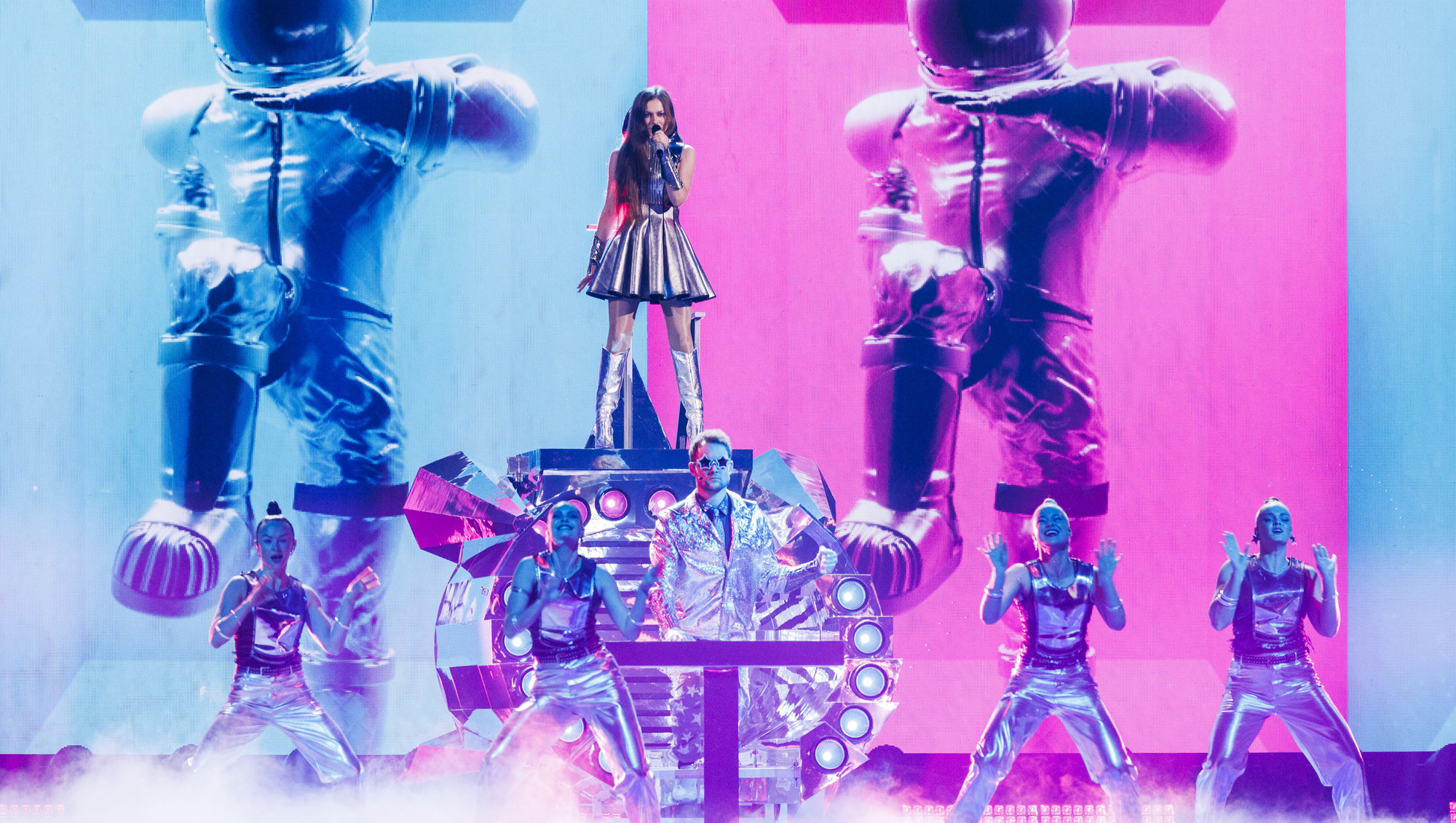
Emmy representing Ireland pictured performing at the Eurovision Song Contest 2025 in Basel Swtzerland. Picture: Andres Poveda
Taoiseach Micheál Martin has said he fully understands RTÉ’s decision to boycott the Eurovision Song Contest, describing it as an act of solidarity with journalists killed in Gaza by Israel.
RTÉ confirmed on Thursday that Ireland will not take part in the Eurovision after Israel was cleared to compete. The broadcaster also confirmed it would not broadcast the contest.
RTÉ joins public broadcasters in Spain (RTVE), Slovenia (RTVSLO) and the Netherlands (AvroTros) also confirming they will boycott the contest in Vienna amid Israel's ongoing war in Gaza.
The EBU decision was taken at a meeting in Geneva today, where a majority of members agreed that a vote on Israel’s participation was not required.
“I fully understand the decision of RTÉ as a broadcaster because there are two groups of people, among many, who acted extremely brave during the war in Gaza: medical community and journalists,” Mr Martin said.
“This is, among other things, an act of solidarity with those journalists who were killed in breach of international humanitarian law during the war in Gaza.
“Without those journalists the world would not have known the horrors of what transpired in Gaza, so I understand that fully.”
RTÉ said Ireland’s participation was “unconscionable given the appalling loss of lives in Gaza and the humanitarian crisis there which continues to put the lives of so many civilians at risk."
It added that it remained “deeply concerned by the targeted killing of journalists in Gaza” and the continued lack of access for international media.
Mr Martin made his comments at a British Irish Council meeting in Wales, saying the focus must turn to peace and the “bedding down of the ceasefire”.
“Ireland is up to contributing to the peace process and we will work with other like-minded countries in that respect,” Mr Martin said.
The Taoiseach called for an unimpeded flow of aid into Gaza, saying it is not being permitted into the enclave at a sufficient level.
Despite a ceasefire agreed in October, Israel has repeatedly violated its terms through attacks on Gaza.
Meanwhile, Tánaiste Simon Harris said he understood RTÉ’s decision but argued it would not be appropriate for him to weigh in on whether he believed the BBC should also pull out of the competition.
“These are editorially independent decisions. I think that's important,” he said.
“But I would say this by way of context; We've seen hundreds of journalists killed throughout this horrific, horrific conflict.
“We still today see a situation where there's not free access by Israel for the media to get in to actually see the atrocities that have happened in Gaza. You can't just forget or ignore the fact that a genocide has taken place in relation to Palestine.
“I'm sure this was a well-considered decision. Ireland has a long affinity with the Eurovision, indeed, winning it more times than anyone, I think, at least jointly first.
“But RTÉ would have weighed up all of these issues and made their decisions editorially independent of the Government, as it should be. But I certainly understand the context for that decision."
Ireland has competed in Eurovision 58 times since 1965, winning a record seven titles. It has only missed two editions, in 1983 and 2002.

CONNECT WITH US TODAY



Be the first to know the latest news and updates