Political parties 'must run more female candidates in a meaningful way'
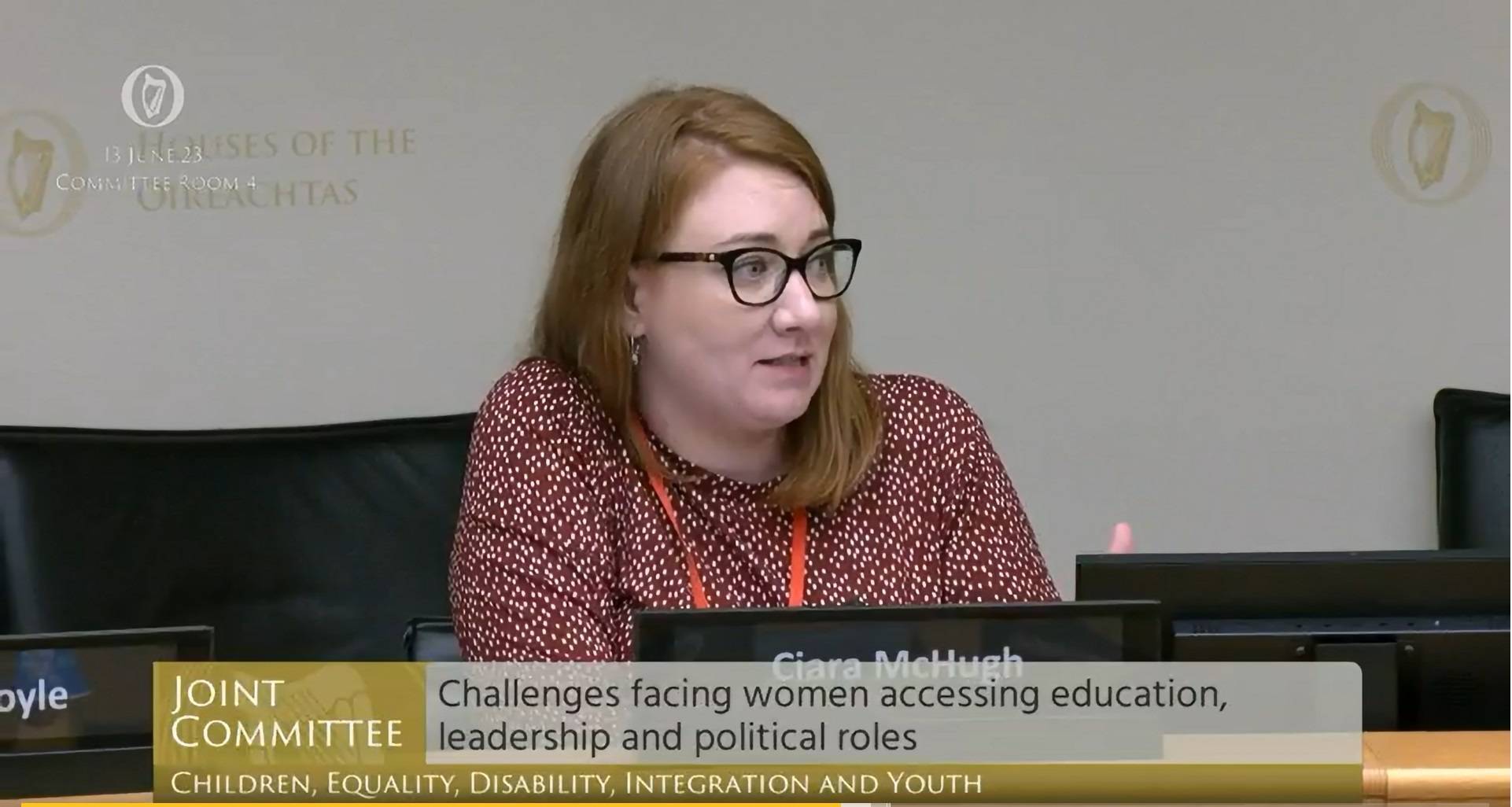
National Women’s Council leadership officer Ciara McHugh told the Oireachtas committee: 'The issue is not that women are not interested, the issue is that the system is set up in a way that excludes them.' Picture: Oireachtas TV
Political parties must run more female candidates in a “meaningful and serious way” while not all women are “political animals”, the Oireachtas committee on children, equality, disability, integration and youth has heard.
At its meeting on Tuesday about challenges faced by women in accessing education, leadership, and political roles, Women’s Collective Ireland CEO Miriam Holt said women at the grassroots are not getting beyond representation on local school boards and community group volunteering roles which she said is becoming a “stagnant route”.
Ms Holt said political parties must ensure they run female candidates in a meaningful, serious and supportive way and not engage in “tokenism”.
Fianna Fáil senator Ned O’Sullivan said not all women are feminists, activists, or “political animals”.
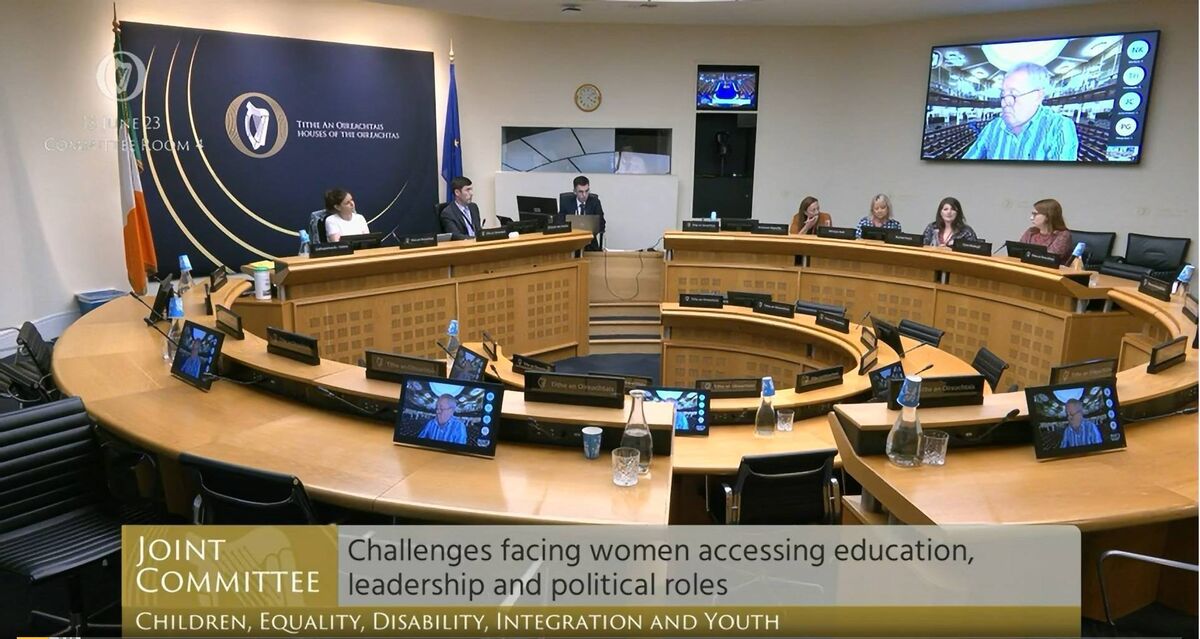
“No matter how hard you try, there’s only a certain element of people of the female gender, no matter what incentives are placed in their way or what opportunities are given to them, who will actually opt to run for election at local or national level,” he said before adding that, without minimising the difficulties faced by women, politics is not easy “for anyone”.
National Women’s Council (NWC) leadership officer Ciara McHugh said it is “very wrong” to assume that some women are not “political animals”.
“Politics is not accessible for women because of the barriers that we’ve discussed so we shouldn’t be immediately jumping to the conclusion that women aren’t interested.” She added:
Acknowledging that local government is a key pipeline for national office, NWC head of campaigns Rachel Coyle said gender quotas must be extended to local and European elections, noting that men represent 49.37% of the population yet hold 74% of local government seats.
Ms Coyle said the provision of affordable childcare is essential in reducing poverty and improving access to education and political roles, while women’s continued responsibility for unpaid care is a “major contribution” to the challenges facing access to political roles.
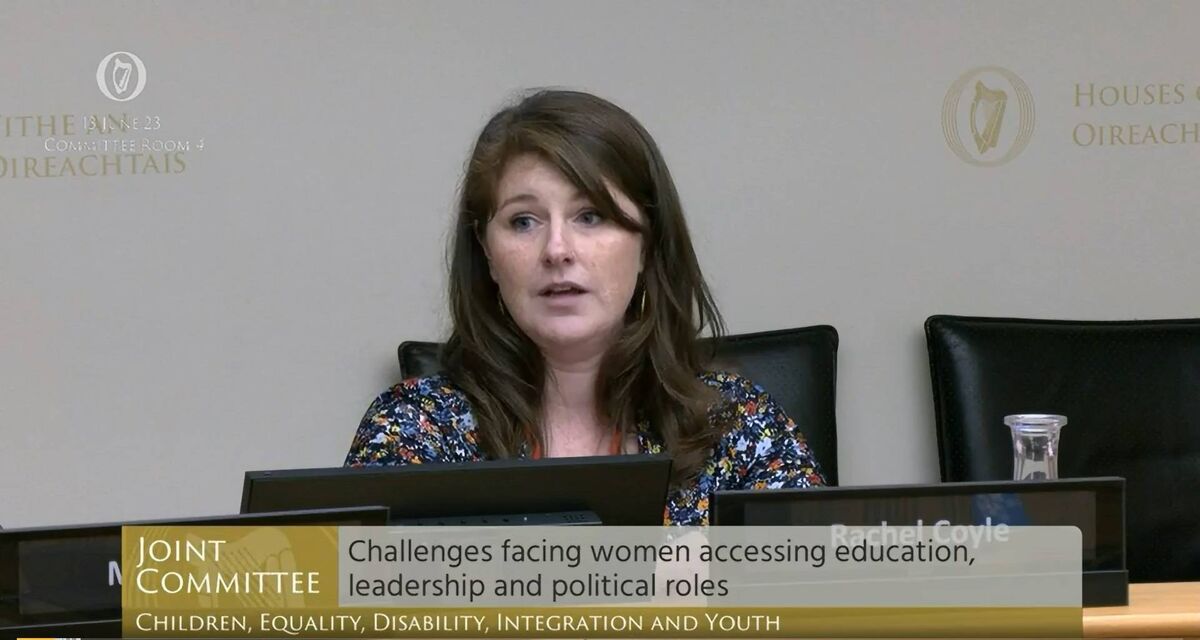
Ms Coyle said income disparity which is exasperated by soaring inflation and poverty also poses as a barrier.
“Heading to college or running for election seems very unrealistic when your primary concern is keeping food on the table and gas in the meter,” she said.
Along with childcare costs and responsibilities and income disparity, “widespread and unrelenting” online abuse which is disproportionately aimed towards women in political roles also acts as a deterrent.
The abuse faced by women in politics is not only preventing women from accessing political roles but also influences women who may refrain from future opportunities, the committee heard.
Ms Holt said it is difficult to encourage women into politics “when you can see what’s happening to women in politics.” Fine Gael Senator Mary Seery Kearney said any abuse must be called out, noting that she has received rape threats, something she initially accepted as part of being in politics.
CONNECT WITH US TODAY



Be the first to know the latest news and updates