Exemption for developers in new government housing plan has no legal basis, experts claim
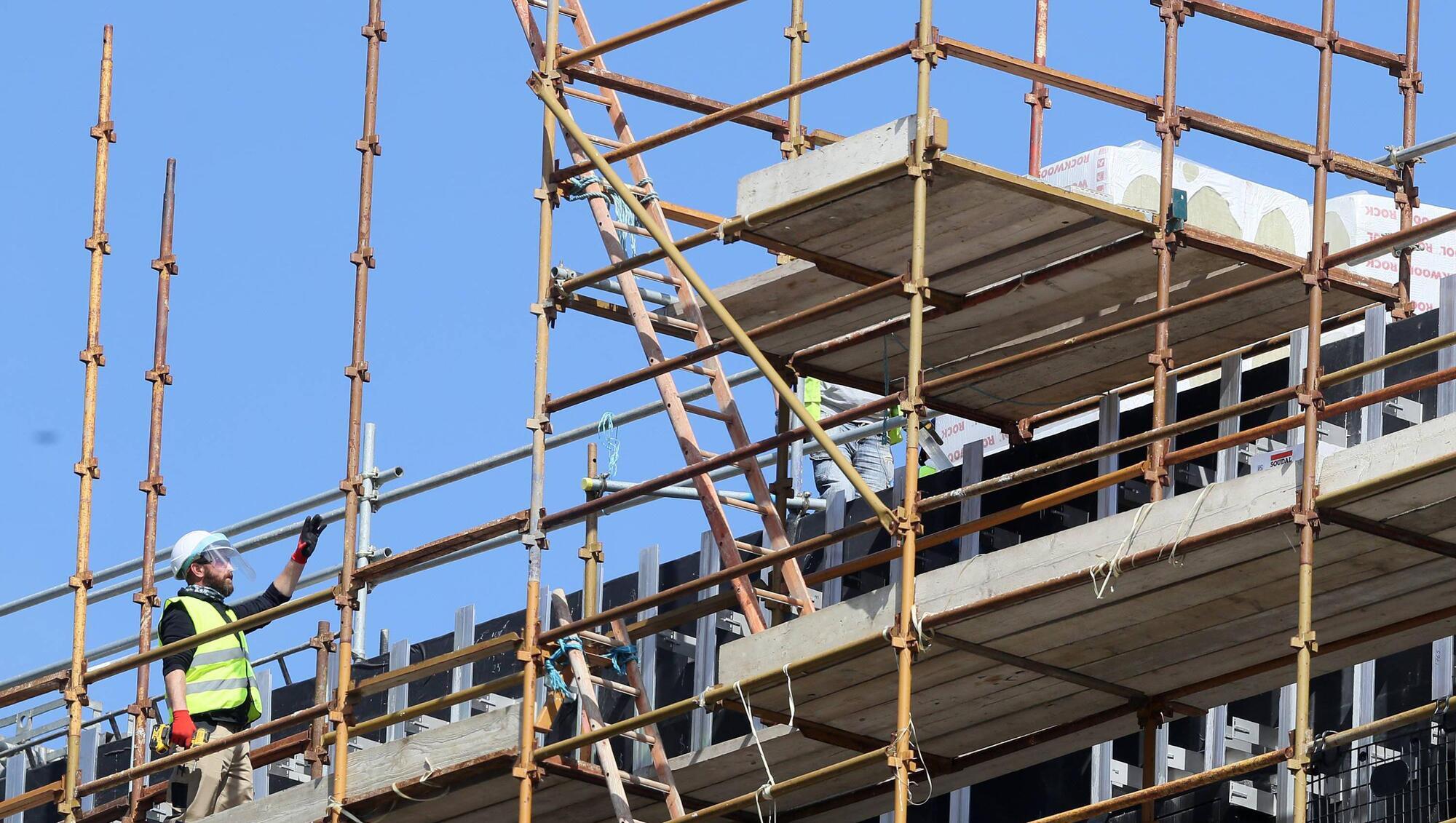
Housing For All, the Governmentâs new âŹ20bn housing roadmap and successor to 2016âs Rebuilding Ireland, was launched last week with the aim of securing 160,000 new homes by the year 2026. File photo
An exemption in the new Housing For All plan which could see the loss of thousands of affordable homes was included on foot of legal fears which have no basis, it has been claimed.
The Department of Housing declined to confirm whether or not specific legal advice had been sought before including the exemption.
Housing For All, the Governmentâs new housing roadmap and successor to 2016âs Rebuilding Ireland, was launched last week with the aim of securing 300,000 homes by the end of 2030.
One strand of the new plan would see some developers tasked with allocating 20% of a new development for social and affordable housing. That figure was first introduced as Part V of the Planning Act 2000, but had been reduced to 10% in 2015.
The reported last weekend that the Government has committed to keeping that figure at 10% social housing only for any lands bought between 2015 and 2021 which have as yet not secured planning permission, with Minister for Housing Darragh OâBrien insisting it was necessary to do so on foot of âvery strong adviceâ to stave off legal challenges from disgruntled developers.
The move is likely to remove an opportunity for the State to secure thousands of affordable homes.
However, planning and information law solicitor Fred Logue has stated that a Supreme Court ruling on the constitutionality of Part V - dating from 1999 before the Planning Act became law - means that any challenges to the 20% figure would have no legal standing.
That Supreme Court decision considered whether or not applying the 20% rule to developers would be constitutional and concluded that it would be.
âIt's hard to see how there is any need for an exemption given there were no such exemptions in the original Part V which the Supreme Court found to be constitutional in 1999,â Mr Logue said.
"Based on that judgment, there should be no requirement for even a temporary exemption, and any issues relating to when land was purchased can be accounted for in terms of compensation by reference to the Supreme Court decision.â
A spokesperson for the Department of Housing said the six-year dispensation is not an exemption, but rather a âtransitional provisionâ.
They said the decision to provide that âappropriateâ transitional provision was made on foot of advice from the Housing Agency and the departmentâs own officials in order to address any âpotential viability issuesâ.
The 1999 Supreme Court decision was not mentioned in the departmentâs response, while specific questions as to whether or not it sought legal advice from either an external solicitor or barrister or the Attorney General before including the exemption were not answered.
Assistant professor at the UCD school of architecture Orla Hegarty said the Supreme Court decision âpre-empted future legal challenges so that the principle could not be brought to court laterâ.
She said the impact of the new exemption âwill be many sites developed with fewer social and affordable homesâ.
âIt is not clear why future legal challenges were a concern, given that the legislation was previously tested,â Ms Hegarty said.