Tourists in West Cork 'darting out onto main roads' because of faded road markings
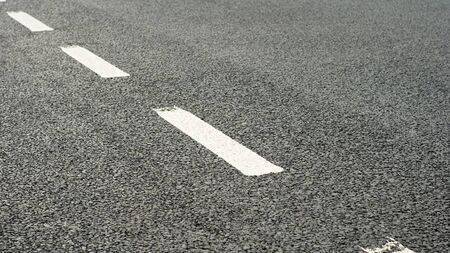
Councillors were told clear road markings were particularly important for visitors unfamiliar with local roads. File picture
An urgent review of faded road markings across West Cork has been sought amid concerns worn-out junction markings, pedestrian crossings, and disability parking bays are creating safety risks for motorists and pedestrians.
The issue was raised by Fine Gael's Caroline Cronin at a recent meeting of Cork County Council's West Cork Municipal District, where she called on the local authority to undertake a repainting programme targeting high-traffic and safety-critical locations.
Ms Cronin said there were numerous examples across the region where road markings had deteriorated significantly and required attention.
Among the locations she highlighted was the Mill junction near Centra in Drimoleague, where she said fresh road markings were needed to improve visibility and safety.
She also pointed to the causeway junction at Barleycove, where traffic turning onto the main road could face difficulties due to a lack of clear road markings and signage.
Ms Cronin said the issue was particularly important given the large number of tourists visiting West Cork during the summer. “Tourists heading west to Mizen could be darting out onto the main road without even realising,” she said.
Ms Cronin said she also had concerns about the condition of the pedestrian crossing in Ballydehob, which has almost completely faded away.
She also called for disability parking bays throughout West Cork to be repainted in line with current accessibility standards. She said many bays in towns and villages, including Schull and Goleen, had faded significantly and should be upgraded with clearly marked blue-box layouts to ensure they remain visible and accessible.
The motion was seconded by Fianna Fáil’s George Gill, who said clear road markings were particularly important for visitors unfamiliar with local roads. He pointed to a recently resurfaced road in Baltimore, where, he said, a lack of markings was causing confusion.
He said:
Independent Ireland's Danny Collins also supported the motion and suggested Cork County Council should explore purchasing its own road-marking truck in partnership with Kerry County Council.
Mr Collins said councils currently relied on specialist lining trucks based in other parts of the country, resulting in delays in carrying out works. “We are waiting for this lining truck to come down from Tipperary or Clare. They are here today and gone tomorrow,” he said.
“They do so much and you might not see them for another three, four, six, or eight weeks after,” he added.
Mr Collins suggested Cork and Kerry county councils could jointly purchase a road-marking truck to improve response times and allow works to be carried out more efficiently. “We'd know when it's coming,” he said.
Responding to the motion, senior executive engineer John Ahern said road line marking at junctions was funded through the council's general road maintenance allocation and was undertaken as resources allowed.
He said roads resurfaced under the restoration improvement and restoration maintenance programmes receive new road markings as part of those works.
Mr Ahern also confirmed Cork County Council had received additional funding this year from the Department of Transport under the low-cost safety improvement programme to help replenish road markings at junctions.
A list of locations is currently being prepared for consideration under the scheme, and locations highlighted by councillors will also be assessed when the schedule of works is being finalised.
Mr Ahern encouraged councillors to continue highlighting locations requiring attention so they could be considered for prioritisation. However, he said the programme operated within a finite funding allocation and not all requests could be accommodated immediately.
CONNECT WITH US TODAY



Be the first to know the latest news and updates