Clare councillor calls for cardiovascular strategy after partner’s heart attack at 29
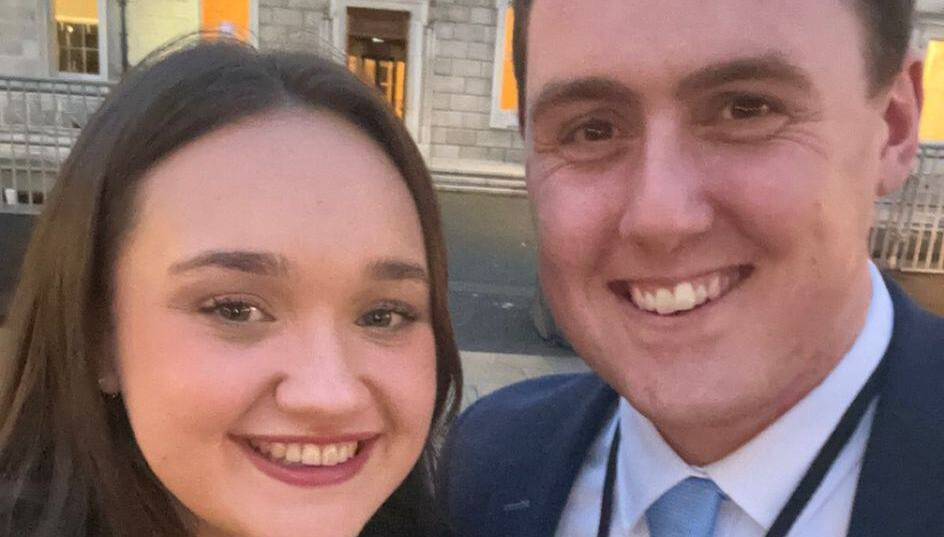
Fianna Fáil councillor Rachel Hartigan and her partner Ben Sweeney. Picture: Rachel Hartigan.
A Clare councillor has called on the health minister to publish the National Cardiovascular Policy and Strategy after her partner suffered a heart attack at the age of 29.
Rachel Hartigan said her determination to see the long-awaited strategy published was reinforced after her partner, Ben Sweeney, suffered a heart attack in January while playing soccer.
The current cardiovascular policy expired in 2019 and, while the was published recently, no implementation plan has yet been put in place.
Ms Hartigan told the : “We are currently operating in a seven-year policy vacuum. We had a national cardiovascular strategy and policy that was in effect from 2010 until 2019, and we’re yet to have an implementation plan for that.”
Read More
Cardiovascular disease (CVD) is one of the leading causes of morbidity and mortality in Ireland, accounting for 27.8% of all deaths.
“Around 80,000 heart and stroke patients are discharged from hospital every year in Ireland, which kind of equates to one every seven minutes.
“Heart disease is one of the leading causes of death in the country, and early detection and prevention are the two key pieces that I'd like to see improved upon in the country,” Ms Hartigan said.
While health minister Jennifer Carroll MacNeill responded to Ms Hartigan’s request, there was “no firm commitment” on when the policy would be published.
“In her own response, by recognising the scale of the challenge, we should be really encouraged to ask whether there's more that we can do, and individual programmes are important.
“It’s great to have the National Review of Cardiac Services published now, but a national strategy really provides a clear vision, clear priorities, and accountability, which is what's needed.”
After her partner suffered a heart attack, he discovered he had severe familial hypercholesterolaemia. At the age of 29, he underwent an urgent quadruple bypass operation.
“He was just 29 at the time, and he's going to be celebrating his 30th birthday this weekend.
“Looking back, there were some early warning signs, but they weren't necessarily symptoms that would make a young person think that they were at risk of serious heart disease.
“He would occasionally experience chest pain, but it was the kind of thing that many of us would brush off.
“When you're young and you're leading a busy life and a busy professional life as well, it's really easy to ignore a lot of those symptoms,” she said.
Because of their experience, Ms Hartigan has been seeking to raise awareness and encourage early detection.
“Heart disease doesn't always look the way people expect it to, it was just a complete shock because nobody expects to be sitting in a hospital and being told that their 29-year-old partner needs quadruple bypass surgery.”
In a response to Ms Hartigan, the Department of Health said a key priority for the HSE was progressing the implementation of the National Review of Adult Specialist Cardiac Services (NRCS) in 2026.
“On 16 December 2025, the European Commission published Safe Hearts – the EU Cardiovascular Plan, a landmark initiative aimed at reducing premature deaths by improving prevention, early detection, and treatment, while also driving innovation.
“Ireland’s active role in shaping these policies reflects our ambition to strengthen cardiovascular health outcomes for our population and contribute to a healthier Europe.
“The Minister remains fully committed to advancing cardiovascular health at both EU and national level, supporting the implementation of the EU Safe Hearts Plan in Ireland, and the development of a new national cardiovascular plan,” the department said.

CONNECT WITH US TODAY



Be the first to know the latest news and updates