Tipperary family says lack of information on care of elderly relatives causing grief and worry
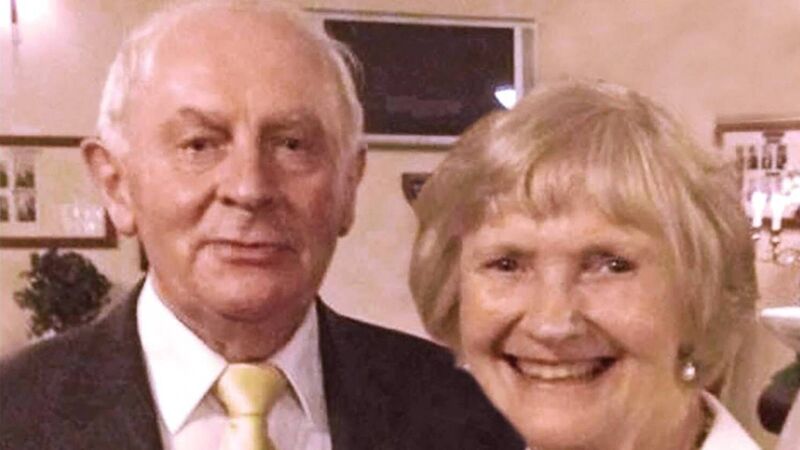
Joe and Mary Quinn from Clonmel, Co Tipperary. Joe, who had Alzheimer's disease, died in February. Mary has advanced kidney disease and has long-term complications following cancer treatment.
Unnecessary layers of bureaucracy and a lack of information on decision-making around care in the health system are exacerbating grief and worry for families around the country.
That is according to a Tipperary family, which is calling for a review of their parents' care, saying a one-stop shop-style communication system is badly needed.
The family of Clonmel couple Joe and Mary Quinn is seeking a dedicated liaison point for community care for “elderly and complex patients”.
Joe, who had Alzheimer's disease, died in February. Mary has advanced kidney disease and has long-term complications following cancer treatment.
Both have had various hospital admissions in recent years, with Joe living in a nursing home until his death. In recent months, he had suffered a fall and had to have two surgical procedures on his thumb.
Their daughter Niamh said “every hospital visit required us to repeatedly explain his diagnosis, re-enter all his details, and watch him be treated as a standard patient, left in A&E and waiting rooms for hours on end rather than a vulnerable person who needs calm, reassurance, and continuity”.
The family is seeking a dedicated community care liaison point for elderly and complex patients to provide a “one point of contact to guide families, coordinate services, and prevent unnecessary hospital admissions”.
They also want the introduction of a single, PPSN-linked digital health record, which would be accessible across hospitals and community services,” so diagnoses, medications, vulnerabilities, and care plans follow the patient”.
Ms Quinn said her mother wishes to remain at home, but added: “Supports exist, such as community intervention teams, home blood services, and step-down care, but families are not proactively informed. Access depends on chance discovery, long waiting lists, and the ability of exhausted carers to navigate a fragmented system.
“Our mother has been admitted to the hospital six times in 2025, spending over 35 weeks as an inpatient. Yet meaningful conversations about end-of-life care, comfort, dignity, and remaining at home are extremely difficult to access.
Niamh shared the family’s experience on Instagram, prompting HSE chief executive Bernard Gloster to make contact with her. She subsequently had a meeting with Mr Gloster to highlight her parents’ experience and to say what the family wants to change.
She said she wanted to “highlight how the absence of joined-up thinking, continuity, and family engagement leads to distress, avoidable hospital admissions, and a failure to treat the whole person”.
A spokesman for the HSE said the executive was aware of the issues raised by the family.
Since then, there have been a number of engagements, he said.
"The HSE cannot comment on an individual’s care or cases. Even when a client or family makes personal information public, this does not relieve the HSE of its duty to preserve and uphold client or patient confidentiality at all times.”


CONNECT WITH US TODAY



Be the first to know the latest news and updates