Almost 350 inmates in Cork prison where capacity stands at just 300
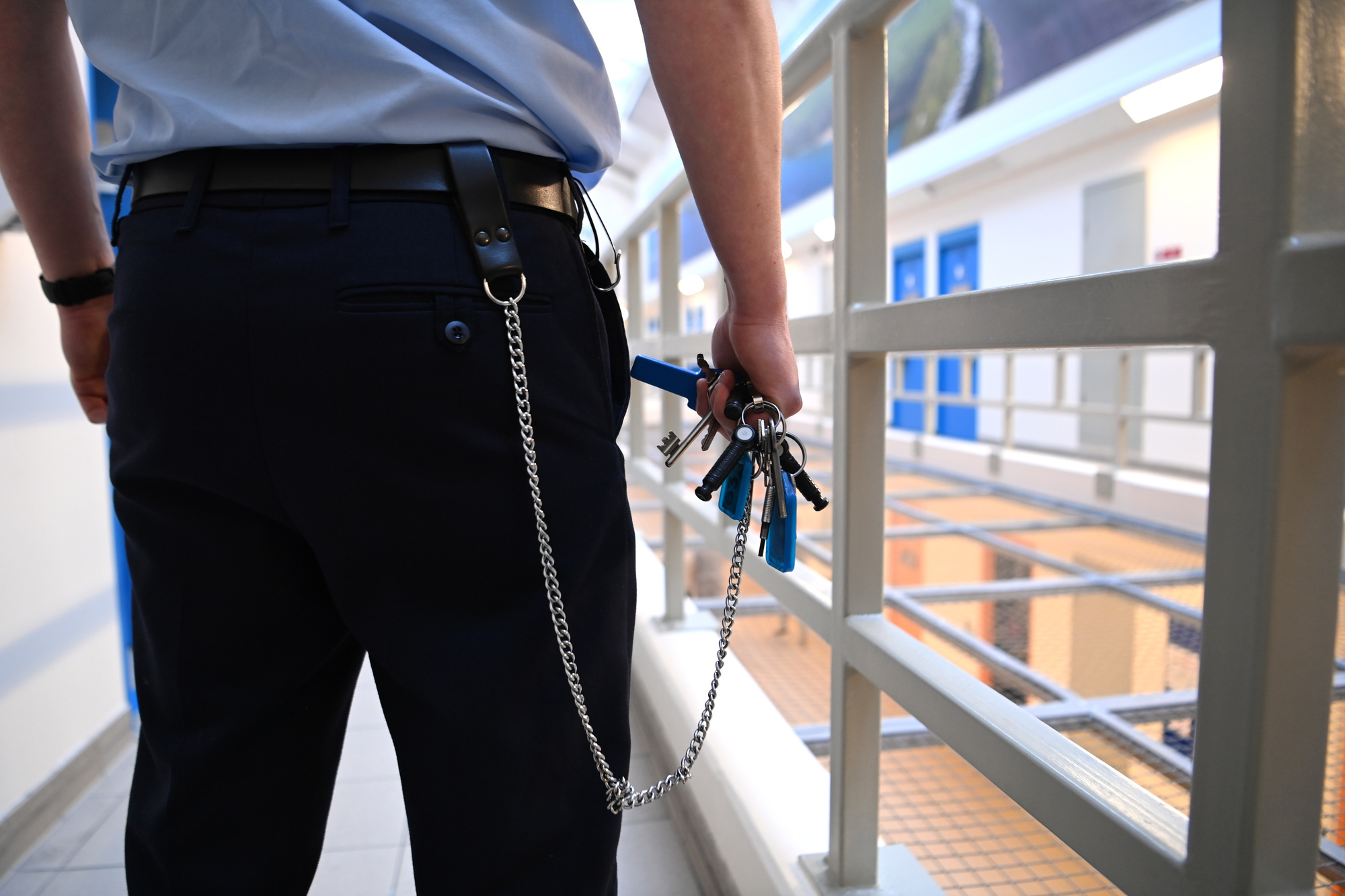
The Prison Officers' Association says crowded jails are a 'ticking timebomb'. Picture: Dan Linehan
Almost 350 inmates were in cells in Cork Prison last Tuesday night — in a jail with a maximum capacity for just 300 people.
The bulk of these cells already have two prisoners in them, including an increasing number of specialist single cells for violent inmates and prisoners with psychiatric disorders.
Just under 50 of the additional prisoners had to make do with sleeping on mattresses on the floors of these cells.
A breakdown of the figures for the night, obtained by the , provides an insight into just how bad things are in Cork Prison — a scenario repeated in all closed prisons.
The rarely-seen statistics, broken down by prison landing, show:
- A1 landing: 30 cells with 60 beds and 12 people sleeping on the floor — total 72;
- A2: 29 cells with 58 beds and 14 people on the floor — 72;
- A3: 30 cells with 60 beds and 10 on the floor — 70;
- B1 CBU (Challenging Behaviour Unit): 10 cells with 14 beds and six prisoners on the floor – 20;
- B1 VPU (Vulnerable Prisoner Unit): Seven cells with seven beds and three prisoners on the floor — 10;
- B1 CBU (Challenging Behaviour Unit): Six cells and six beds and two people on the floor — 8;
- B2: 26 cells with 49 beds;
- B3: 28 cells with 56 beds;
- Total of 47 prisoners sleeping on the floor;
In total, 348 people were in custody in Cork, which has a capacity for 296, meaning it is at 118% capacity, the second-highest after Limerick Female Prison (121%).
The understands that on another night in Cork Prison this week, there were 49 people on mattresses.

The crisis in the modern jail is reflected in the number of prisoners on temporary release.
Last Tuesday, 66 inmates were on temporary release, the highest number, in percentage terms, across all prisons.
On the same day in 2023, there were 46 prisoners on temporary release.
The understands that such was the level of people being sent to Cork Prison on remand by the courts in the last few months, that the number on remand accounted for almost one in four of all inmates.
Cork Prison bosses have had two options: Put people on mattresses or release pressure by giving more people temporary release.
Last week, in Midleton District Court, Judge Colm Roberts was told that a man he had sentenced to eight weeks in prison had spent just 15 minutes there before being given temporary release.
The judge noted that the offender spent more time travelling to prison than he spent in prison.
The situation highlights the repercussions for court time and for Garda time and resources.
The issues in Cork Prison are replicated across other prisons: They all have more people in them than the maximum they can hold.
This maximum has been pushed as far as possible in the last year or so, by doubling up cells and putting four or five people into three-man cells, as at Cloverhill Prison.
This West Dublin jail is for people on remand awaiting trial — those charged but not convicted of a crime — many of whom, as documented in numerous reports, have mental health difficulties, including substantial psychiatric disorders, and/or are homeless.
Gabriel Keaveny, deputy general secretary of the Prison Officers’ Association, said the situation is the worst he has seen it in the 33 years he has been working in prisons.
An analysis of figures published by the Irish Prison Service (IPS), shows just how bad the situation has become over the years:
- There are almost 1,280 more prisoners in custody now than in December 2017 (up 34%) and over 620 more than December 2022 (up 14%);
- Over the same period, around 240 extra bed spaces have been put in place (up 6%), including 103 spaces since December 2022 (up 2%);
- The number on temporary release has jumped by 155% since 2017 and 61% since December 2022;
- The number on remand has increased by 56% since 2017 and 14% since December 2022.
Currently, all but one prison (Arbour Hill sex offenders’ prison) is overcrowded.
The picture, as of last Tuesday, across the prison system is grim:
- Limerick Female Prison (opened last year) had 68 prisoners for 56 bed spaces (121% over capacity) and has 66 on temporary release;
- Cloverhill had 502 prisoners for 433 bed spaces (116%);
- Limerick Male Prison had 330 inmates for 286 spaces (115%) and has 54 on temporary release;
- Castlerea Prison had 392 prisoners for 340 beds (115%) and 20 on temporary release;
- Mountjoy Male Prison had 863 prisoners for 755 beds (114%) and 149 on temporary release;
- Mountjoy Female (Dóchas) had 167 inmates for 146 beds (114%) and 57 on temporary release.
Senior prison sources agree the situation is “horrendous”, and point out there are only two options available to the prison service: Increase capacity or increase the number of prisoners on temporary release.
Within the temporary release system, there are the Community Return and Community Support Scheme, but they require the agreement of the Probation Service to supervise inmates on release, which, in turn, is dependent on the number of probation officers.

Mr Keaveny said the system was at “breaking point”, adding: “We have said to the minister and the director general [of the Irish Prison Service] how do they think we are going to get through the summer without a serious disturbance? I hope we will but tensions are already running high.
“With numbers in cells, it creates the opportunity for confrontation and the pressure builds on the system. This is a ticking timebomb.”
Mr Keaveny said the Prison Officers Association (POA) blamed the Department of Justice for "failing to plan" despite years of notice and blamed the prison service for not adopting short-term proposals the association has suggested.
He said the POA proposals included: Reopening Curragh Prison (refurbished in 1996 but closed, along with Spike Island, in 2004 in a Government cost-cutting exercise), providing around 100 spaces; reopen newer sections in the old Cork Prison, providing around 100 spaces and build 10 modular homes, with eight inmates in each, at the Grove in Castlerea Prison, providing 80 spaces.
Mr Keaveny said prison service management did not accept their proposals.
He claimed the service is planning to build modular units in the Grove, Shelton open prison, and Loughan House open prison, providing 10 spaces in each, or a total of 30.
He further claimed each of these modular units would cost €400,000 and described the plan as offering poor value for money.
In a statement, the Irish Prison Service (IPS) said it “must accept” all prisoners committed by the courts and has “no control” over the numbers sent.
It said that between 2022 and 2023, a total of 3,271 people were remanded in custody pending trial, a rise of 21%.
It said the IPS cannot release any of these inmates on temporary release.
The statement said the Department of Justice has outlined plans for four capital projects at Castlerea, Cloverhill, the Midlands, and Mountjoy prisons to accommodate 670 prisoners.
In a detailed second statement, the IPS said a feasibility report by engineering consultants on the old Cork Prison was due in mid-2024, but added that multiple reports over previous years identified “serious deficiencies” with its physical condition.
It said the prison in the Curragh was owned by the Department of Defence, but added that the IPS had requested the Department of Justice to engage with Defence to determine its availability and condition.
The statement said IPS said officials had drawn up short-term measures which could deliver “an additional 95 spaces" this year.
These include 30 spaces in independent living units in Castlerea (10), Loughan House (10) and Shelton Abbey (10); six spaces through the refurbishment of a house in the Grove and three spaces in Loughan House in the same way.
An additional eight spaces are to be found in four new cells in the Midlands; 10 spaces in Castlerea with the recommissioning of six cells and 12 spaces in Wheatfield with the recommissioning of six cells.
Also this year, the refurbishment of 26 cells in the old Limerick Female Prison should provide an additional 26 male spaces.
The IPS said medium-term projects include 26 extra spaces at Dóchas Women’s Prison through the conversion of an administration area and 52 additional spaces, via 26 double rooms, through an extension at the jail.
On top of that, it envisages 68 places at Castlerea through an additional 28 standard and six disabled access cells.
In its statement, the Department of Justice said Minister Helen McEntee secured on Wednesday €49.5m additional capital funding for four projects.
It said preparatory work would begin this year, with construction expected "to start" on a phased basis in 2025-2027.
The statement said that over €70m was spent redeveloping Limerick Prison, including a new female unit.
It said that, as of March 27, there were 469 staff within the Probation Service, with staff increasing, on foot of recruitment drives, by 48 since the end of 2022. It said a further 20 staff are due to be recruited this year.