Calling time on history as the last of Cork's old phone boxes to be replaced
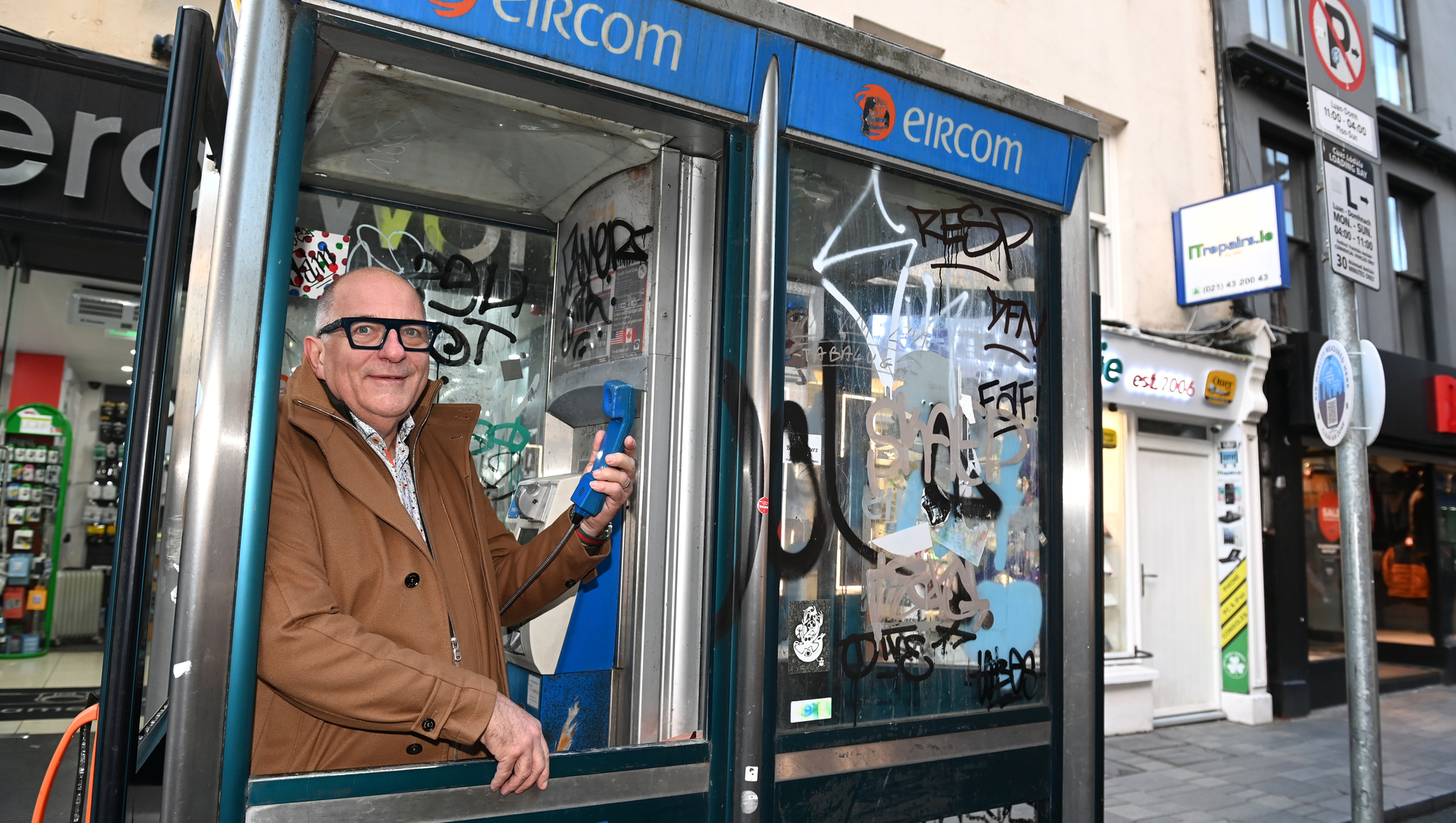
Architect Hugh Wallace was feeling nostalgic about a pair of disused and vandalised Eircom telephone boxes on Oliver Plunkett Street, Cork. Picture: Larry Cummins
It’s last call for Cork’s old phone boxes — and hello digital pedestals.
Telecoms company Eir plans to remove all of the city’s redundant payphone boxes over the coming months and replace some with sleek new kiosk-style digital payphones.
The company will have to apply to Cork City Council for a special licence for the replacement kiosks, which will include advertising panels, at locations which have yet to be agreed with City Hall.
However, this process, unlike a planning application, does not provide for a public submissions process. The council’s decision in relation to these licences can, however, be appealed to An Bórd Pleanála.
The details were outlined in a report to councillors at this month’s meeting of the city council by Fearghal Reidy, the director of services in the council’s strategic and economic development directorate, on a new procedure the council has devised to deal with phone boxes.
Mr Reidy said previously the Commission for Communications Regulation, ComReg, imposed a "universal service obligation" on phone companies to operate and maintain public pay phones in Ireland, and that pay phones could only be considered for removal when specific criteria were met.
But this service obligation was lifted at the end of 2020, and the location and number of public pay phones is now a matter to be decided between the service provider, in this case Eir, and the council.
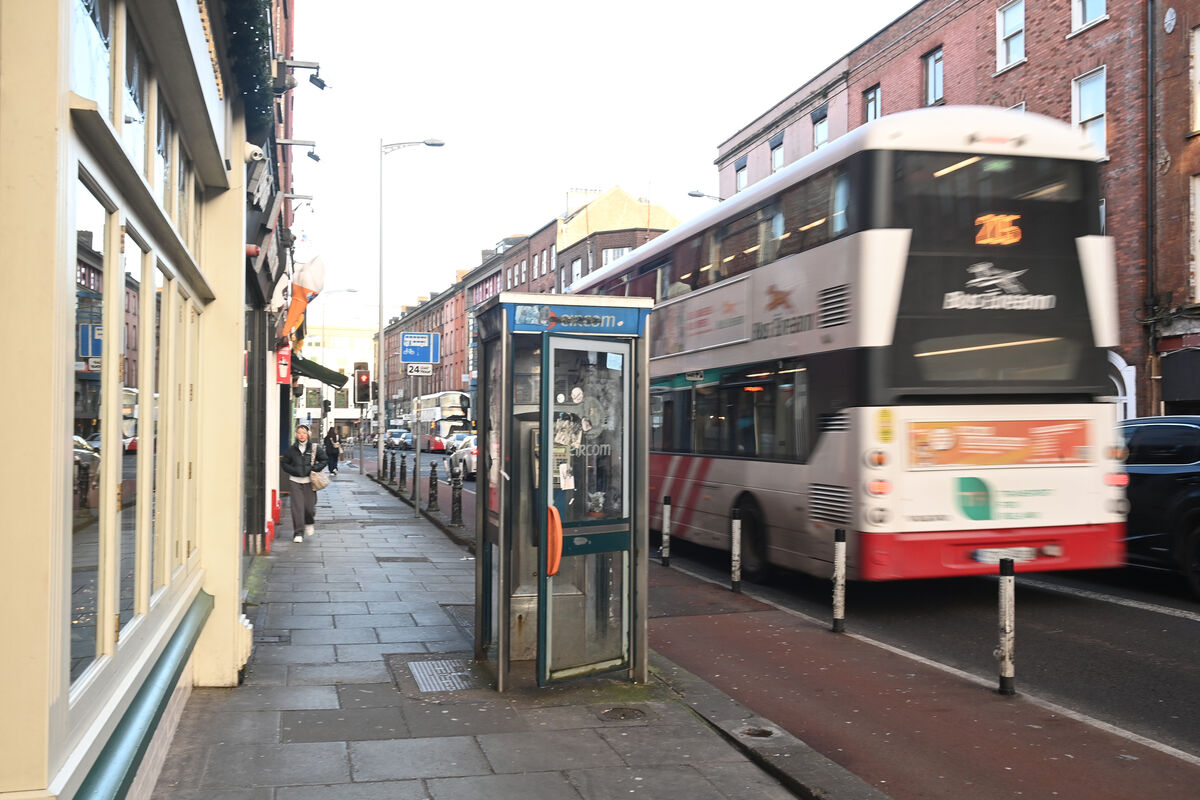
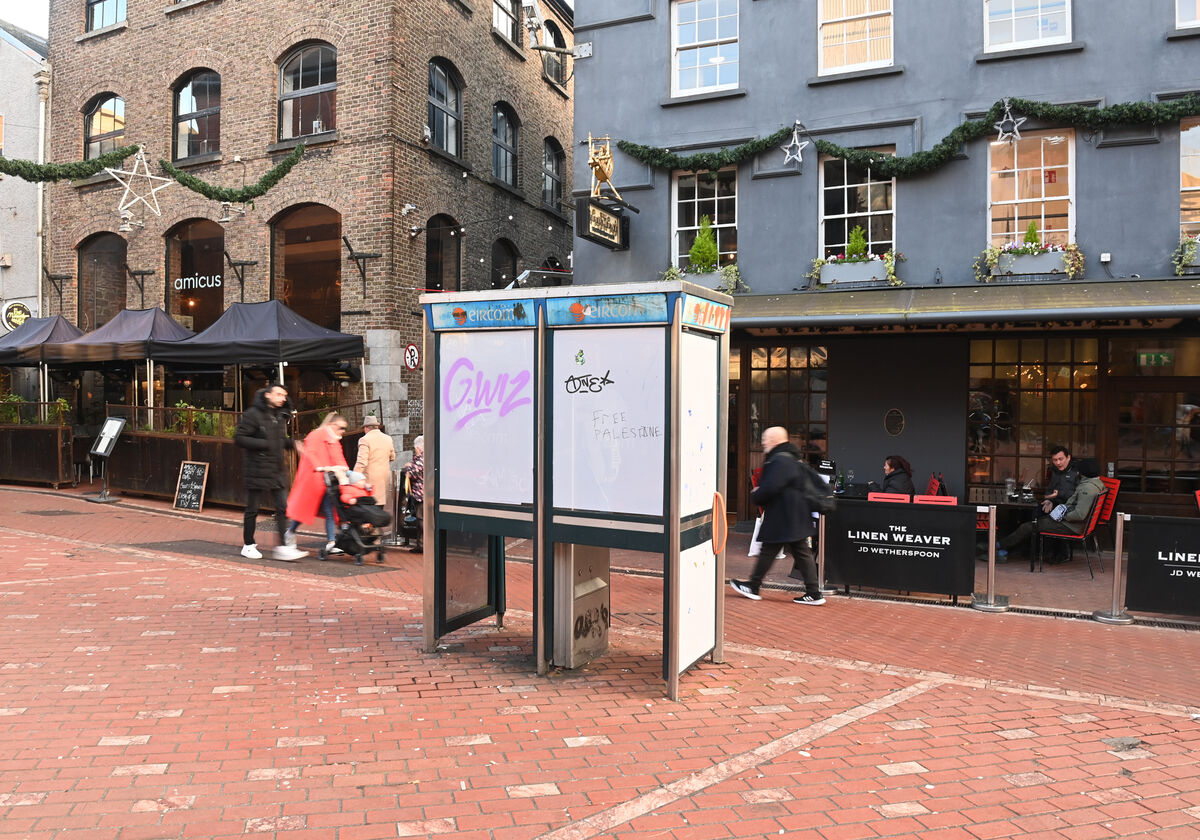
There are 15 phone boxes in the city centre, five more in Ballincollig, Douglas, St Luke’s Cross, and at Cathedral Road/Shandon St, with most in poor visual condition or not working. Four redundant phone boxes have already been removed as part of recent public realm or streetscape works.
Mr Reidy said the company now planned to remove 11 phone boxes and replace nine with sleek new kiosks — open, stand-alone kiosks with wi-fi, interactive touchscreens and tourist information — that include a 1.7mx.96m LED advertising panel. The removal of the redundant phone boxes will start within a matter of weeks.
He said the city would assess Eir's applications for the replacement kiosks through its street furniture licensing process, which is governed by Section 254 of the Planning and Development Act 2000.
City Hall has identified nine locations, based on security and social inclusion reasons, where it would be willing to consider such licence applications.
Most are on the city centre island, but consideration will be given to licence applications for replacement kiosks in suburban towns.
Among the issues that will be considered through the Section 254 licensing process will be the proper planning and sustainable development of the relevant area, and the convenience and safety of road users, including pedestrians.
While this process does not provide for a public submissions process, Mr Reidy said details on the applications lodged and the decisions made will be available to councillors from the council’s development management section. The decisions can be appealed to An Bórd Pleanála.
“Should Cork City Council take a decision to grant any licenses, conditions attached to any decision will specify a time period (likely two years) for which the license is granted,” he said.
“The licensing process thus allows for the ongoing monitoring of the usage of and need for any street furniture granted and further provides for the removal of street furniture if it is no longer needed in the future."


CONNECT WITH US TODAY



Be the first to know the latest news and updates