Deckchair and baptismal cup among Lusitania artefacts to be put on public display in Cork
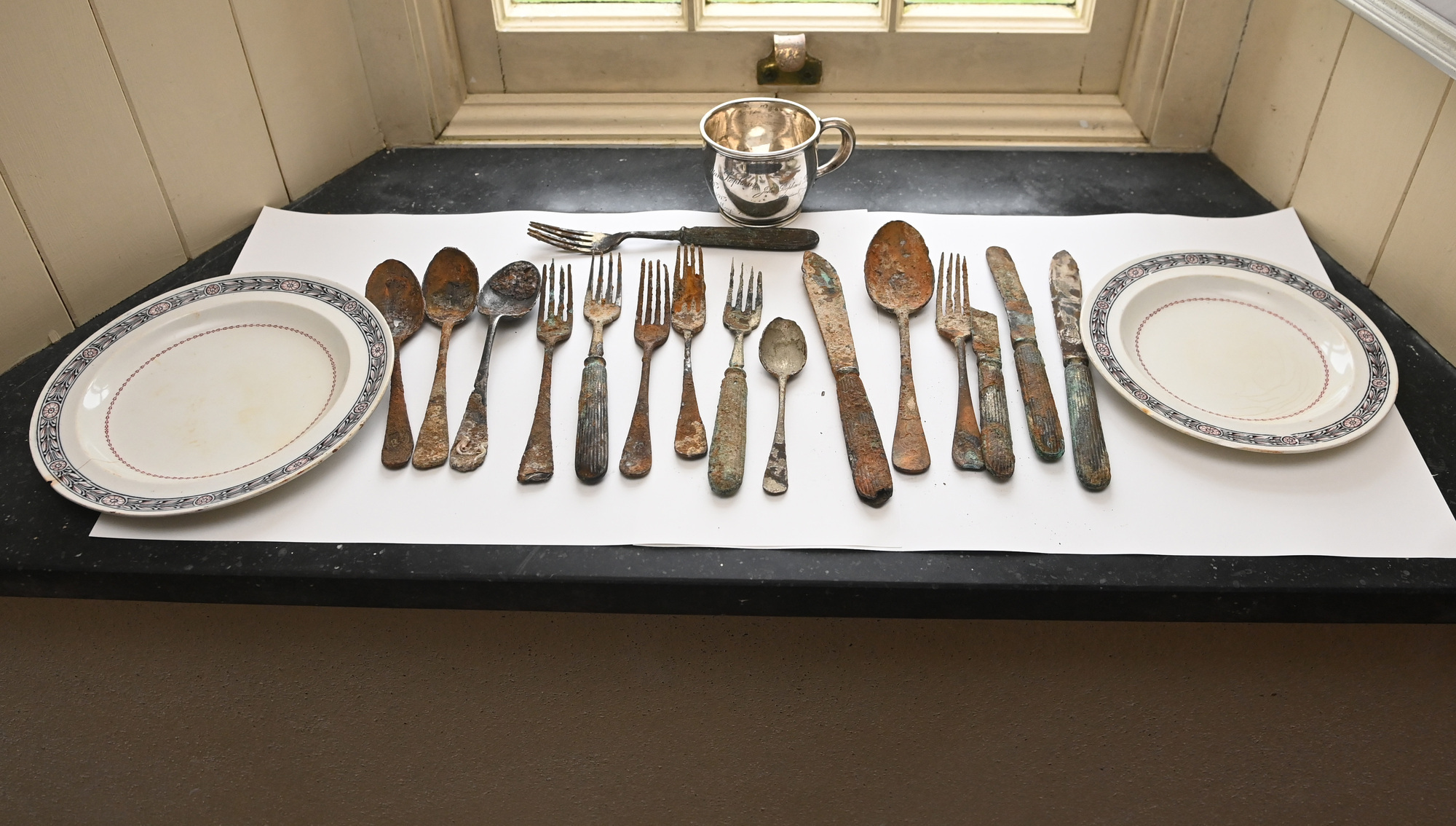
Plates, cutlery and a baptismal cup from the Lusitania which will be on display on Culture Night. Pictures: Eddie O'Hare
Several priceless artefacts recovered from the liner Lusitania, which have never before been put on public display before, are to be showcased at a museum in Co Cork dedicated to the memory of the sinking of the ship and the loss of 1,198 lives.
Exquisite Wedgewood dinner plates, many of which are in perfect condition, knives, forks, spoons, a deckchair and a baptismal cup that belonged to a two-year-old passenger whose body was never found, will be put on display for the first time at the Lusitania Museum and Old Head Signal Tower in Kinsale as part of national ‘Culture Night’ events on Friday from 7pm.
Museum manager Shannon Forde said the artefacts were donated to them by the former owner of the Lusitania wreck, American Greg Bemis in 2019, the year before he died. In his will, he also handed over all rights to the wreck to the voluntary group which runs the museum.
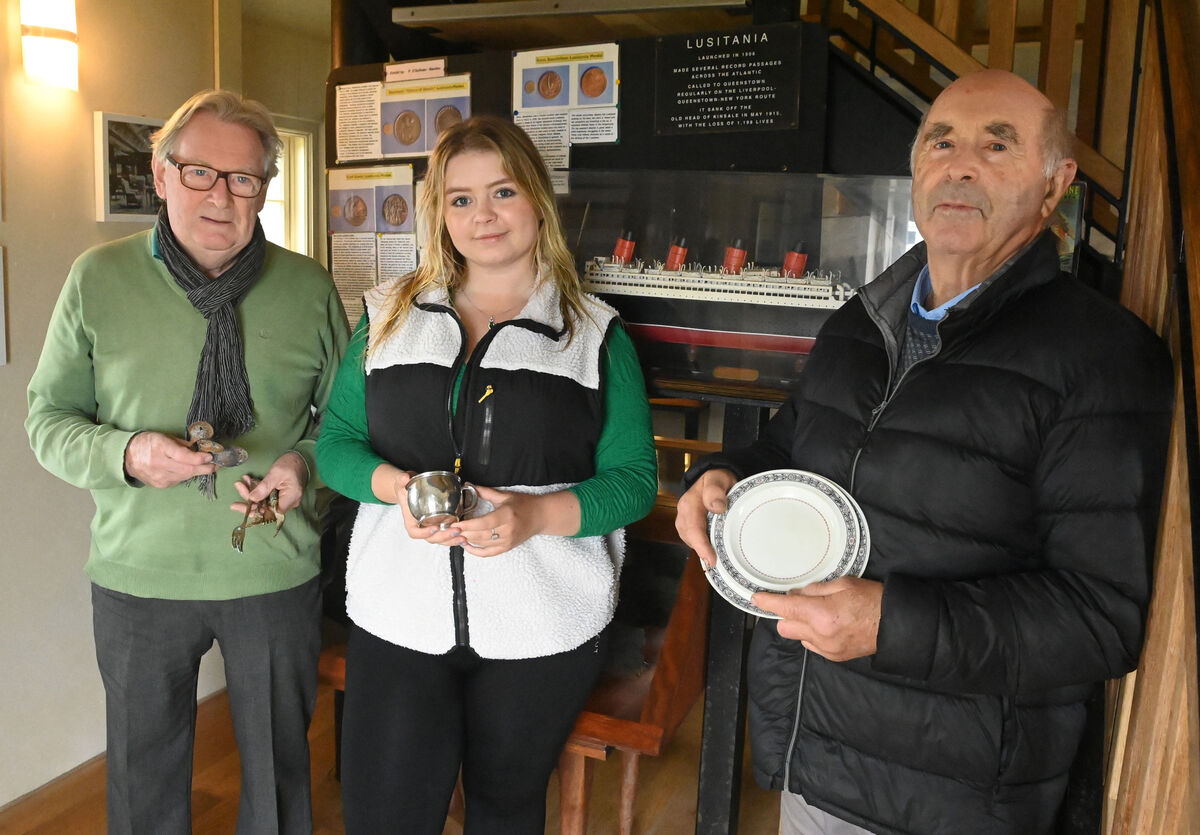
A lot of these artefacts were recovered in the 1980s by divers searching the wreck of the ship torpedoed by a German U-Boat on May 7, 1915, about 20km off the Old Head of Kinsale and were given to Mr Bemis.
“They are absolutely priceless. The dinner plates are incredibly delicate and it’s remarkable that many are in perfect condition considering the torpedoing and the fact the ship sank so fast,” Ms Shannon said.
The silver baptismal cup belonged to John Stevens, who was aged two when he perished after the liner sank. Ms Shannon said this had been donated to the museum by the boy’s great-grandnephew who lives in Canada.
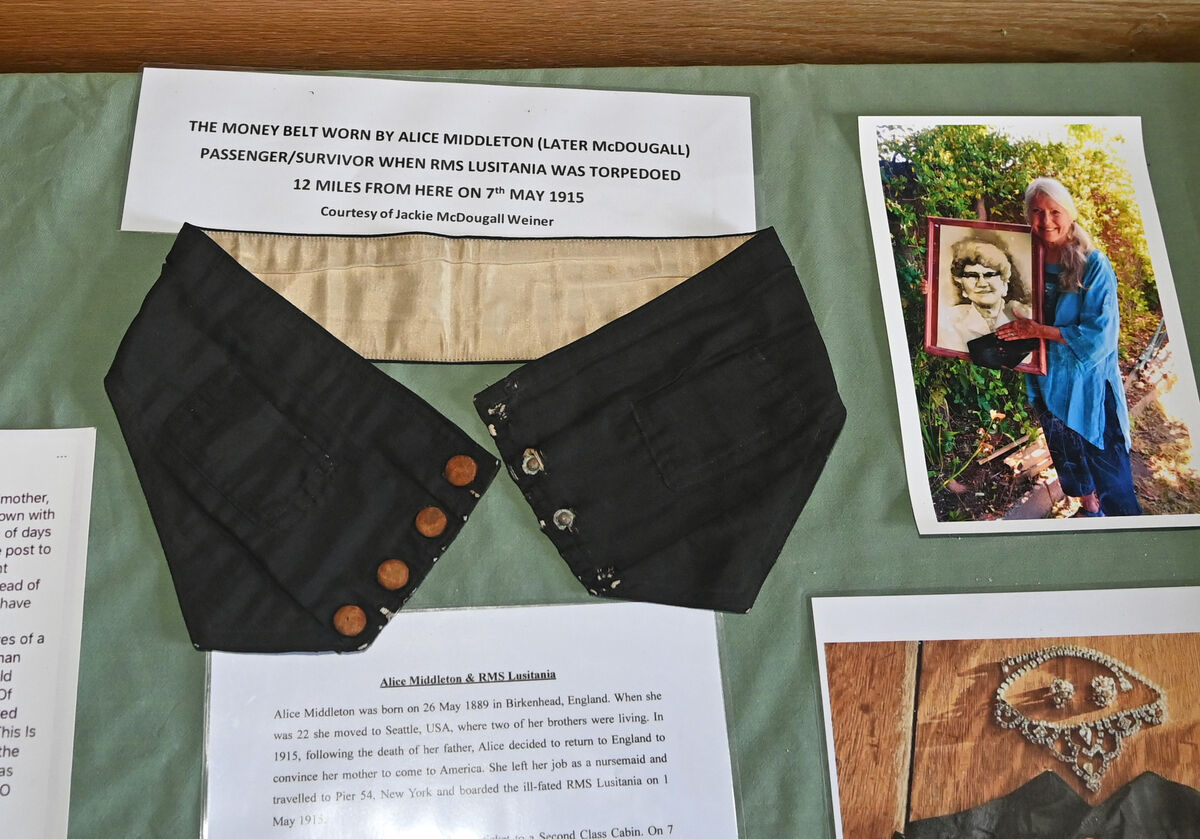
“A money belt will also go on display. It belonged to Alice Middleton who survived the sinking (as did 760 others). She was originally from Liverpool but later went to America. Her relatives living in America donated it to us,” Ms Shannon said.
The museum is showing them as a one-off on Friday night but plans to expand its facilities to provide state-of-the-art viewing cabinets to put them on permanent display.
The museum, which is run by locals, is a three-phase development, with the last phase being the crowning glory.
The first phase saw the signal tower refurbished and a small museum opened on the site at the Old Head in 2015 to commemorate the 100th anniversary of the Cunard liner’s sinking.
Two years later, the project, which is run by a local group, led to the opening of a memorial garden featuring the names of every man, woman and child who was on the ill-fated ship, along with all the crew.
“We’re now working very hard on the third phase, which will be the opening of a proper museum which will be the only one in the world entirely dedicated to the Lusitania. It will give us the space we need to adequately display the artefacts we have to a proper museum standard,” Ms Shannon said.
She said a lot of time has been spent on preparing a plan for this, as it is in "a sensitive area" and she and her group hope to lodge a planning application for it with Cork County Council before the end of the year.
Ms Shannon admitted this would probably cost “millions” of euro and the group will need funding from Government departments to see it come to fruition.
CONNECT WITH US TODAY



Be the first to know the latest news and updates