Gardaí investigating laser attack on search and rescue helicopter in Cork
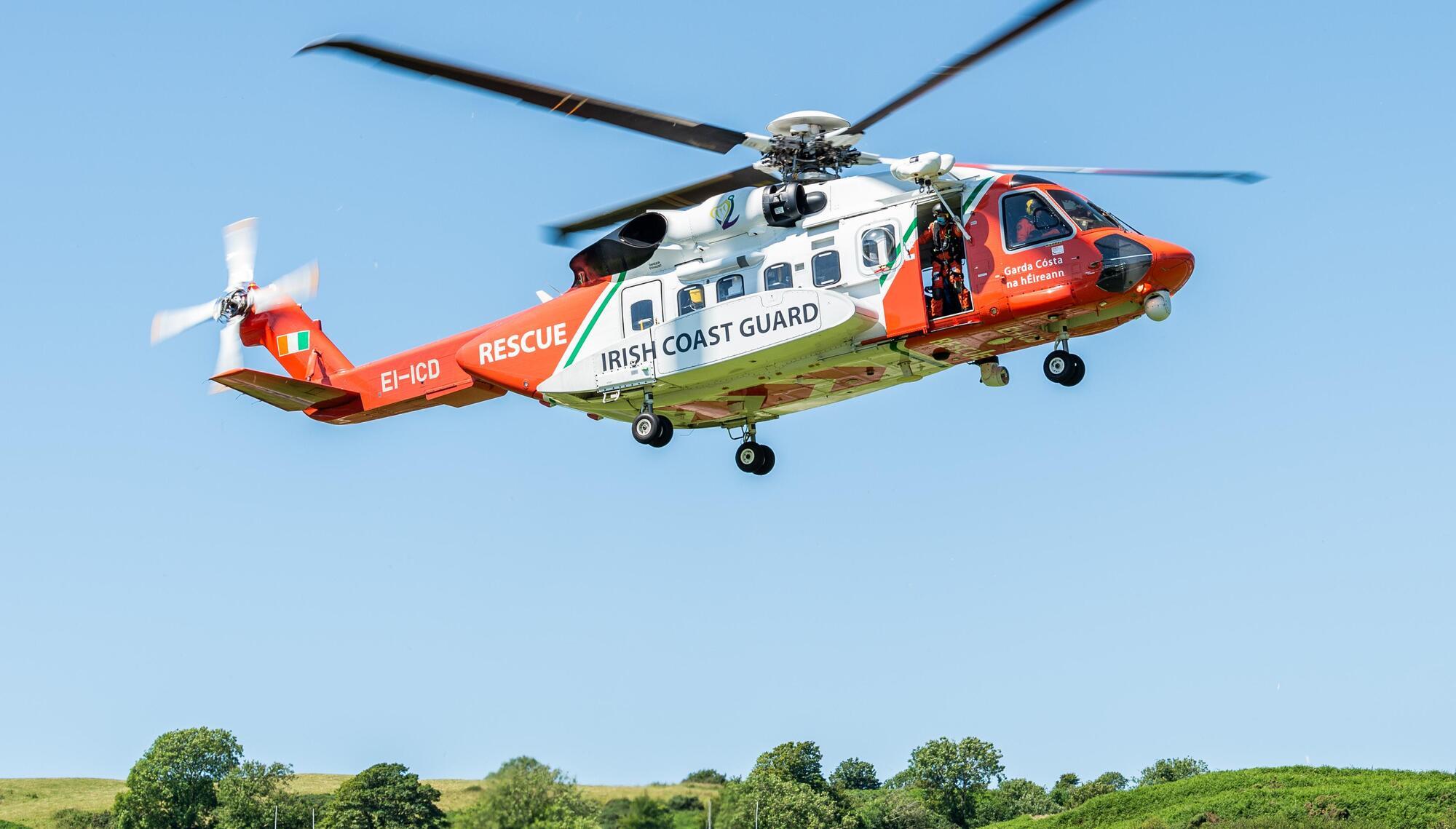
Details emerged on Thursday of a laser attack on a S92 Coast Guard search and rescue helicopter as it was engaged in a training flight over the Ballineen and Bandon area within the last two weeks. File picture: Andy Gibson.
A laser attack on a Coast Guard search and rescue helicopter over West Cork put the aircraft at risk, experienced flight crew have said.
Lasers directed at an aircraft in flight can bounce around the cockpit, distracting, disorientating, or even temporarily blinding pilots on the flight deck, which could be disastrous, a source said.
“Lasers pose no physical risk to an aircraft or to its engines but incidents like this, where you can have a pinpoint of green light bouncing around the cockpit can distract the crew, and that by extension puts an aircraft at risk,” the source said.
“They don’t know what’s going on inside the aircraft. It could be a critical phase of flight, either with a patient on board or on route to rescue a casualty. They need to be aware of that.”
The comments came after details emerged on Thursday of a laser attack on a S92 Coast Guard search and rescue helicopter as it was engaged in a training flight over the Ballineen and Bandon area within the last two weeks.
The incident did not affect the aircraft's flight path but Garda Frances Murphy of Bandon Garda Station told C103 that the pilot reported the incident to air traffic control at Cork Airport, which in turn contacted gardaí.
Garda Murphy said such incidents could have a serious outcome.
The source said laser attacks can be incredibly distracting to the flight crew of any aircraft at any stage of flight, but they are particularly dangerous during critical phases of flight such as take-off and landing, when the workload on pilots is extremely high, and their focus should be entirely directed at the various landing or take-off checklists and procedures.
“A laser light bouncing around the cockpit can be incredibly distracting — but especially at these critical phases of flight when a distraction of even just one or two seconds can be deadly,” he said.
He also said Coast Guard helicopters could be on route to an emergency, or transporting a critically ill casualty to hospital.
Meanwhile, the Baltimore volunteer lifeboat crew performed a medical evacuation for a woman living on Cape Clear on Thursday morning.
The crew launched its all-weather lifeboat at 8.30am following a request from the Irish Coast Guard, arriving at North Harbour on Cape Clear Island at 8.54am where they collected the casualty, and returned to Baltimore by 9.17am, where the crew handed the care of the casualty over to HSE paramedics, who transferred the woman to hospital.
The five volunteer crew onboard, coxswain Aidan Bushe, mechanic Cathal Cottrell and crew members Don O’Donovan, Micheal Cottrell and Pat Collins, described conditions during the call as windy but calm with a south easterly force 3-4 wind and very little sea swell.

CONNECT WITH US TODAY



Be the first to know the latest news and updates