Clean air zones and thousands of trees: Cork City Council unveils clean air strategy
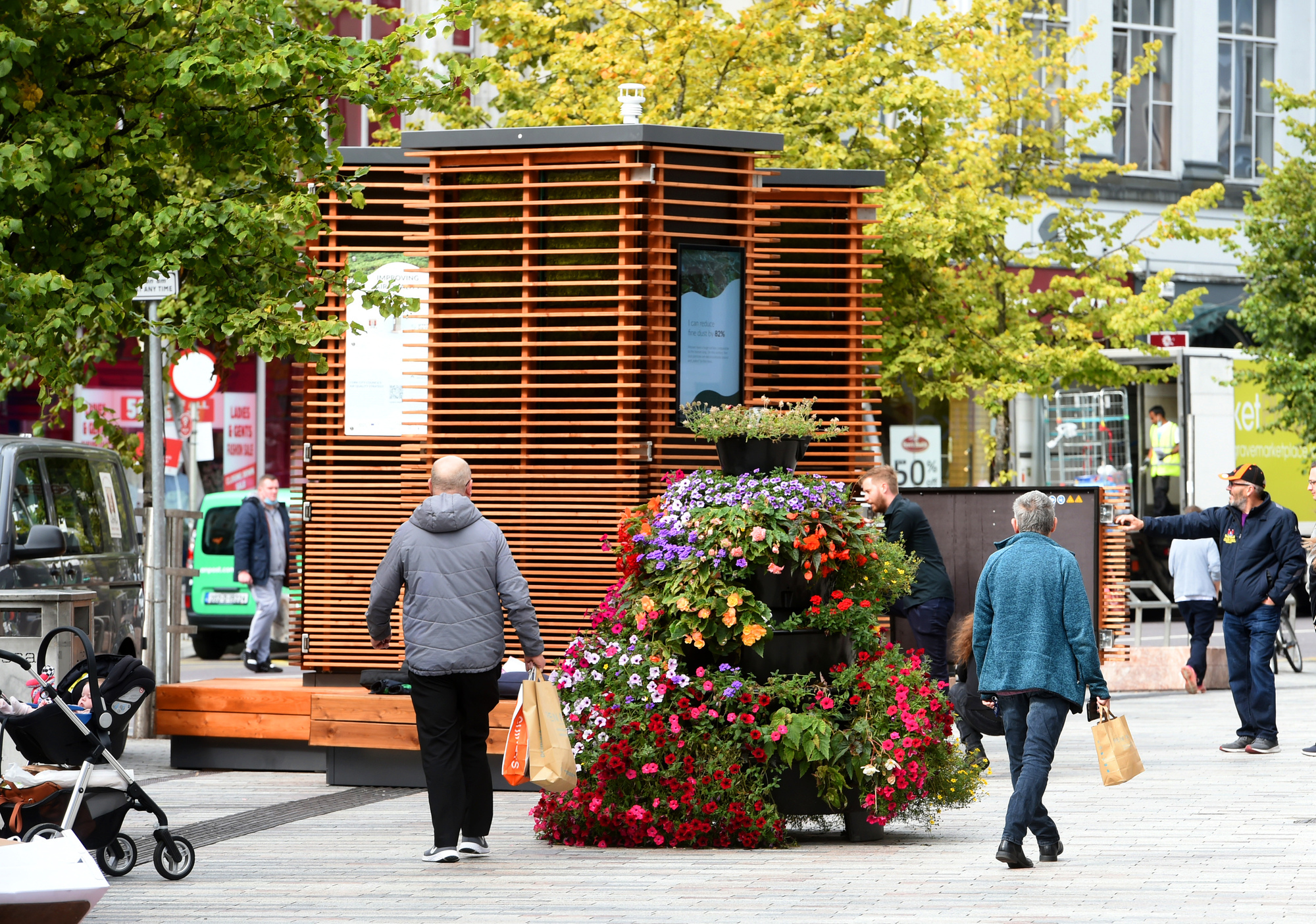
The new CityTree devices being launched in Cork City today. The Cork City Council Innovative Air Quality Strategy 2021-2026 plans to commission a study on the potential for introducing low emission or clean air zones. Photo: Larry Cummins
The prospect of a ban on heavy goods vehicles (HGV) from Cork city centre in favour of last-mile electric delivery has been raised following the launch of the city’s first air quality strategy.
And amid ongoing difficulties with the enforcement of the St Patrick’s Street bus lanes, the Lord Mayor says the measure needs to be reviewed, with more focus on enforcement.
Cllr Colm Kelleher made his comments as he launched the city council's Cork City Air Quality Strategy - the first local authority in the country to devise such a strategy - alongside three of the new CityTree devices, which have sparked controversy.
Director of Operations, David Joyce, said it will take several years for the €3.5bn CMATS public transport strategy to impact on traffic levels, and reduce pollutants.
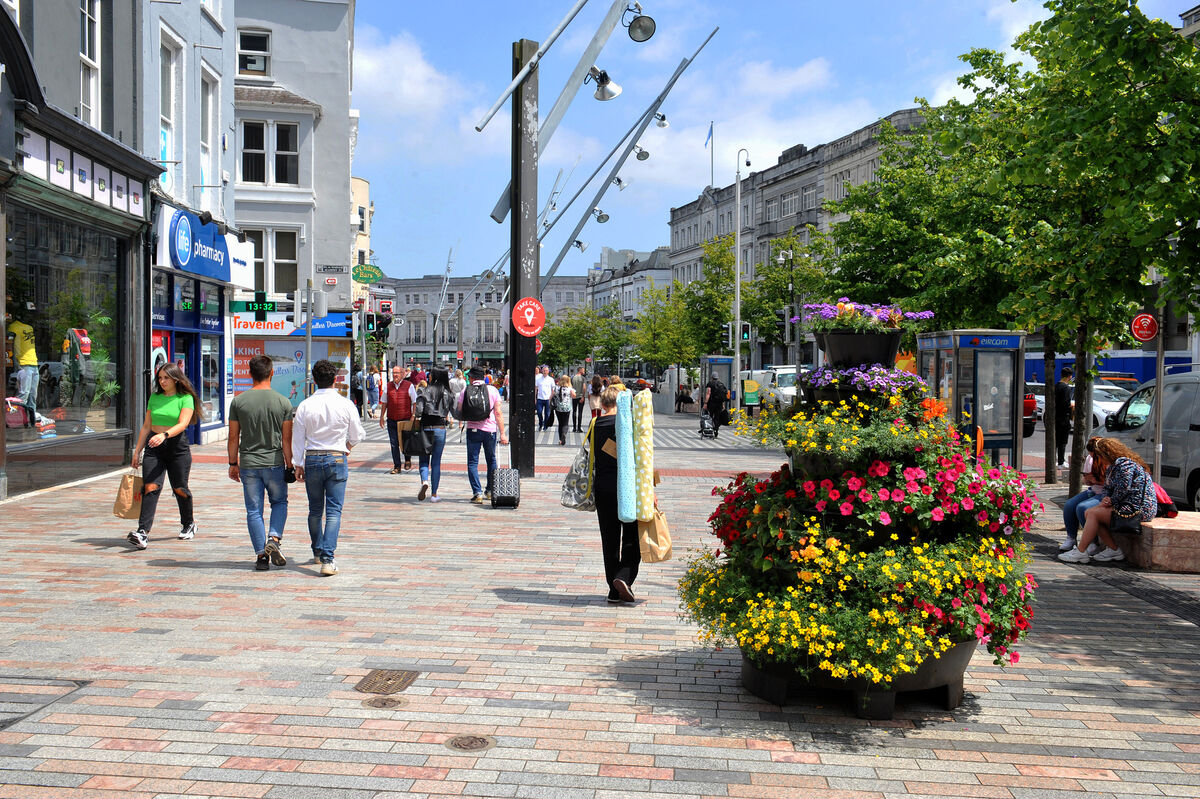
"Rather than sitting on our hands and doing nothing until that is delivered, it makes sense for us to make short and medium-term interventions to help with air quality - like the CityTrees, like the pedestrianisation of 17 streets, like the introduction of 20kms of protected cycle lanes, like the conversion of 75 city council fleet to electric vehicles," he said.
The air quality strategy sets out a range of short and medium goals over the next five years to reduce the concentrations of air pollutants in the city.
It includes plans to commission a study on the potential for introducing low emission or clean air zones, as well as assessing the current application of traffic-free vehicle restriction zones as part of wider efforts to reduce the volume of private vehicles on the city’s roads.
It plans to work towards assigning central roads within the city and Tivoli docklands solely for sustainable and active travel modes.
It plans to increase the rate of tree planting from 1,200 this year - six times the rate of last year - to 1,500 next year.
And it also includes plans for public awareness campaigns and a city-wide Clean Air Day, to trial an air quality forecasting system, to develop more green spaces, to promote public transport, and to build upon the city's existing air quality monitoring network - four stations used by the EPA and a network of 15 district level air quality sensors which are being monitored as part of a project with UCC’s Centre for Research into Atmospheric Chemistry lab.
While data collected by these devices is available online the strategy says it’s hoped to develop an air quality forecasting system too.
Green Party Cllr Dan Boyle welcomed the strategy and defended the spend on the CityTree devices saying it's important not to lose sight of the big picture.
"In local government, we have suffered in the past from officials being discouraged from taking risks and taking innovative approaches," he said.
"If there are different ways of doing things, they should be examined and tried.
"In terms of environment information, these could be useful and might be a trigger to properly police the St Patrick's St bus lane."
And despite controversy over the robot trees, he said he believes the council is "going in the right direction".
"But we need to keep people focused on where we need to get to. The problem is if we fixate on individual items, we are going to lose sight of the bigger picture," he said.
Proud that Cork City Council is first Irish local authority to have an Air Quality strategy. It is a foundation document that can be built upon. It identifies the risks that exist and the measures that have to be taken. https://t.co/OeYylmHZkK #AirQuality #CorkCityCouncil pic.twitter.com/THXlwnOWFb
— Iar Ard Mhéara Chorcaí, Cllr. Dan Boyle (@sendboyle) August 12, 2021
The Environmental Protection Agency’s (EPA) Report on Irish Air Quality 2019 stated that 1,300 deaths per year were due to poor air quality.
In addition, estimates indicate that air pollution has health-related costs in Ireland of over €2 billion per year; including the loss of 382,000 workdays per year. Researchers from the University of Birmingham and the University of Bern have also found “compelling evidence” of a link between air quality and the rate of Covid-19 virus uptake.
The research indicates that an increase in PM2.5 concentrations (more than 100 times thinner than a human hair) of 1μg/m3 is associated with up to 21% more deaths attributable to Covid-19 coupled with an increase in hospital admissions.
Data on Cork’s air quality is available on the Cork City Air Quality Dashboard.

CLIMATE & SUSTAINABILITY HUB
CONNECT WITH US TODAY



Be the first to know the latest news and updates