Cars may have been dumped in River Blackwater to stop bank eroding
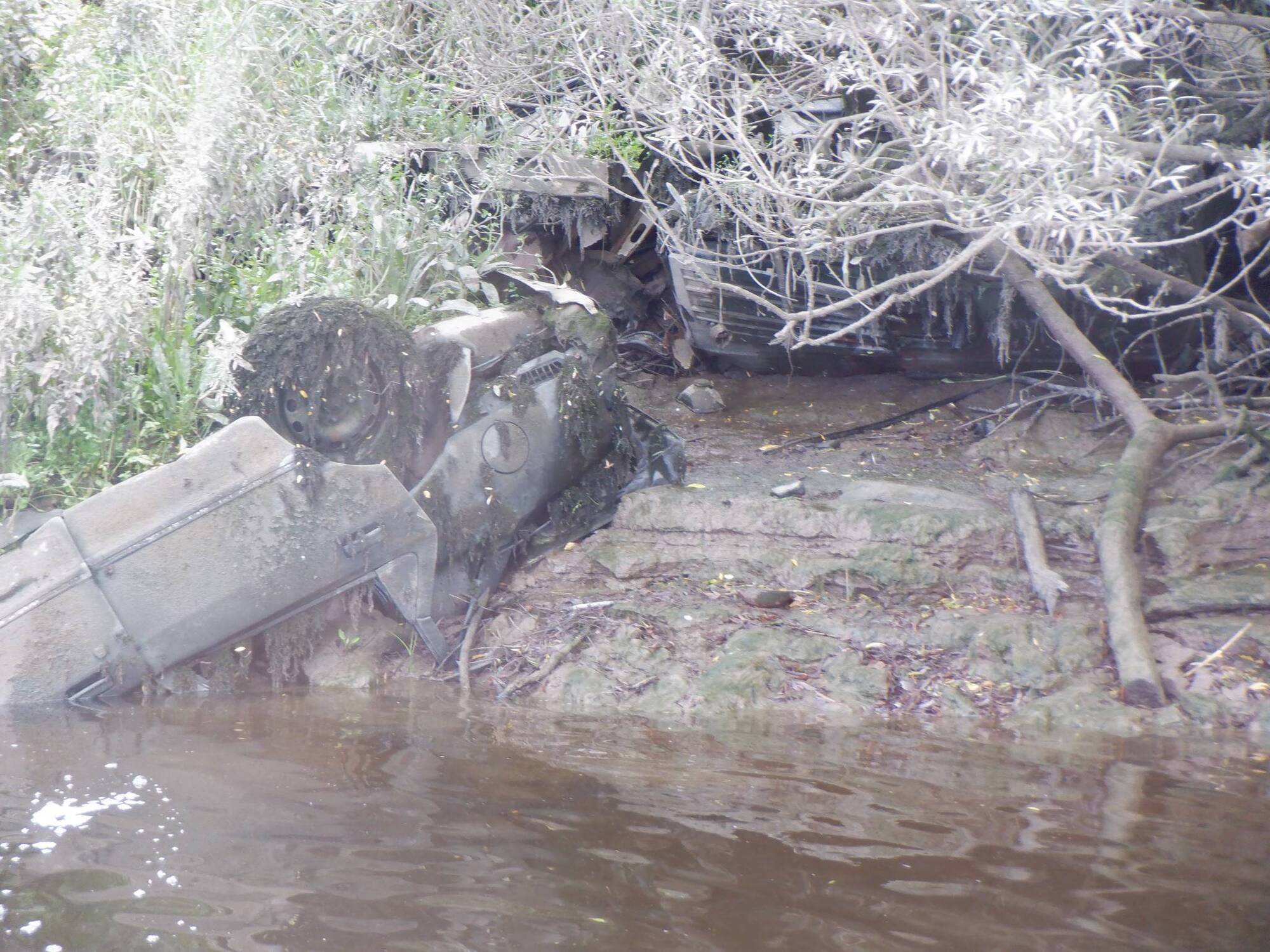
The corroded vehicles were discovered by journalist Dan McCarthy during a kayaking trip near the Dromana bridge, some 4km from Cappoquin. Photo: Dan MacCarthy
Waterford City & County Council has lent credence to a growing belief that an unquantified number of cars discovered submerged by a remote riverbank in west Waterford, were once dumped there as a measure to protect the embankment from erosion.
The corroded vehicles were discovered by journalist Dan McCarthy during a kayaking trip near the Dromana bridge, some 4km from Cappoquin.
Following media coverage, a man informed Fermoy-based newspaper that cars were frequently dumped in the area “to hold the bank together”.
Speaking under anonymity, the man estimated over 50 cars may have been dumped near Dromana up to 60 years ago. He did not indicate who may have dumped them and there is nothing to suggest the local authority did so.
The paper says used cars were similarly deployed “several decades ago” near Ballyduff, about 20km away.
Waterford City & County Council concurs that using end-of-live vehicles (ELVs) for erosion control on river embankments "was relatively common” a number of decades ago.
Online research reveals the practice persisted in many countries, including America and Australia, with the cars often filled with rocks. It became known as the ‘Detroit riprap’ after the American city most synonymous with automobiles.
Landowners found it cheaper and more effective than concrete and it persisted up to the 1970s.
In one account, Colorado rancher Tim Holt says many vehicles disappeared because “the river basically ate them”, adding that, “you don’t mess with Mother Nature!”
In Ireland, the Waste Management Act 1996 would certainly have outlawed the practice, with a 2006 EU directive on responsible disposal of ELVs underscoring that legislation.

Waterford City & County Council meanwhile has “inspected the site by drone and from the river” and has "contacted the National Parks and Wildlife Service and the Foreshore Unit in the Dept. of Housing, Heritage and Local Government".
A council spokesman was “not aware of any involvement by the council” in the placement of the cars in the river, observing that the site in question where the cars were found "is not adjacent to a road or other council infrastructure” that would have required intervention.
The council says water samples from the area showed "no sign of ongoing pollution associated with the vehicles”.
The spokesman adds that “no decision has been taken on whether to remove the vehicles”, but any such plans would be subject to “an appropriate assessment” to avoid damaging the habitat.