Cork student wins Young Scientist 2021 with 'deepfake' detection software
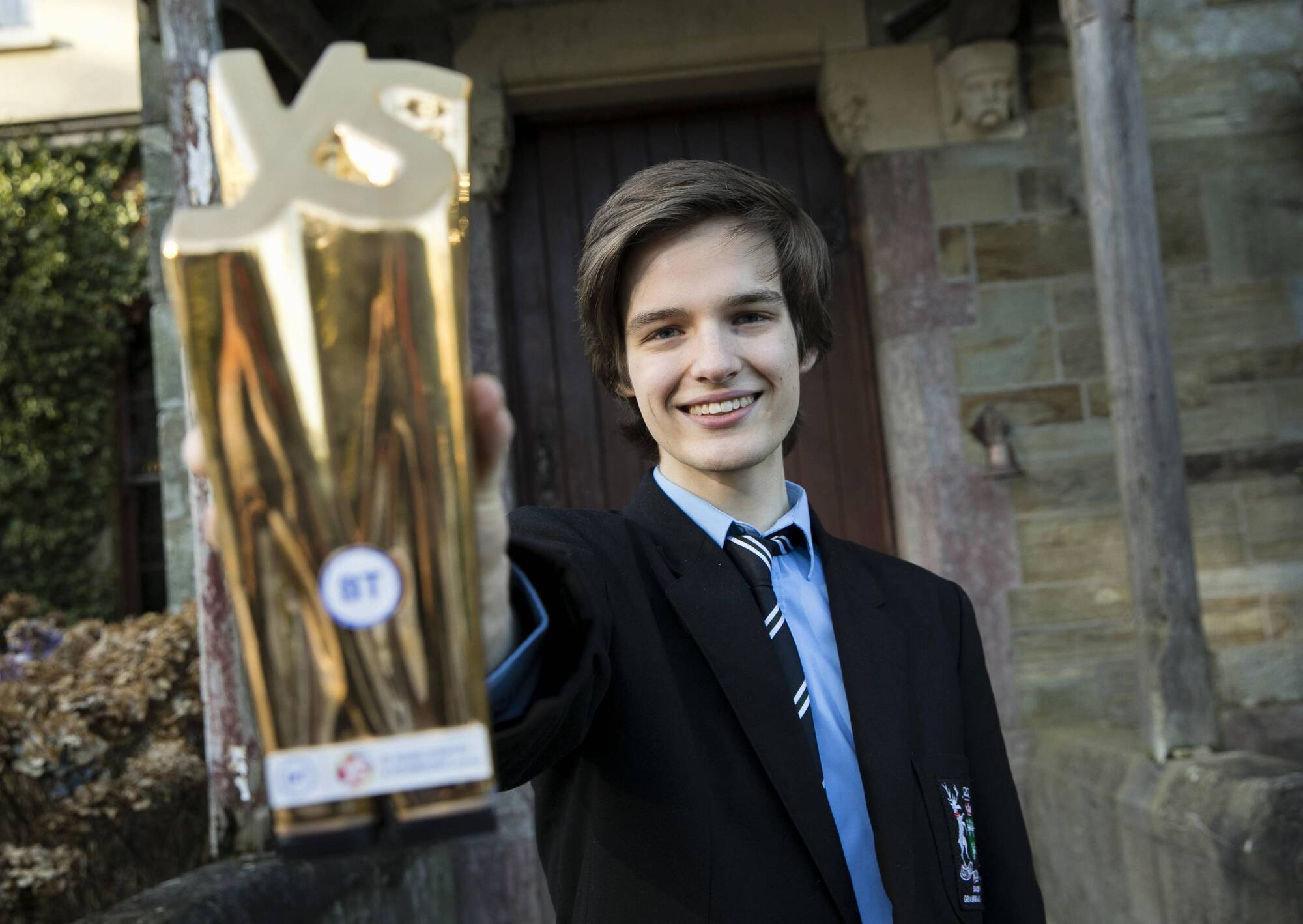
Gregory Tarr, 17, a 6th year student from Bandon Grammar School Co. Cork who was announced as winner of the 57th BT Young Scientist & Technology Exhibition. Picture: Chris Bellew /Fennell Photography
A Cork student has been named the overall winner of this year's BT Young Scientist of the Year as the annual event draws to a close today.
Greg Tarr from Bandon Grammar School saw off tough competition with his computer program which is designed to detect 'deepfake' videos.
He will take home the €7,500 top prize for his project 'Detecting state-of-the-art deepfakes'.
Sixth-year student Greg, who has entered projects to the competition for the past few years, presented his project in the senior age group of the Technology category.
The project uses a sophisticated artificial intelligence software program that can efficiently detect DeepFake media with state-of-the-art accuracy.
The software, which is over 150,000 lines of code, made significant improvements on speed and efficiency when compared to the current best model without sacrificing its ability to accurately detect the fake.
The tool could potentially be deployed at scale to filter out DeepFake media making the internet a safer place.
Greg will go on to represent Ireland at the European Union Contest for Young Scientists in Salamanca, Spain in September 2021. At this time the contest is scheduled to go ahead as planned.
At the virtual ceremony, Greg joined online from his home in Bandon. “I don’t know how to feel, to be honest, this is such an honour” he said when asked how he felt on winning the prize.
“Lots of screaming and shouting, mostly shock and telling my parents to calm down were my first reactions,” he added.
Winner of the 2021 @BTYSTE is
— Stripe Young Scientist & Technology Exhibition (@StripeYSTE) January 8, 2021
Gregory Tarr, Bandon Grammar School, Co Cork. For his project ‘Detecting state of the art deepfakes’
Stand 4308 on our virtual portal.
Well done, and thank you, everyone for embracing a digital-first exhibition due to Covid-19#BTYSTE #beyondlimits pic.twitter.com/9UgNnV5GFH
Chair of the Technology judging panel, Mr Leonard Hobbs from Trinity College Dublin, said that “the winner this year demonstrated an expertise in computer science which was well beyond his years.
"The level of coding he deployed in developing the extremely complex program which detects fake videos, was guided by his deep understanding of the state of the art of this leading-edge technology."
He went on to say that “the judges have been continually impressed by Gregory’s projects at the BT Young Scientist competition over the past few years and they were delighted that he had progressed to winning the top award this year."
This is the second year in a row that the winning project has come from Cork.
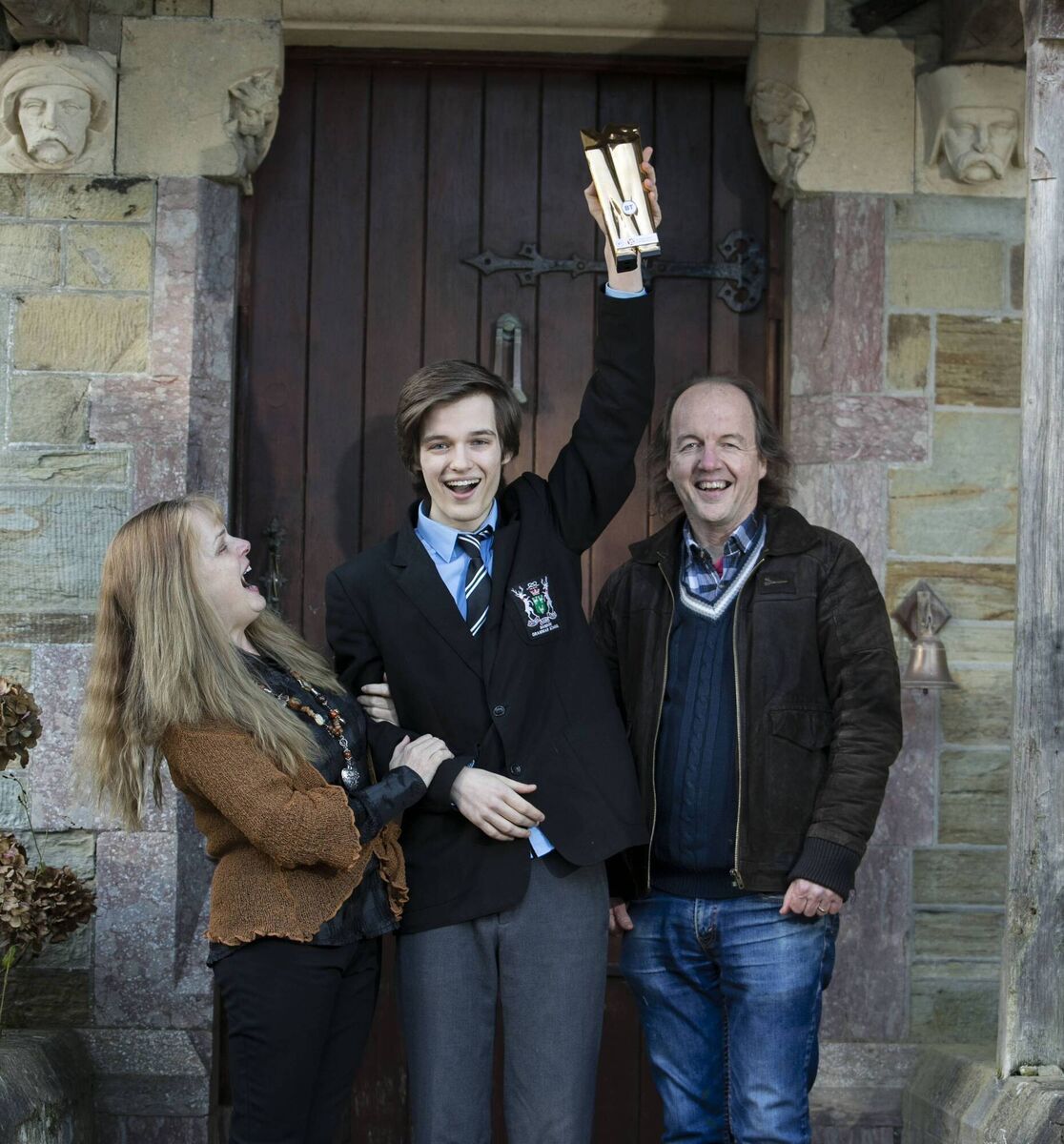
Last year, Ballincollig students Cormac Harris and Alan O'Sullivan won for their groundbreaking research on the prevalence of gender stereotyping in 5-7-year-olds and the development of an initiative to combat gender bias.
This year, the majority of projects came from schools in Cork with the Rebel County accounting for 120 of the finalists.
Two other Cork projects received accolades at the 2021 BTYSTE.
Jack Quirke from Colaiste Treasa received the Individual runner-up award for his project 'Investigating possible vegetable oil toxicity using nematodes as environmental bioindicators'.
While Isobel Hynes and Ava Hynes from Colaiste Treasa won the Group runners-up award for their project 'Use of the Health Belief Model to investigate elements informing young people’s attitudes towards Covid-19 and subsequent impact on response to restrictions and vaccine uptake'.
Read More
A huge number of this year's projects focused on health and the impact of Covid-19 with topics varying from exploring the effects lockdown may have had on different socio-economic groups, to investigations into the effectiveness of different types of facemasks and the impact of hand sanitizer on our skin.
This year the BT Young Scientist of the Year was held virtually for the first time due to the ongoing Covid-19 pandemic.
Speaking at today’s award ceremony Shay Walsh, Managing Director, BT Ireland commended all of the participants for their ingenuity and for showcasing the talent among the young people of Ireland during an uncertain and difficult time.
"When I reflect on last year’s award ceremony, when I spoke in front of an audience of over 1,800 people, little did I know what creativity, critical thinking and technical innovation we would need to use to be able to deliver this exhibition during a pandemic.
"Students this year really went beyond limits to present their projects to our judges online and they are a credit to their schools, communities, and families. I would like to thank all of those who put such a remarkable event together this year in a virtual setting.
"You’ve spotlighted the talent that exists in communities across the island of Ireland and at a time when we must stay at home, you have helped showcase that talent to people across the world – as of this morning visitors from 77 countries have viewed the online exhibition.”
The public will have free access to the BTYSTE 2021 portal content until the end of January. You can check out the content here.
CONNECT WITH US TODAY



Be the first to know the latest news and updates