Seán Rooney inquest: Captain of fatal convoy was 'unaware' fellow soldiers didn't know route
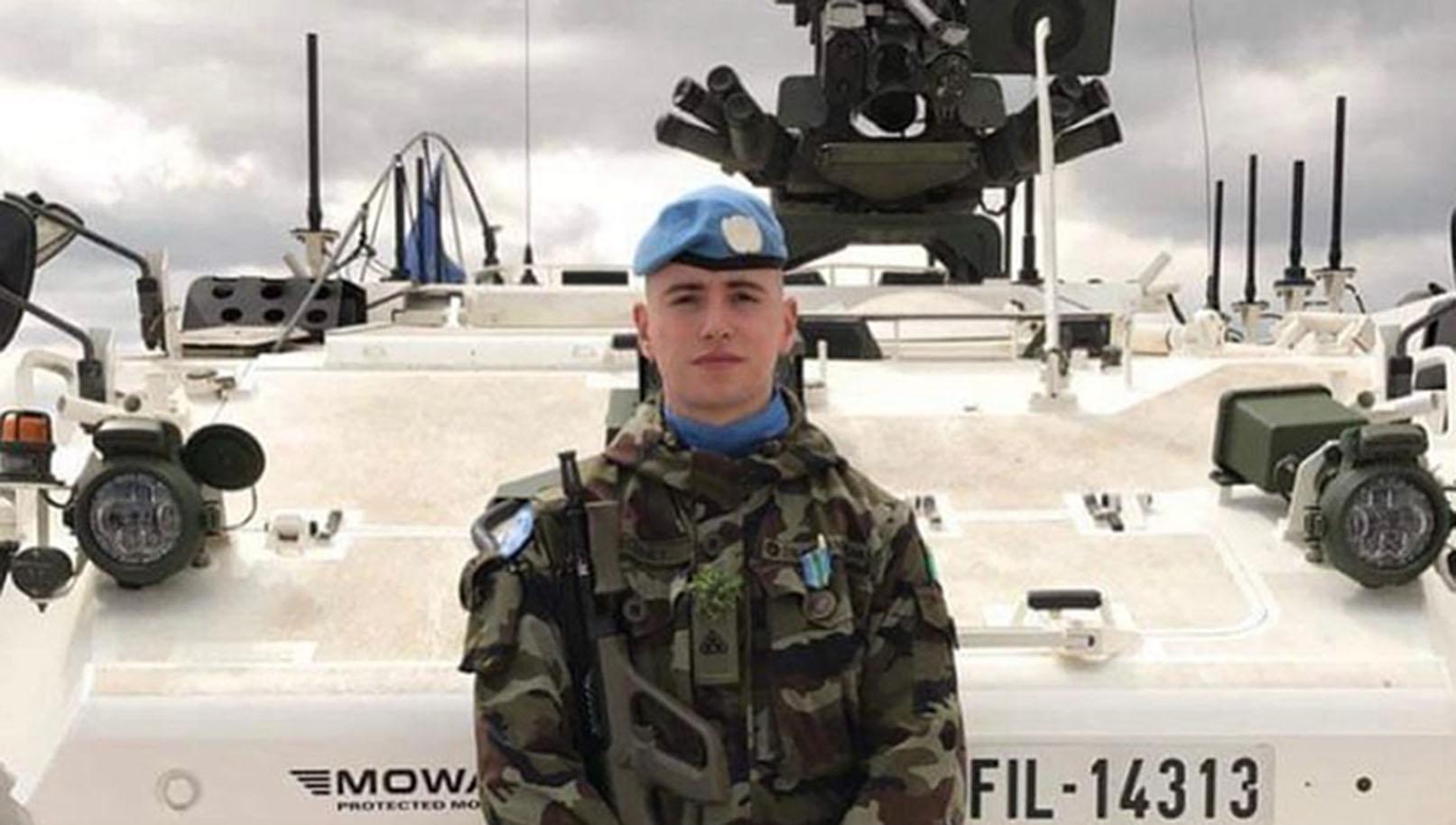
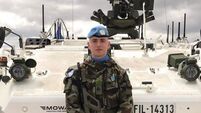
Private Seán Rooney: The 23-year-old, who was serving with a UN peacekeeping mission, died when his convoy came under attack. File picture
The commanding officer of the convoy on which Private Seán Rooney lost his life has said he was unaware the other soldiers on the trip through hostile Lebanon had no knowledge of the route they were taking.
Captain David Kelly told the inquest into Pte Rooney’s death that he was similarly unaware that none of the other seven soldiers in the two-car convoy had ever been part of such a convoy before.
“No I wasn’t aware of that,” said Capt Kelly.
He said he had been aware that three of the four soldiers in Pte Rooney’s armoured vehicle had “done previous tours, but I was not aware that they didn’t know the route”.
He said no one had told him at the time that they were unfamiliar with the route.
Read More
Capt Kelly told the jury at Dublin District Coroner's Court that he had no part in selecting the soldiers for the convoy or in assigning drivers.
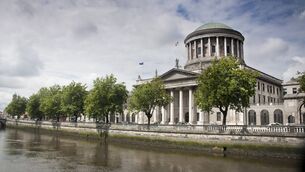
Pte Rooney was shot dead after his four-man vehicle became stranded among a hostile crowd after becoming separated from the lead vehicle in the village of Al Aaqbiyeh in northern Lebanon on December 14, 2022.
Capt Kelly told the inquest he was “unaware” of any map at the soldiers’ base, Camp Shamrock, which would have detailed the route the convoy was to take to Beirut airport. The base’s maps only covered the Defence Forces’ immediate area of operations, he said.
He said he gave travelling soldiers a briefing for “10-15 minutes” at the cars before leaving Camp Shamrock at 9.30pm on the night in question.
It was put to him that every other soldier present in the convoy, who has given evidence at the inquest, said they would ordinarily expect a longer briefing of up to an hour ahead of a mission. Capt Kelly said: “I’m going to say that is not correct”.
He said such a briefing could take place if a multiple-vehicle convoy involving other military forces was being conducted, but not for a routine mission.
He noted that he had made the run to Beirut airport some 40 times previously without incident.
Seán Guerin SC, for Pte Rooney’s family, put to him that he would have been aware that the other soldiers present had no knowledge of the airport route if he “had briefed them properly”. Capt Kelly replied that “there would not have been any expectation on me to”.
“These were trained soldiers,” he said, adding that there would be “a reasonable expectation that they would raise issues if they had any”.
“Trained soldiers in the Middle East, I can comfortably say, have the ability to ask questions."
He disagreed that in leaving the UN’s area of operations at the Litani River, the point at which the convoy became separated, the group was moving into a more dangerous area, replying “not necessarily”.
He said he could relate stories of DFOMs (denial of freedom of movement, to which Pte Rooney’s vehicle was subjected immediately prior to his death) within the area of operations.
Asked why there was no formal record of communications between the convoy and Camp Shamrock between roughly 10.15pm and 11.20pm — the time at which the attack on Pte Rooney’s car by a hostile crowd came to a head — he said there needed to be a distinction between casual communications with the watchkeeper and “more important ones” with the base’s tactical operations centre commander.
There is no formal record of the convoy having requested permission to leave the area of operations at the Litani from Camp Shamrock. Capt Kelly said he would be “incredibly surprised” if that approval had not been sought.
Capt Kelly agreed that navigating through Lebanon at night is “difficult”.
Asked how the front car had not noticed that Pte Rooney’s vehicle had not followed them from the Litani, he said that after the UN flags are taken off vehicles at the river, “there isn’t a defining marker” to be seen.
He said when his own car left, he had seen lights behind him and had “thought it was” the second car.
He said he first became aware that the second car had become separated just before 10.45pm. Having taken a turn for the main coastal highway into Beirut, he saw the vehicle behind him and realised it was not the second car.
“Cars can separate in a convoy. We pulled in and waited. We waited slightly too long,” he said.
Capt Kelly’s evidence will continue on Wednesday afternoon.
CONNECT WITH US TODAY



Be the first to know the latest news and updates