Mosque bomb plotters brought 'shame and embarrassment' to Ireland
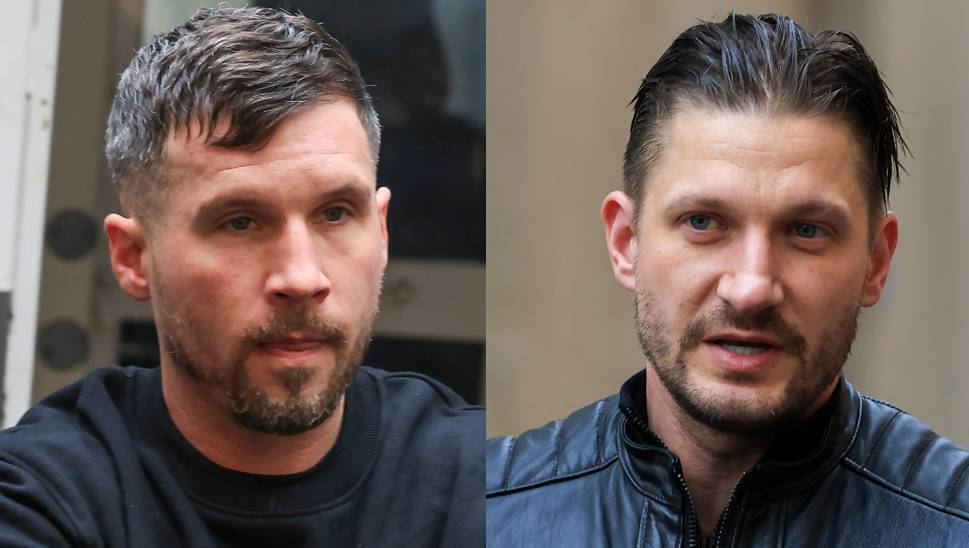
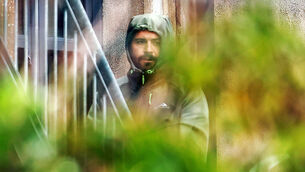
Garrett Pollock was sentenced to 10.5 years and Karolis Peckauskas was sentenced to eight years. File pictures: Colin Keegan/Collins
Ireland is a diverse, multicultural country — and three men who formed part of a terrorist group that plotted to attack a Galway mosque using pipe bombs have brought "shame and embarrassment on all of us", a judge has said.
Ms Justice Caroline Biggs, presiding at the three-judge Special Criminal Court, handed down a sentence of 10-and-a-half years, with the final year suspended, to the man deemed the most culpable of the three, Garrett Pollock.
She sentenced his co-defendants Karolis Peckauskas and Darren Gorman to eight years each, also with the final year suspended.
Pollock, aged 36, Gorman, aged 34, and Peckauskas, aged 39, previously apologised for the planned attack, which was foiled when gardaí carrying out random drug searches found explosive materials, weapons, and evidence relating to the terrorist organisation calling itself the Irish Defence Army in a car in which Pollock and Peckauskas were travelling.
Ms Justice Biggs said the planned attack was thwarted not by the conscience of those involved, but by good Garda work. She said the offending was motivated by hatred and carried a "sinister and terrorising message" that was to be spread worldwide in furtherance of the terrorist activities of the "self-styled Irish Defence Army".
She said the plot involved careful planning, premeditation and the use of improvised explosive devices which Pollock had tested to ensure they would work. If detonated at the mosque, which is a busy place of "prayer and peace" surrounded by apartments and houses, the devices could have caused "huge and irrevocable damage", she said.
Although the plan was not carried through, the judge said the court had to consider the "profound emotional distress" caused to the Islamic communities of Ireland and the "impact on the country as a whole".
She said it was right that each of the accused had apologised to the nation because Ireland is a diverse, multicultural country.
She added: "Their actions bring shame and embarrassment on all of us."
She noted that Peckauskas came from Lithuania to Ireland and "took what was on offer", becoming part of the "rich fabric" of Irish society.
She said the defendants had taken a view that there is a "hierarchy of immigrants", some who are welcome and some who are not.
She said the three men believed they should decide who stays and who does not and described their views as "disturbing".
The defendants said they were radicalised through social media, but Ms Justice Biggs said the fact the same material is available to everyone suggests it didn't take much.
Every child, she said, knows about how algorithms on social media manipulate information, adding that these men acted not as 'automatons', but made their own decisions and "went down rabbit holes", seeking out radical material.
She said their group had no respect for the rule of law and had decided to take the law into their own hands. Pollock and Gorman, she said, had submitted that their involvement was born from their lack of self-esteem, sense of failure in their own lives, and a desire to be part of a community or to achieve an "ego boost".
However, Ms Justice Biggs said testimonies from their families and friends showed that they had a community available to them.
She said the community they chose was not one of patriotism or concerned parents but of "hooliganism and thuggery born out of a need for status". She said they sought a community that wanted to visit violence, chaos, and destruction against a community that had done them no wrong.
Pollock, she said, had a leadership role and has the greatest culpability. He had devised the organisation's manifesto, created a manual for making explosives, and shared information with other members. It was not possible to distinguish between Peckauskas and Gorman in terms of their culpability, she said.
Mitigating factors included that none of the three had relevant previous convictions or a history of involvement in terrorist activities. Peckauskas and Pollock have been in custody since their arrests and have used their time well. Gorman, she said, had made efforts to deal with his drug addiction issues.
She said all three had pleaded guilty, exhibited genuine remorse, and have children who will "not have a father for the foreseeable future".
Having passed sentence, she said each must comply with the directions of the probation services when they enter the suspended portions of their terms.
Pollock, of Kilhorne Greene, Annalong, Co Down previously pleaded guilty to a charge of attempting to engage in a terrorist activity or a terrorist-linked activity contrary to section 6(1)(a)(ii) and 7(1) of the Criminal Justice (Terrorist Offences) Act 2005.
The details of the offence are that between November 4 and 5 2025, the defendants attempted to engage in terrorist activity or terrorist-linked activity by attempting to set fire to the Maryam Mosque at Old Cottages, Monivea Road, Galway, an offence which was aggravated by hatred.
Gorman, of O’Moore Place, Portlaoise Co Laois, and Peckauskas, with an address at Newfoundwell Road, Drogheda, Co Louth, both pleaded guilty to the same offence.
The three-judge court previously heard that the plot was foiled when gardaí carrying out a routine drug stop became suspicious and searched the car that Pollack and Peckauskas were travelling in. In the boot, gardaí discovered bomb-making equipment along with a manifesto for a group calling itself the 'Irish Defence Army' complete with crests and logos.
They also discovered a statement written in the past tense claiming responsibility for bombing the Galway mosque.
Gardai searched Pollack's van, which was parked outside Peckauskas's home in Drogheda, and found a hidden drawer containing four IEDs. The detective said gardaí believe that Pollack had previously tested explosives to ensure they would work.
Peckauskas has no previous convictions. Pollack has 18 convictions for road traffic offences and one for resisting and obstructing police in Northern Ireland. Gorman has six previous convictions for road traffic offences.
Det Inspector Alan McDevitt previously told Edward Doocey BL, prosecuting, that the 'Irish Defence Army' formed in October 2025 as a splinter from the larger 'Irish Citizens Army'.
He described the splinter organisation as a right-wing, extremist, terrorist group with an anti-immigration ideology. He said the discovery of explosive and incendiary devices linked to the group indicated a real and imminent attack was planned and that they intended to target minorities.
Technical experts examined Pollock's phone and discovered he was using the encrypted messaging app Signal to communicate with others regarding the planned terrorist attack. He had created a group called 'Shadows of Eire' and used artificial intelligence to design a manual for making IEDs which he shared with the rest of the group.
The group had also filmed a video in which they wore balaclavas and warned that they would carry out further attacks, saying: "An eye for an eye is going to be our approach going forward."
They said legitimate targets would include mosques, anyone who facilitated the development of accommodation for international protection applicants and estate agents who "house these thugs ahead of our own".
They said they would not target women or children "unless the woman is a threat to our country or loved ones".
CONNECT WITH US TODAY



Be the first to know the latest news and updates