Solicitors 'one after the other stood up, withdrew their services, and then left the courtroom'
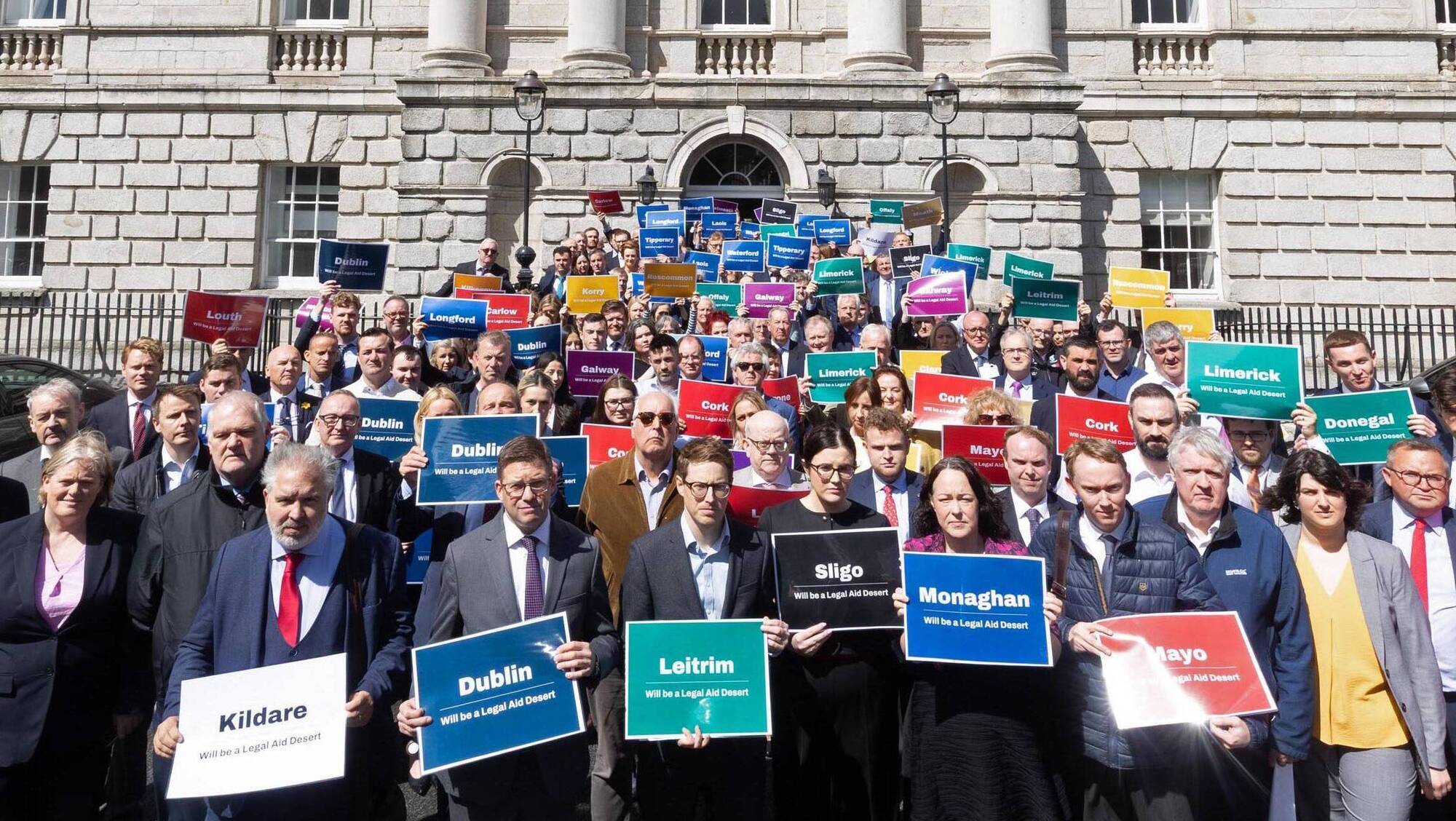
A meeting of more than 150 solicitors was held at the Law Society’s headquarters last week to discuss the implications of the proposed changes and potential responses from the profession.
A solicitor involved in the withdrawal of criminal legal aid services has described the first day of action as a success, as court business was disrupted across the country following a co-ordinated protest over proposed changes to the fee structure for defence work.
Cathy McDarby, a criminal defence solicitor, at the law firm McDarby & Co Solicitors, said lawyers in courts nationwide stood up one after another to withdraw their services, resulting in widespread adjournments.
“In Castlebar, when the first case was called, the first solicitor stood up and stated that they were withdrawing their services, and then after that, the next solicitor, and every solicitor in the courtroom, one after the other stood up, withdrew their services and then left the courtroom," said Ms McDarby.
“After that the judge adjourned all matters and that will be the same thing that's happening [on Thursday] and on Friday and it is happening in different variations of that across the country."
Read More
Ms McDarby said the withdrawal of services by solicitors on an individual basis would continue over the coming days and that similar action had taken place in multiple courts.
The protest has led to significant disruption in the district court system.
The dispute centres on proposed reforms to the criminal legal aid scheme due to come into effect on July 1, which would replace the current per-appearance payment system with a flat fee per client.
At present, solicitors are paid €239.38 for an initial district court appearance and €59.86 for each subsequent hearing.
Under the new model, a single fee of €455 would be payable per client regardless of the number of court appearances required.
Practitioners argue the change effectively removes the link between workload and remuneration, particularly in cases involving multiple hearings, adjournments, and ongoing criminal proceedings.
The Law Society has said it is not organising the protest but that its members have significant concerns about the reforms and is continuing engagement with the Department of Justice.
A meeting of more than 150 solicitors was held at the Law Society’s headquarters last week to discuss the implications of the proposed changes and potential responses from the profession.
Separately, solicitors in Cork have voted to escalate their action, including withdrawing services in custody cases from next week, with an exemption for juvenile matters.
Legal aid practitioners have warned that the reforms could make district court defence work increasingly unviable, while the Department of Justice has said it is engaging with stakeholders and that the changes are intended to make the system more efficient, fairer, and faster.
“You get €455 for one case under the new guidelines” said Ms McDarby.
“But that one case could be adjourned ten times and there is a lot of work going on in the background, particularly in the juvenile cases, you have to work with young people and help them along the way. You have to get to know them.
“I have received a lot of support from clients already” she said.
“The work has increased, the clients have increased, but the fees have not and so many of us are invested and do very long hours.
“In juvenile cases, there are very, very vulnerable clients, there's an awful lot of work that goes into juvenile cases and there's a lot of work with probation services and bringing them along and coming back to court month after month to see are they doing what the courts have asked, but there are no changes overnight.
"These juveniles, we want them out of the system. I don't want to see them as adults in court, but you need to work with them for months and months as juveniles to get to a point where you know that they're never going to come back to the system.”
Ms McDarby said the work in the courts has also increased, but solicitors are still not getting paid for it.
“The rates have not gone up and now you can’t go back to the office and work in the evening the workloads is too large."
CONNECT WITH US TODAY



Be the first to know the latest news and updates