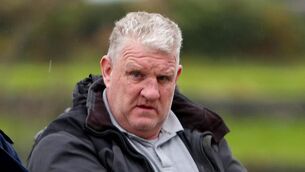
'King Scum' Tony Felloni died after collapsing on toilet in rehab, inquest rules
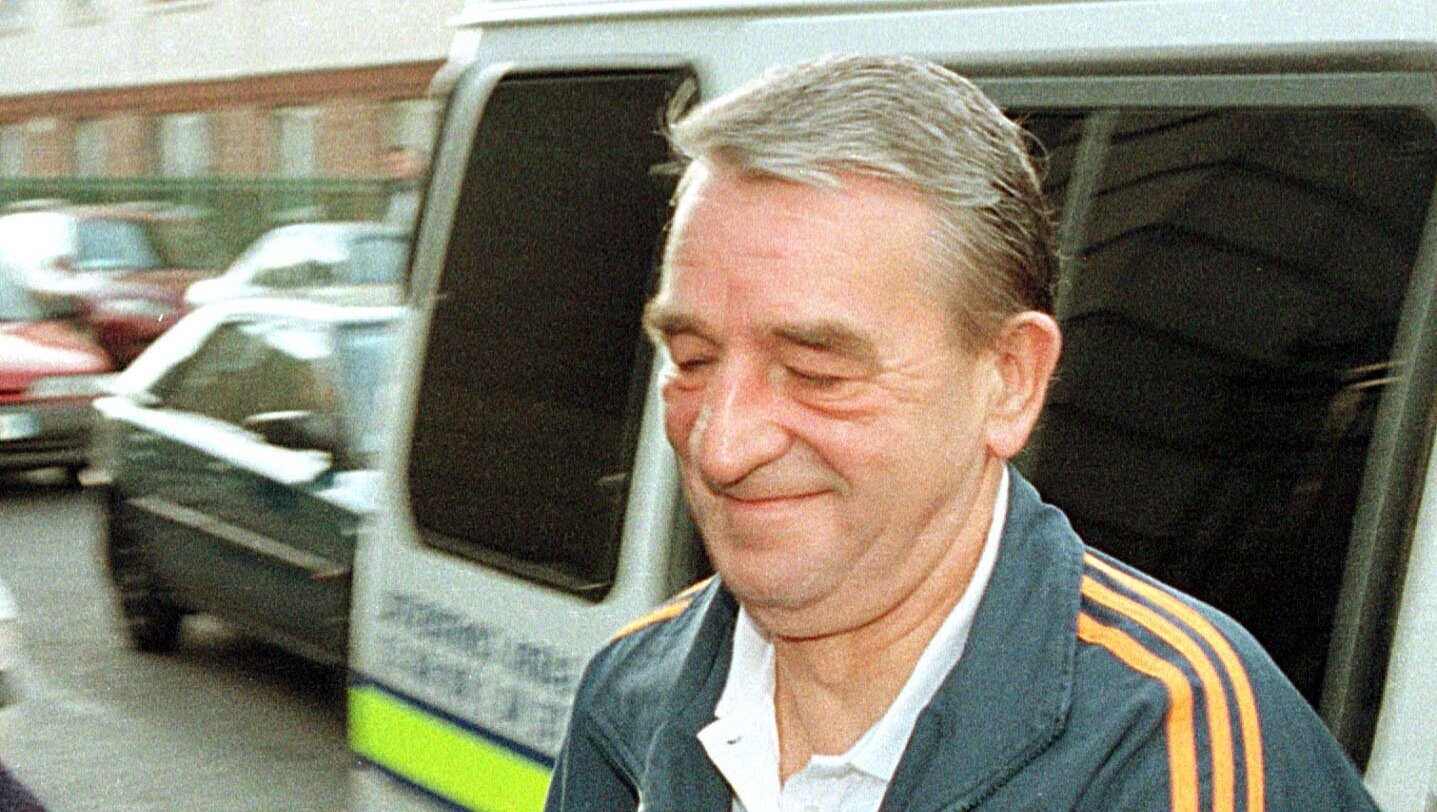
Tony Felloni ahead of a court appearance in 1998. A sitting of Dublin District Coroner’s Court on Thursday heard Felloni had suffered a series of falls in the months before his death. File picture
One of the most notorious criminal figures in Dublin’s illegal drug trade, Tony Felloni, died after suddenly collapsing while on a toilet in a rehabilitation facility two years ago, an inquest has heard.
Felloni, aged 81, a divorced father of seven with an address at Drumcondra Road, Dublin 9, who had the nickname 'King Scum', was pronounced dead at the Mater Misericordiae University Hospital on April 22, 2024.
He had been transferred to the hospital’s emergency department by ambulance after becoming unresponsive in Clontarf Hospital where he was recovering from several broken ribs following a fall at home.
A sitting of Dublin District Coroner’s Court on Thursday heard Felloni had suffered a series of falls in the months before his death. The result of a postmortem examination showed he died as a result of hypovolemic shock after suffering a loss of two litres of blood from an injury to his spleen.
Pathologist Eamon Leen gave evidence that he believed the injury to Felloni’s spleen had been caused by a fall. Prof. Leen said a normally healthy young adult would struggle to cope with such a loss of blood.
In reply to questions from coroner Clare Keane about what triggered the fatal injury, he said “something dramatic and acute happened in the hours before his death".
While he originally believed that Felloni had suffered a fall, Prof. Leen accepted it was possible the injury to his spleen could have been triggered by “a minor trauma” such as hitting against something, given Felloni’s underlying health conditions.
The pathologist observed that a spleen is essentially “a bag of blood,” while also noting that the deceased was on blood thinning medication at the time.
The inquest heard he also suffered from heart disease, arthritis, osteoporosis, and chronic obstructive pulmonary disease.
A consultant geriatrician at the Mater, Colin Mason, gave evidence of the care provided to Felloni after his admission to the hospital on March 30, 2024, following a fall at his home.
Dr Mason said the deceased had been suffering multiple falls including four in the previous month.
He said tests confirmed that Felloni had suffered three broken ribs and a fracture of his lumbar spine. The inquest heard a healthcare assistant in the Mater had also found the patient on his knees in the hospital after his legs gave way on April 2, 2024.
Dr Mason said there was no evidence that Felloni had suffered any new injury in the fall.
The inquest heard he was transferred to Clontarf Hospital for rehabilitation care on April 6, 2024.
Another consultant geriatrician, Lucy Chapman, said Felloni’s mobility had improved during his stay and he was due to be discharged on April 24, 2024, once increased homecare provision had been arranged.
Dr Chapman gave evidence that tests would be carried out to ensure Felloni would be able to get up and down stairs in order to be allowed to go home.
She recalled that he had been allowed to leave the hospital on April 19, 2024, with a friend to attend to a financial matter after he had declined the offer of being accompanied by a care assistant.
A nurse at Clontarf Hospital, George Reyes, gave evidence of wheeling the patient on a commode into a toilet at around 5.45am on April 22, 2024, after he had complained of being unwell and feeling nauseous.
Mr Reyes said Felloni was “pale, cold, and clammy with slurred speech” before he lost consciousness.
Evidence was heard that efforts to resuscitate the patient were unsuccessful.
In reply to questions from Brian Sugrue, counsel for the State Claims Agency, Mr Reyes said Felloni had not suffered any fall under his care.
The inquest heard the deceased’s body was formally identified to gardaí by his daughter, Regina.
Ms Felloni, who had remained close to her father, was expected to attend his inquest but failed to show up at the hearing.
Recording a verdict of accidental death, Dr Keane noted the deceased had suffered six falls in a period of around a month before his death.
The coroner observed that the rib fractures were on the same side of the body as the spleen.
Dr Keane said she was satisfied that the fatal injury was the result of a fall at home, noting there was evidence that he had hit off a chair during the fall which resulted in his hospitalisation.
Felloni was regarded as one of the key figures for the heroin epidemic which ravished poor inner city communities in Dublin during the 1980s and he was blamed for creating the first generation of heroin addicts in the capital.
The son of Italian immigrants from Sicily who was born on January 6, 1943, Felloni grew up in Dublin’s north inner city in the Dominick St Lower area. He only adopted his father’s surname in 1969 after being known by his mother Anne’s surname, Carroll, for most of his early years.
Involved in petty crime as a juvenile, Felloni embarked on a career in serious crime in the 1960s as a blackmailer and a pimp. He developed a pattern of demanding money from women working as domestic staff in large houses in Dublin whom he had taken compromising photographs of after having seduced them.
Felloni had threatened he would show the images to the women’s parents and employers if they did not agree to pay him a portion of their weekly wages. He later began forcing women into prostitution for which he received a conviction in 1964.
He also had a number of criminal convictions for physical assaults on his wife, Anne Marie. Felloni picked up a string of convictions over the following years for burglary and assault before moving to Britain for a period where he established connections with criminals involved in drug trafficking.
He was jailed for four years for conspiracy to import heroin after being arrested in Surrey in 1981.
On his return to Ireland in 1984, Felloni quickly established himself alongside another notorious criminal, Larry Dunne, as one of the main heroin dealers in Dublin as the city experienced an epidemic of the drug.
He earned his notorious reputation when it emerged that some of his own children became heroin addicts because he got them involved in drug-dealing as teenagers. Several of his children, including son Luigi and daughter Regina, also served lengthy prison sentences for drug offences.
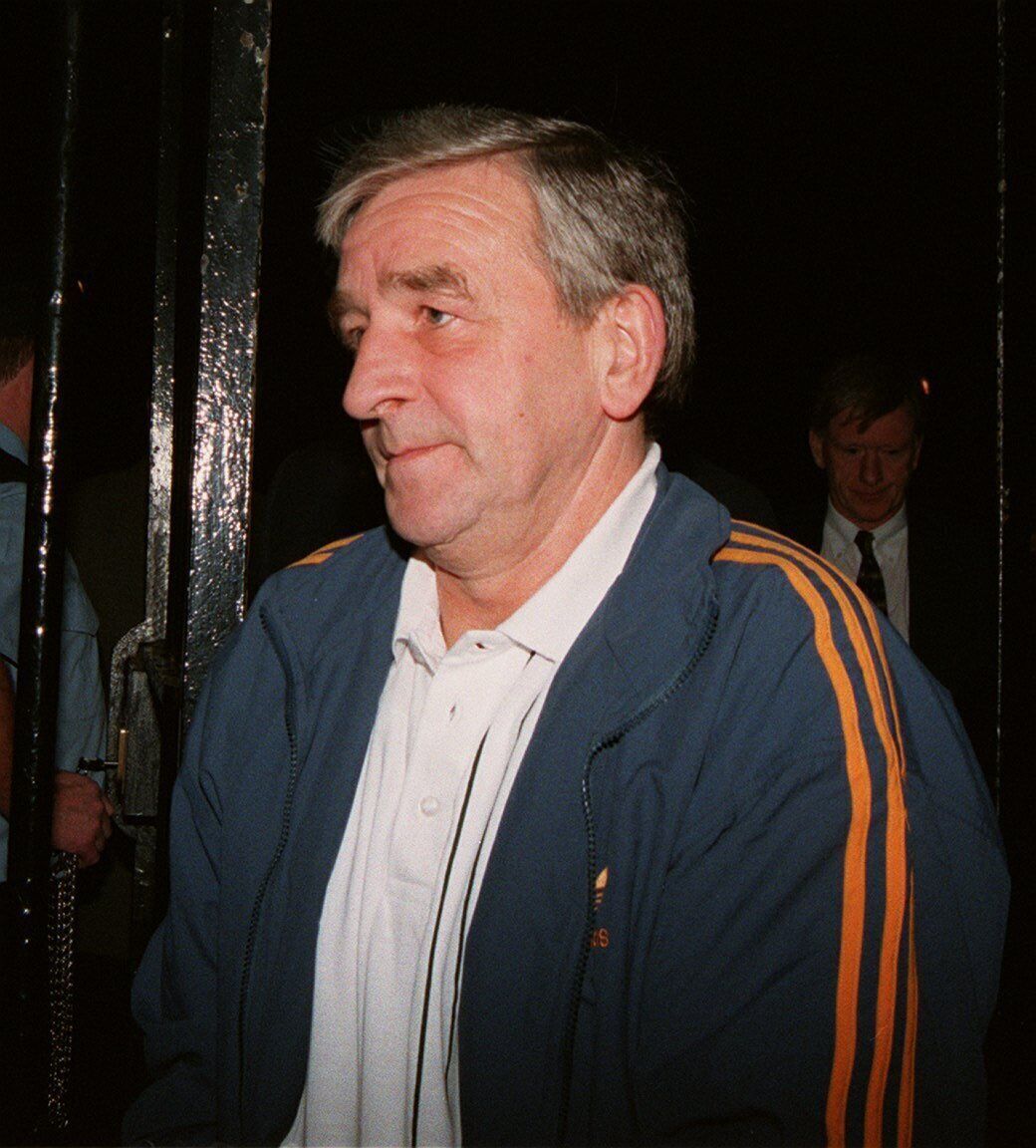
Felloni himself was sentenced to 10 years in prison in 1986 and immediately resumed his involvement in drugs on his release in 1993.
His criminal career effectively ended in June 1996 when he was sentenced to 20 years in prison for heroin trafficking, which was the longest prison sentence ever imposed at the time for drug offences.
Felloni also became one of the first targets of the Criminal Assets Bureau after its establishment in 1996.
During a court hearing in 1999, it emerged that Felloni was HIV positive and had become completely institutionalised while in prison and was unable to manage on his own for more than two days.
Following his release from prison in 2011 after serving 14-and-a-half years of his sentence, Felloni kept a low profile.
The inquest heard Regina continued to help in providing care for her father up to his death.

CONNECT WITH US TODAY



Be the first to know the latest news and updates