Senior garda who died by suicide was 'under pressure' over Regency Hotel shooting, inquest hears
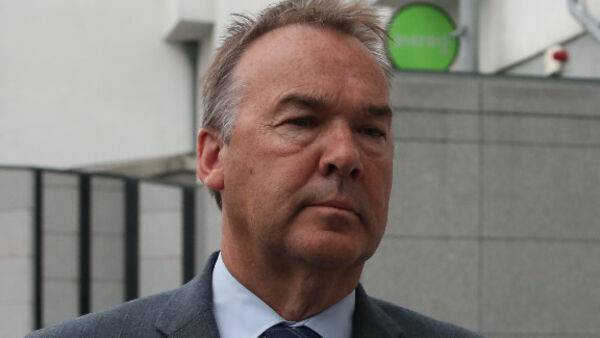
Detective Superintendent Colm Fox died during a trial in relation to a high-profile murder at the Regency Hotel in Whitehall, Dublin, on February 5, 2016. Picture: Collins
A senior-ranking detective who took his own life in a Garda station over six years ago was under intense pressure over his role as lead investigator into a murder which sparked the Kinahan-Hutch gangland feud, his family have told an inquest.
Detective Superintendent Colm Fox was found dead in his office at Ballymun Garda Station on the evening of February 10, 2018, with a number of notes left for family members and his official firearm.
The death of the 56-year-old married father of three from Seabury Glen, Malahide, Co Dublin, occurred during a trial in relation to a high-profile murder at the Regency Hotel in Whitehall, Dublin, on February 5, 2016.
Patrick Hutch was charged with the murder of David Byrne, a senior member of the Kinahan crime cartel, during a daring attack on a boxing weigh-in at the hotel by members of the rival Hutch gang.
The trial at the Special Criminal Court subsequently collapsed due to the death of Det Supt Fox.
At the opening of the inquest at Dublin District Coroner’s Court on Monday, the deceased’s widow, Edel Fox, gave evidence about the stress the Regency case had caused her husband.
Ms Fox told coroner Myra Cullinane he had come under pressure at the outset of the investigation from “commissioners” to progress the case quicker.
She also recalled her husband had remarked the week before his death on February 3, 2018, he “may have made a mistake” in relation to the Regency investigation.
“I had no idea what it was about as he was not making sense,” she added.
Ms Fox said he was also “devastated” to be transferred to Ballymun in 2015 from a role with the Garda fraud branch where he felt he was “making a difference”.
She told the coroner he was always in good form and her only complaint was about the amount of time he spent at work.
However, she said he loved his job and had never shown any signs of stress at the time but “in fact the opposite”.
However, she said he was really happy when he was promoted and transferred to Swinford, Co Mayo, where there was “a different pace of policing, which was good for him”. Ms Fox said he just loved “the break from gangland crime and shootings”.
Her husband was also delighted to be transferred back to Dublin for a role investigating fraud, where he spent 15 months.
She claimed he was subsequently “devastated” to be transferred to Ballymun in 2015 to oversee serious criminal investigations.
Ms Fox said she believed “going back to such intensity” must have caused him worry.
Following the Regency shooting, she said there was a fear everything could escalate.
She said her husband would have felt pressure as he was working very long hours and trying to get resources for his investigation, including cars, from another Garda division.
During a short break in Kilkenny, Ms Fox said his phone never stopped ringing.
“It was the first time I ever saw Colm under pressure,” she said.
She believed he found the high-profile nature of the Regency case “hard to deal with” and could not have come out of it “unscathed”.
During the related trial, she said he became very stressed and had difficulty sleeping.
Ms Fox said her husband was concerned two gardaí had “a hard time” giving evidence in the trial.
She was particularly worried about him on the weekend before his death when he was neither eating nor sleeping and just knew it had something to do with the trial.
On the morning of his death, she said her husband had gone into his office in Ballymun early to study for a thesis, which was not unusual.
Ms Fox said she had arranged for them to go see a movie that evening in order to take his mind off the Regency case.
The inquest heard she tried calling her husband a number of times later that day but got no answer.
Ms Fox said she was relieved when she rang Ballymun Garda station at 8.30pm and was informed there was a light on in his office.
However, she became really worried when she had not heard from him by 10pm and learnt about what happened a short time later when her brother and another garda called to her home.
In reply to questions from the coroner, Ms Fox said she believed the week before his death represented “some turning point”. Referring to February 3, 2023, she said: “I felt something broke in him that night.”
Asked if she had any concern he might harm himself, Ms Fox replied: “Absolutely not. My biggest fear was that he was going to have a heart attack.
“Colm was a perfectionist. It was probably weighing heavily on him if everything wasn’t going perfectly,” she remarked.
Her brother, Fr Seán Donohoe, a Capuchin friar, told the inquest he believed Det Supt Fox was frustrated with the support he was getting on the Regency investigation, as he had admitted for the first time he was under pressure.
In the week before his death, Fr Donohoe said he had suggested to his brother-in-law it was time to get out of policing as Det Supt Fox had appeared “anxious, troubled and stressed”. He recalled the deceased had remarked at the time that the Regency investigation would be “my last case”.
The deceased’s sister, Gillian Fox, said her brother had texted her at 2.30pm on the day he died with the message: “Well done, Gillian.” Ms Fox said she got no reply when she asked what he had meant.
Det Supt Fox’s eldest daughter, Rebecca, said her father’s workload was always busy and appeared massive but seemed to be “at a whole new level” with the Regency case.
She recalled how she found him up watching TV one night when he could not sleep and he remarked: “I’m so stressed” but then shrugged it off.
Ms Fox expressed surprise her father rang her on the day of his death to say how proud he was of her as it was “out of context”. She described her father’s death as “totally out of character”.
Her brother, David Fox, told the inquest his father was concerned about some gardaí “getting torn apart” at the trial when there was nothing he could do about it.
His sister, Megan, gave evidence that she had moved to New York in December 2017 for work and how her parents were looking forward to visiting her the following summer.
Ms Fox said she thought her father would be the last person to do something like he had and it must have been because of “something out of the norm or significant”.
Sergeant Michael Ryan told the hearing he was called by Det Supt Fox into his office on the morning of his death, where they had a general conversation.
When talking about the Regency trial, Sgt Ryan said his superior had remarked if he had to do it all again there would be some things he would do differently.
However, Sgt Ryan said Det Supt Fox did not elaborate on what he meant.
He expressed surprise at the comment as there had been an “upturn” in the trial for the prosecution which had proven “a very positive aspect” for the investigation.
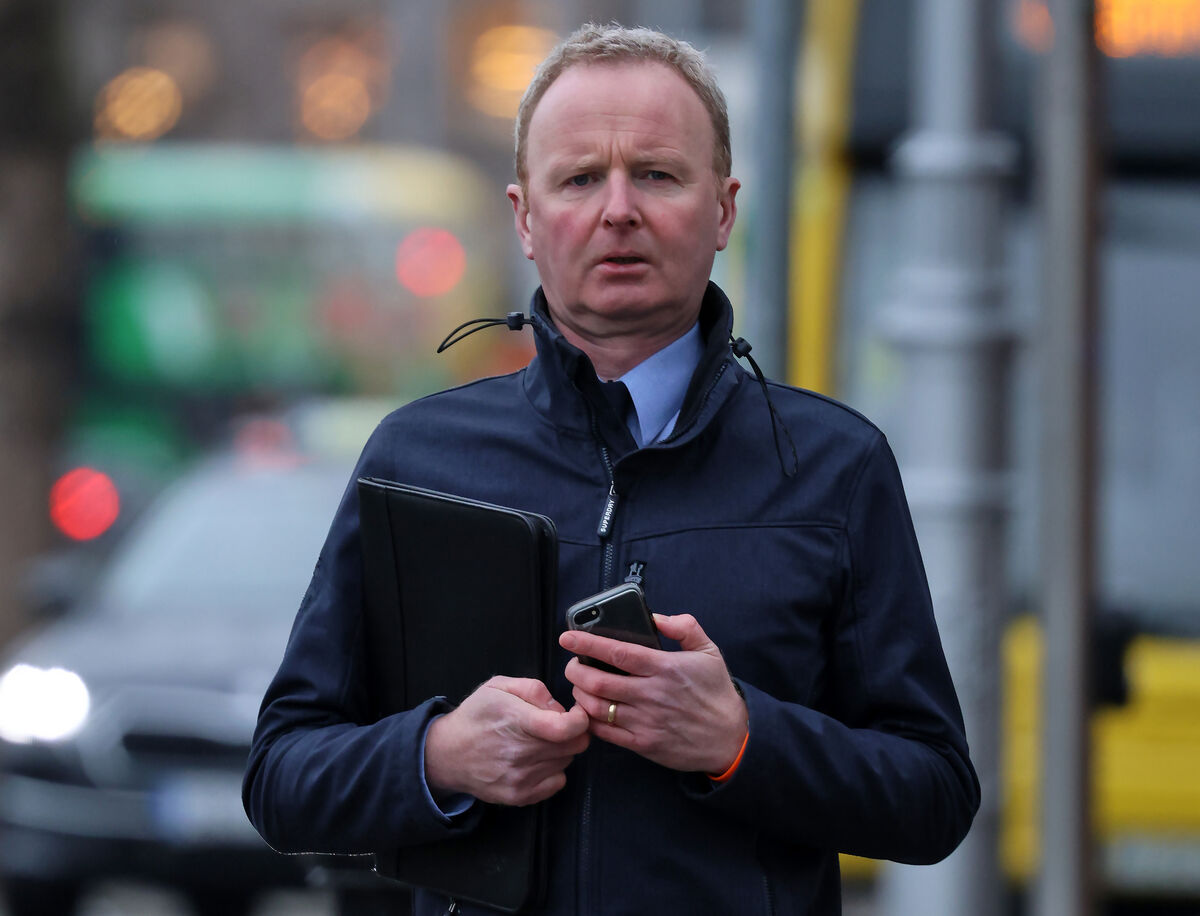
Sgt Ryan agreed with Dr Cullinane it seemed there was something still troubling the deceased even though he “would have expected the opposite”.
The witness also expressed surprise to find the door to the deceased’s office open at 5.45pm that evening but did not give it much thought when he saw Det Supt Fox’s jeep was still parked outside the station.
Inspector John Collins gave evidence Det Supt Fox had asked him to sign him out for taking a firearm that morning as he wanted to go to the Garda shooting range in Tallaght.
Insp Collins said Det Supt Fox had returned after 10 minutes as he had taken the wrong ammunition from the armoury.
He told the coroner he had not asked to see the deceased’s firearm card to check his training was up to date as he did not believe it was necessary.
Insp Collins said there was nothing unusual about Det Supt Fox’s demeanour and he had also appeared in good form when they chatted in a canteen later that afternoon.
The inquest, which is expected to last four days, will resume on Tuesday morning.
CONNECT WITH US TODAY



Be the first to know the latest news and updates