Gardaí begin trialling body-worn cameras. How will the system work?
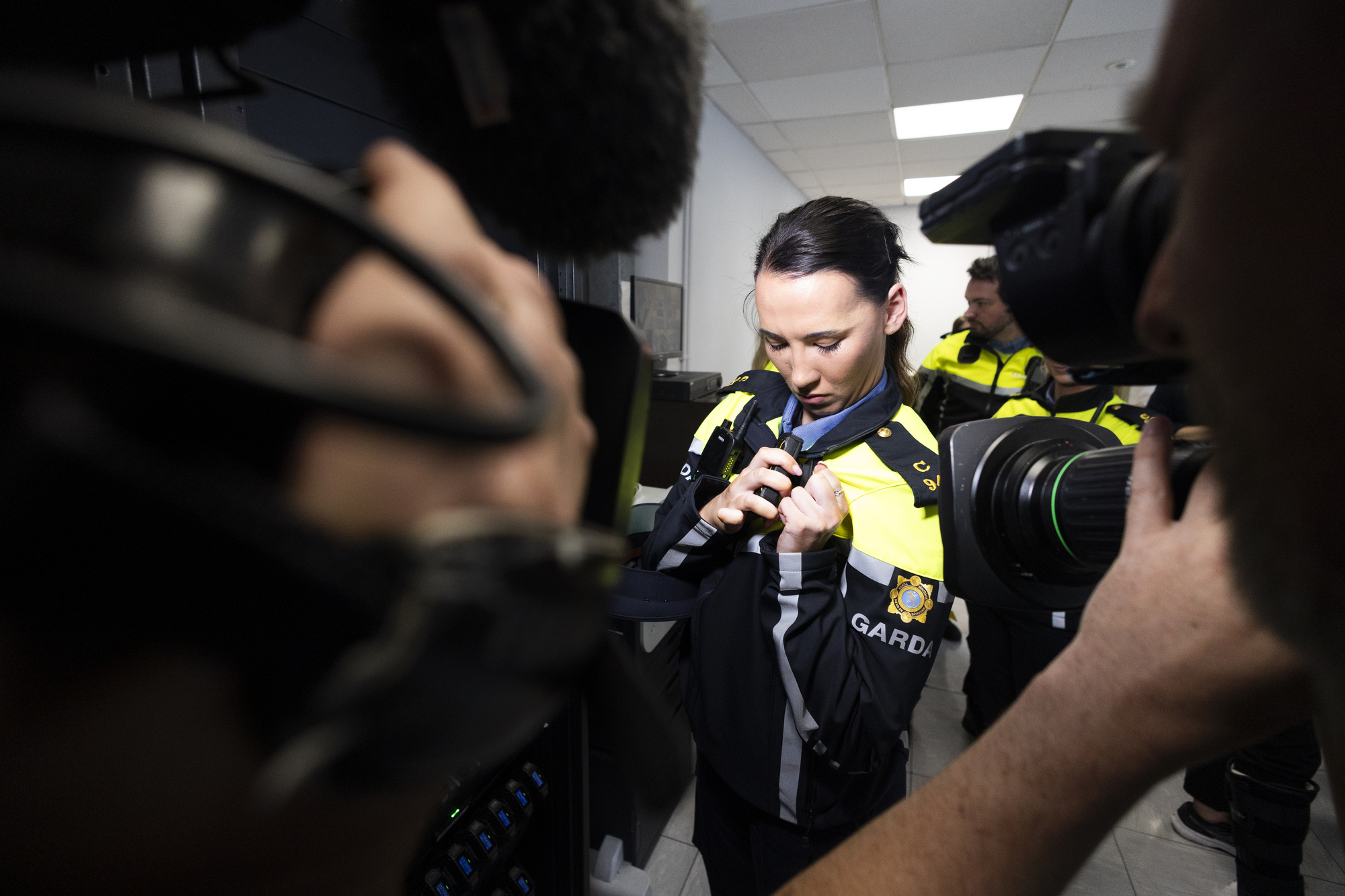
A Garda attaching a Garda Body Camera ahead of her patrol in Dublin on Friday. The cameras will be activated by individual officers during their shift for any incident where they believe it necessary to gather evidence. Photo: Sam Boal/Collins Photos
Gardaí have begun a "proof of concept" exercise on body-worn cameras.
The use of the devices was provided for in the Garda Síochána (Recording Devices) Act 2023 which was signed into law last December.
The Act provides for body-worn cameras, Garda CCTV, automatic number plate recognition, and Community CCTV, but not for facial recognition.
The cameras will be activated by individual officers during their shift for any incident where they believe it necessary to gather evidence.
Garda members have been trained to inform the public when they are turning on the camera, though this is not strictly required, and a red light will flash on the front of the device.
There is no capability for the devices to play back footage themselves and it is instead stored on a digital evidence management system (DEMS) and is uploaded to the cloud once docked in a Garda station.
The management system can only be activated using a garda ID badge and the garda who took the footage is the only person able to view it.
Recorded footage will remain on the system for 31 days unless tagged as evidence for a case.
The models being tested have a 160-degree field of vision, a 64GB hard drive and enough battery to record continuously for 12 hours.
Yes. One of the issues that Garda Commissioner Drew Harris pointed to in the collection of video after the Dublin riots in November was a lack of audio, which can remove context or intent.
An Garda Síochána has developed a Code of Practice for gardaí to govern the use of the cameras. That code is authorised by a Ministerial order, which was signed by Minister McEntee on May 15.
You can request any footage containing you be given to you. This can be done through a subject access request.
At present, three types of camera are being used but when one supplier is chosen, it is expected that the devices will cost around €10 million.

CONNECT WITH US TODAY



Be the first to know the latest news and updates