Narrowing of cervical cancer case against HSE may have implications for other cases
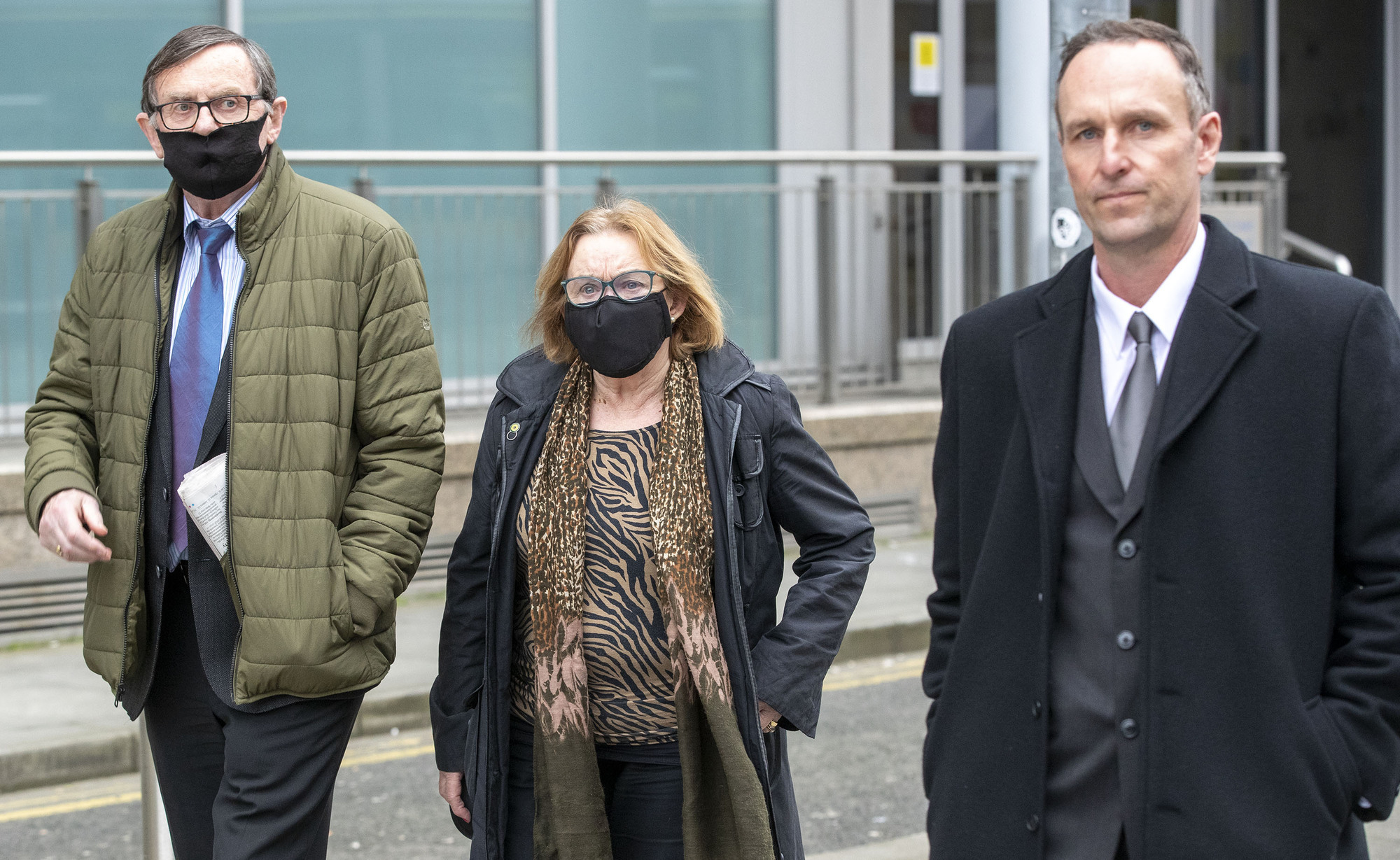
(Left to right) Aoife Mitchell Creaven’s parents, Gabriel and Marcella Mitchell, with Padraig Creaven widower of Aoife in 2021. Mr and Ms Mitchell submitted that there are “substantial reasons for believing that the (Ruth) Morrissey judgment was wrong” in finding that the HSE did not owe her husband a duty of care to notify him about the audit results. File picture: Collins Courts
A High Court ruling has significantly narrowed a case seeking damages alleging the HSE breached a duty it owed to the parents of a woman who died of cervical cancer. The decision could have implications for similar type cases.
Gabriel and Marcella Mitchell, whose daughter Aoife Mitchell Creaven from Menlo, Galway, died in 2015 aged 40, brought a claim for damages for nervous shock arising out of the alleged misinterpretation of their daughter’s cervical smear sample.
They pointed to six instances of alleged nervous shock from an alleged breach of duty, including learning of their daughter’s metastatic cancer, accompanying her through the trauma of having to lose her pregnancy due to the diagnosis, and on learning there was an alleged significant delay in disclosing relevant information.
Mr Justice Tony O’Connor this week ruled that their case is not barred due to a 1961 law prohibiting multiple actions arising out of an alleged wrongful death.
However, he found their claim for damages in respect of five of the six alleged instances was bound to fail as the HSE did not owe them a duty of care in this regard.
He held over until next week the question of any potential duty of care owed in relation to the sixth issue concerning a colposcopist’s communication to them regarding Ms Mitchell Creaven’s death in an allegedly “inappropriate manner”.
The judge said Mr and Ms Mitchell acknowledged they shared in a statutory solatium for mental distress arising out of the death in the settlement of proceedings brought by Ms Mitchell Creaven’s widower, Padraig Creaven, for nervous shock over her death.
Mr Creaven also sought the costs of surrogacy he hoped to pursue using his late wife’s embryos frozen as part of IVF treatment a decade ago.
In settlement of that case, the HSE apologised to Mr Creaven “for the failure by the CervicalCheck programme to communicate with him in a timely and appropriate way the results of an audit that indicate a change in the interpretation of Aoife’s smear taken on 8 August 2011″.
It emerged in April 2018 that CervicalCheck had in 2014 carried out a retrospective audit of the cytology of all women who were diagnosed with cervical cancer after having participated in the screening programme. In 221 of 1,482 cases, the review spotted abnormalities that had not been detected at the time of screening.
In seeking to have the Mitchells’ case struck out, the HSE and Texas-based Clinical Pathology Laboratories Incorporated, a third party against whom the HSE seeks an indemnity or contribution, argued that section 48(2) of the Civil Liability Act of 1961 prevented Mr and Ms Mitchell from bringing these newer proceedings because they were listed as statutory dependents in Mr Creaven’s earlier case.
Mr Justice O’Connor found that, as the plaintiffs are not suing for wrongful death and confine themselves to a claim for nervous shock from the alleged breach of duty on the part of the screening service, the 1961 Act does not bar their claim.
The HSE further argued that the couple’s claim for nervous shock based on the six pleaded incidents is bound to fail on the grounds of public policy and/or on the grounds that the HSE, by extension, does not owe them a duty of care.
They pointed to an unappealed decision by Mr Justice Kevin Cross not to award damages to Ruth Morrissey’s husband for the admitted breach of duty by the HSE in failing to advise Ms Morrissey about the results of the 2014 retrospective audit. The judge awarded €2.1 million to the couple but only “nominal” damages of €10,000 to Ms Morrissey for the non-disclosure.
Mr and Ms Mitchell, represented by Cian O’Carroll solicitors, submitted that there are “substantial reasons for believing that the Morrissey judgment was wrong” in finding that the HSE did not owe her husband a duty of care to notify him about the audit results.
Mr Justice O’Connor was not persuaded that there are substantial reasons for believing Mr Justice Cross ought to have found that the HSE’s screening service owed a duty of care to Mr Morrissey.
He proposed to rule that the Mitchells’ claim for damages relating to five pleaded instances is bound to fail due to the Morrissey judgment's findings about an absence of a duty of care to relatives.