Energy drinks increasingly popular among young people as report warns of health risks
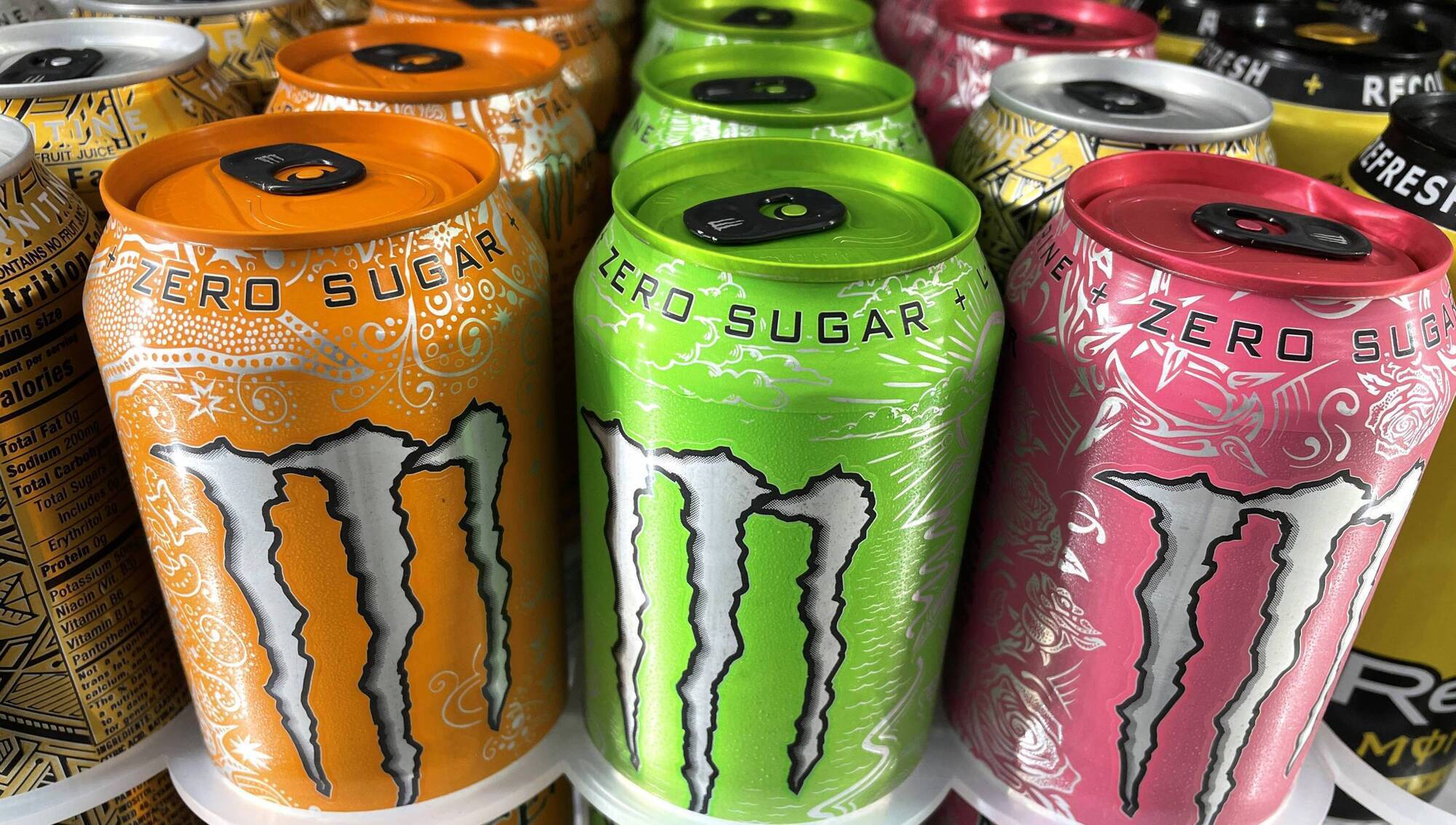
A 500ml can of Monster Original contains around 14 teaspoons of sugar (55g), with two shots of espresso. Picture: Stock image
A Government-commissioned report into energy drinks has warned of the health risks posed to children as serving sizes and product offerings continue to rise, with the Department of Health citing the drinks as a cause for concern.
Data compiled across the energy drinks sector by Safefood found that sugary, highly caffeinated drinks such as Monster and Red Bull were largely consumed by younger people. Around 54% of respondents aged 15-24 said they drink an energy drink once a week.
A 500ml can of Monster Original contains around 14 teaspoons of sugar (55g), with two shots of espresso.
A bottle of BPM Red Berry contains around 17.5 teaspoons of sugar in a standard 500ml serving, with other competitor drinks offering the caffeine equivalent of three shots of espresso in a single serving.
The report found that serving sizes had greatly increased, with 55% of products now available in a 500ml form.
There was a 45% rise in 500ml serving sizes since a previous 2019 study, with the proportion of 250ml cans dropping accordingly by 38%.
Larger serving sizes are likely to significantly increase the amount of sugar and caffeine consumed in one go. The average amount of sugar in a 500ml energy drink increased by seven grams since 2019.
Read More
“While energy drinks may promise a quick energy boost, they often come at a significant nutritional cost,” said Aileen McGloin, nutrition director at Safefood.
“Children and young people are more sensitive to the effects of caffeine than adults, and drinks that are high in both sugar and caffeine can impact sleep, concentration and overall health.”
Around one in ten respondents were using energy drinks as a mixer with alcohol, a combination that can lead to binge drinking and strain on the heart, according to food safety experts.
Half of respondents consumed the drinks as an energy boost or because they enjoyed the flavour.
The energy drinks market was found to be rapidly increasing, with a total of 77 products observed by Safefood, compared to 42 in 2019.
Around 97% of respondents said they were aware of the negative health consequences of energy drinks.
Almost eight out of ten respondents showed some level of support for introducing legal age restrictions on the purchase of energy drinks.
The 15–24-year-old age group, the largest consumers of the drinks, had the lowest percentage (59%) of respondents who supported regulation.
“The sale and consumption of stimulant drinks remains a concern, especially given how popular these products are with younger age groups,” said public health minister Jennifer Murnane O’Connor.
“Energy drinks can be high in caffeine and sugar, and this research offers important insights into how they are consumed, how widely available they are, and public attitudes towards them.”
Ms Murnane O’Connor said the findings would inform future measures from the Department of Health.

CONNECT WITH US TODAY



Be the first to know the latest news and updates