Rise in Navy strength 'too slow' to reach Government target, officers' association says
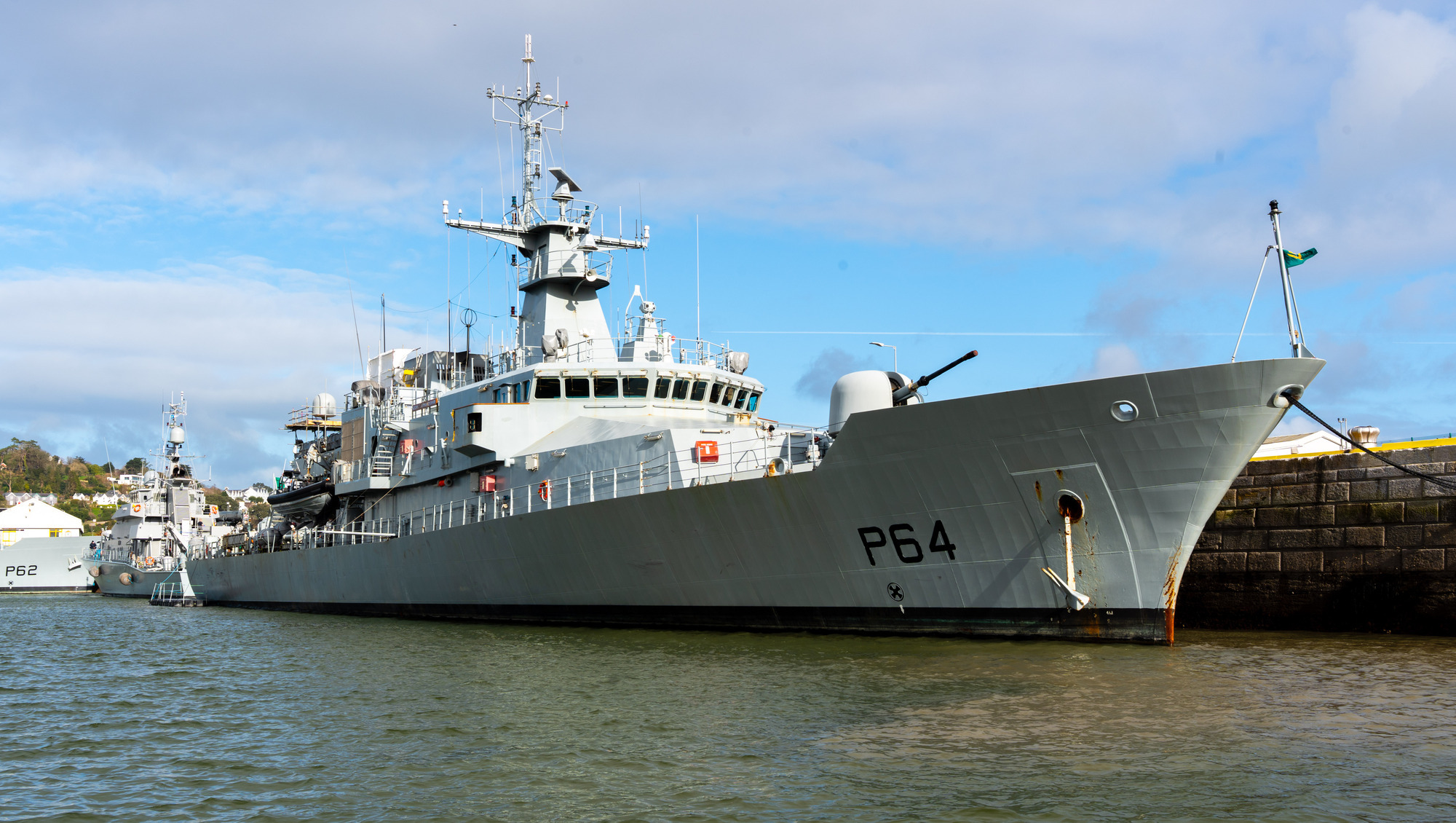
The current strength of the Naval Service is 833, compared to 804 at the end of 2025 and 719 at the end of 2024. What the Naval Service should have is 1,094. File picture: Noel Sweeney
The strength of the Naval Service is continuing to rise this year, but only at a fraction of the rate it needs to in order to meet Government commitments.
Defence Forces' figures show that 83 people have been inducted (recruited) into the Naval Service (NS) by the end of August, with 29 discharges (resignations) — a net increase of 53.
With four months left in the year, it remains to be seen if this year's increase is less than last year. There were 162 inductions and 47 discharges for all of 2025 — a net increase of 115.
The current strength of the NS is 833, compared to 804 at the end of 2025 and 719 at the end of 2024. The NS establishment figure [what it should have] is 1,094.
The second of three investment options (LOA2) outlined by the Commission on the Defence Forces in February 2022 — which was the one chosen by the Government — envisages a NS strength of 1,794 by 2028, requiring a net increase each year of around 330.
Read More
The representative association for Defence Forces’ officers, RACO, said recruitment in the NS was improving, “albeit slowly” and is “nowhere near as fast” as required to meet LOA2.
RACO general secretary Lieutenant Colonel Conor King said: “Four-and-a-half years after the report of the commission was published, this suggests a distinct lack of urgency within the Department of Defence, the Government and the Department of Public Expenditure to invest significantly and quickly into NS assets."
He said Ireland’s defence spend was 0.2% GDP or 0.3% of GNI, the lowest in the EU. “This represents a continuation of defence and security on the cheap,” he said.
“The October budget will show our EU partners how serious, or not, we are about playing our part. Anything less than a budget of €2bn is fundamentally unserious.”
The defence budget has risen from €1.1bn in 2022 to €1.49bn in 2026, with a target of around €1.8bn by 2028.
Former Army officer, and ex-TD, Cathal Berry said the net increase so far this year is “really encouraging” and cited improvements in junior personnel pay.
He said that while pay is important, “so is purpose” and referenced the use of the British and French navies to provide security for EU presidency events in Ireland.
“The use of the Royal Navy and French Navy during our EU presidency is having a devastating impact on Irish naval morale,” he said. “Such a routine security operation is something that an island nation should be well capable of doing, and could do in the past.”
Mr Berry said it is “vital" sufficient funding is given to the Defence Forces in next month's budget. He said: "The urgent purchase of a multi-role corvette or frigate for the Irish Navy, with both air defence and anti-submarine warfare capability, is desperately needed.”
He said this is particularly so “in light of the threat” posed by the Russian shadow fleet, drone incursions from ships, and damage to critical subsea infrastructure across Europe.
On a related matter, the Department of Defence told the the NS Regeneration Plan “has not been finalised”. Last September, then defence minister Simon Harris said it was due “shortly”.
- Cormac O’Keeffe, security correspondent

CONNECT WITH US TODAY



Be the first to know the latest news and updates