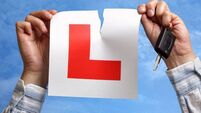
People who learn to drive later in life are less dependent on cars

In Co Cork, people living in areas considered to have a low level of public transport service, such as Castletownshend, Rosscarbery, and Bantry, are more likely to learn to drive earlier than those in Douglas, Mallow, and Cork city centre. File picture
People who learn to drive later in life are less likely to rely on cars and more likely to avoid using them on any given day, according to new research.
Research from ESRI found people who grow up in areas with poor public transport access are more likely to learn to drive at an earlier age than those living in areas with good services.
The study was funded by the Department of Transport and used data from the National Transport Authority (NTA).
It found that by age 20, 60% of people living in areas with limited public transport had learned to drive. In areas with good access, only 40% of those aged 20 learned to drive.
The NTA’s interactive map shows people living in rural parts of Ireland are more likely to learn to drive earlier than those in urban areas.
There is variation in rural areas, where local links would be available, but it would not be the same in comparison with city centres in Dublin and Cork.
In Co Cork, for example, people living in areas considered to have a low level of public transport service, such as Castletownshend, Rosscarbery, and Bantry, are more likely to learn to drive earlier than those in Douglas, Mallow, and Cork city centre.
In parts of Tipperary and Limerick, the map shows many areas with only low or medium levels of public transport service.
Read More
ESRI senior research officer Shane Timmons said there were “knock-on effects” from the decision to learn to drive, which is influenced by the level of public transport available.
“What our evidence suggests is that when people have a choice to use public transport, for younger people there is less urgency to learn to drive,” he told the .
“They may become used to taking the bus, for example, or using alternatives such as cycling. That has positive effects for emissions and can help reduce congestion."

As part of the study, participants completed a driving diary showing how much they had driven over the previous week, where they went, and how far they travelled.
“What we saw was that the later you learned to drive, the less likely it was that you drove at all during the week. And if you did drive, the distances were shorter,” said Mr Timmons.
He said the study suggested access to public transport during formative years affects long-term travel habits and reduces dependence on private cars.
He said if a person were to learn how to drive at age 22 instead of 17, this would reduce the number of kilometres driven in a given year by 1,500km.
“Most people in the data had learned to drive by the age of 30, but it does suggest that every year a person delays learning to drive is associated with less driving later in life," said Mr Timmons.
“There are positive effects for the environment, but also for how much money someone spends on fuel if they have built up habits of getting around in different ways."

CONNECT WITH US TODAY



Be the first to know the latest news and updates