More than 70 new courses available outside traditional CAO system

An alternative route into Primary Teaching courses is among the new choices open to third-level students for 2026/2027. Photo: iStock
For the upcoming academic year, over 70 new courses will be available outside of the CAO points system.
For 2026/2027, a total of 78 Tertiary Bachelor’s Degree programmes will be available to students.
This marks an increase of 32 new options outside of the traditional CAO system, giving students new pathways from further education to higher education.
Co-designed by higher education institutions and the education and training boards, the programmes are outside of the CAO points system.
This means that entry to each course is not based on points, and no college fees apply during the first one or two years of study while students are enrolled in an ETB.
Students will graduate with the same bachelor’s degree qualification as they would have if they entered the university course through any other route.
The upcoming academic year will mark the fourth year since the programmes started, as only 13 programmes were initially offered.
Read More
Amongst the new options available to learners this year is a new route into Primary Teaching, as well as in Health and Welfare, Business, Applied Sciences, Arts and ICT fields of study, namely Social and Community Development, Digital Business, Nutrition, Food and Business Management, Sustainable Supply Chains and Logistics, Applied Sports Performance and Coach Education, Media Technologies, Networks and System Administration, Software and Technology, Computing with AI, and Agricultural science with further expansion in Nursing provision.
The tertiary bachelor’s degree route into primary teaching takes five years.
In Ireland, 16 ETBs across 24 counties and 13 universities are engaging in the delivery of the Tertiary Bachelor's Degrees in 2026.
In the Mid-West, students can begin their studies with a ‘foundation year’ completed either with Tipperary Education and Training Board, or Limerick and Clare Education and Training Board.
Students can then progress to Limerick’s Mary Immaculate College for years two to five, completing the NFQ Level 8 Bachelor of Education in Primary Teaching.
Demand to study primary school teaching is strong every year, with courses regularly attracting CAO cut-off points upwards of 470.
Head of the National Tertiary Office, Tanya Jones, said the programme provides an alternative route outside of the CAO system.
"You're still not compromising on quality, getting the same fully recognised degree as your peers who have followed the traditional routes,” Ms Jone told RTÉ.
She explained that the application process is simple and done through the ETB website.
Once an application is submitted, the applicant is called for an engagement with the education training boards.
"It could be an interview or personal statement. It's much more personalised process, not just counting the points and numbers, but actually talking to people about their aspirations, about their talents and what career would they like to pursue,” Ms Jones explained.
On the National Access Plan, the priority groups include students from certain backgrounds, such as students with low-income households, mature students returning to education, lone parents or carers, as well as care-experienced students.
The new 32 programmes were announced by higher and further education minister James Lawless in April.
Ahead of the 2026 course launch, Minister Lawless pointed out these programmes remove longstanding barriers such as points pressure and upfront fee, while upholding the same academic standards and outcomes of any other degree pathway.
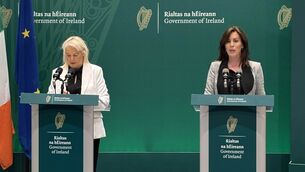
Minister for Education and Youth, Hildegarde Naughton, TD, said the landmark programme represents a transformative step in how we prepare future primary teachers in Ireland.
“By creating a new five-year tertiary pathway, we are opening the doors of teacher education wider than ever before, ensuring that talented and committed individuals, regardless of background, have the opportunity to enter the profession,” Ms Naughton said.


CONNECT WITH US TODAY



Be the first to know the latest news and updates