Literacy and numeracy services increased in line with growing need
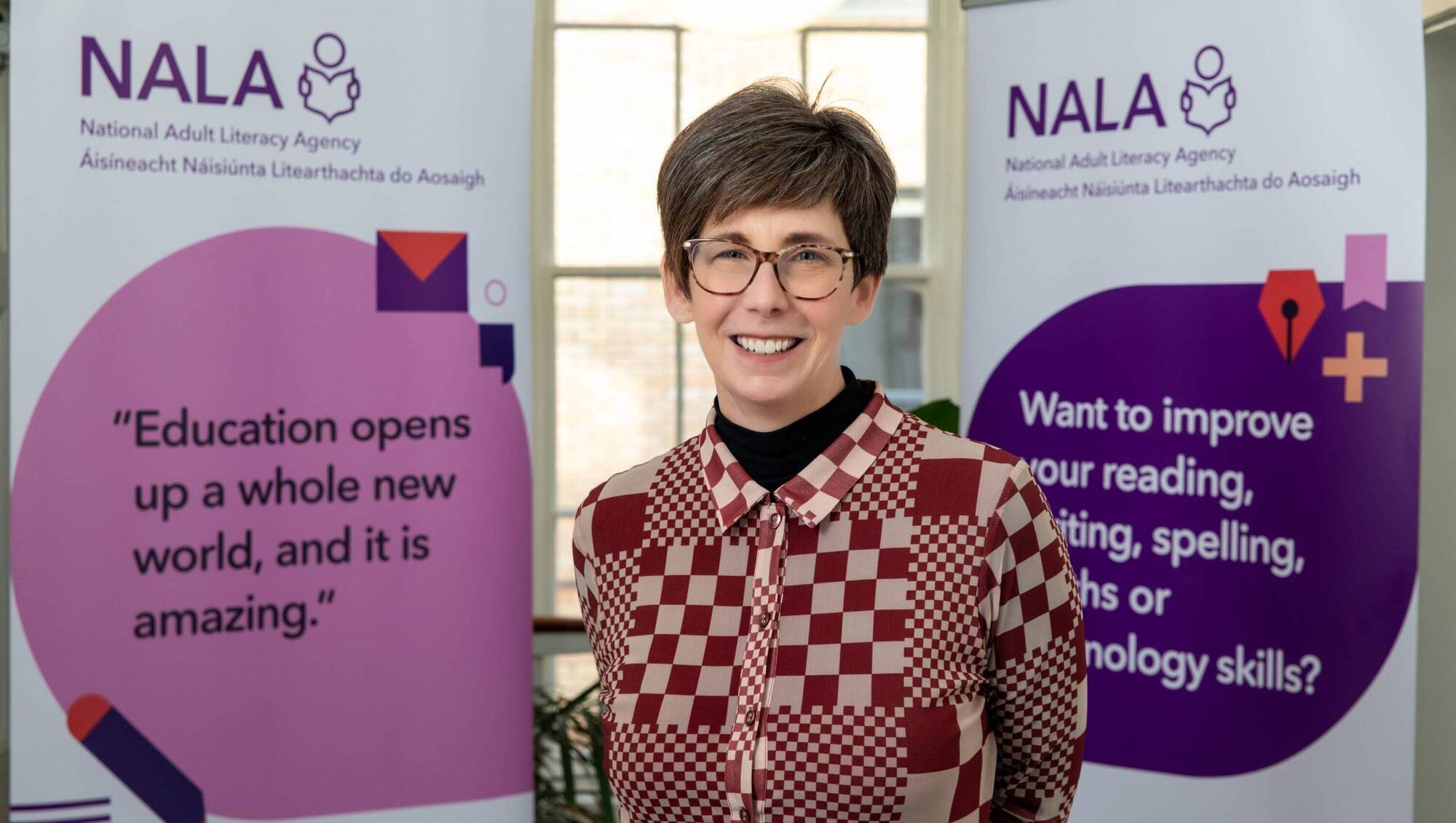
Colleen Dube, CEO of the National Adult Literacy Agency (NALA).
Literacy and numeracy supports are becoming increasingly embedded in further education courses in order to help students reach their educational and training goals, while also preparing to meet the massive boom in literacy needs among young people coming down the tracks.
More than 20% of adults in Ireland struggle with literacy. For 16- to 24-year-olds, the figure is 12% and is affecting more males than females, according to the National Adult Literacy Agency (NALA).
Meanwhile, it has also been found that 15% of this age group struggle with numeracy.
While the rate of literacy needs is higher in older age groups, it is predicted to rise in the younger population in the coming years, largely because of the current level of school refusal, which Colleen Dube, CEO of NALA describes as an emerging challenge that is like a ticking time bomb.
To date, NALA has mainly been focused on supporting adults achieve their literacy goals, and Ms Dube admits that, until recent years, the younger cohort were going under the radar.
“Of 12 target groups, we missed school leavers and refusers – the 16 to 23-year-olds. We are now looking at what’s next for them,” she says.
Not attending school isn’t the only reason for difficulty with literacy, as Ms Dube outlines.
“Difficulties with literacy and numeracy can happen for many different reasons. There may be undiagnosed or unsupported neurodivergence like dyslexia, dyscalculia, dyspraxia, a brain injury or family difficulty,” she says, while also stating that nobody is illiterate – everyone has different skills and competencies.
The growing statistic makes it all the more important to have literacy and numeracy supports embedded into further education and training centres, according to Ms Dube, so that these young people don’t have to hide their difficulties, but can be supported to launch into life with the necessary skills to progress in their jobs without the need to mask.
As part of the effort to tackle this issue, literacy and numeracy support are being provided at FET hubs – the colleges and centres that offer apprenticeships, traineeships, Post Leaving Cert (PLC) courses, community and adult education as well as core literacy and numeracy services. (See www.fetchcourses.ie)
Read More
“14 ETB’s use ‘Learn with NALA’. Some ETB’s blend it into the course with tutors on site, or students can do online courses with workbooks,” explains Ms Dube. “We are working on bringing consistency to provision of this support, but also keeping in mind that no one size fits all,” she adds.
One growth area for support is among young people looking to apply for apprenticeship programs, which require Junior Cert maths.
This can be offered at a range of outlets including Youthreach centres, disability centres and FET colleges.
Dublin College, which offers hundreds of FET courses at 32 dedicated locations, has a number of ways built in to the system to help students succeed with their studies.
First of all, staff are trained to identify where a student is struggling, and what supports to put in place for them. Staff are also trained in Plain English Guidelines and Universal Design for Learning (UDL) which brings more flexible, interactive teaching methods to the classroom, an approach that makes learning materials more accessible to a broad range of learning styles unlike the now much-maligned Power Point presentation.
In phase 2 of apprenticeship training, which is class-based, math support classes are offered alongside the regular classes at Dublin College. These are open to everyone, not just students with numeracy needs, and are tailored to match topics being covered on the curriculum.
Adult Education Officers at Dublin College Joanne Russell and Valerie Hogg see lots of students dip in and out of the maths support class.
“We invite people to come to the classes, which are free. They come if they want. If students don’t come at the start, as the course goes on they choose to come in because they see that they need it,” explains Valerie Hogg, adding that the course is timely and it’s linked in to the area in maths covered on their main course.
“The support maths course is for everyone and it’s good for other apprentices to see that. It allays their fears,” says Joanne Russell.
For those who may not yet have the qualifications to start an apprenticeship, there is a full-time course available with one to one or two to one support in maths and literacy, depending on what’s needed says Joanne Russell.
While much of the focus is on building literacy and numeracy capability, NALA and education providers also offer digital literacy support. While everyone thinks young people have no problem with this, Valerie Hogg points out that many need to develop digital skills for the academic and professional worlds where they use Microsoft Office, or need to submit an academic assignment online.
Asking for help with digital literacy is often the first step learners take before asking for help with their literacy and numeracy, and once they take that first step, the sky’s the limit.
For more information on free, confidential literacy supports see www.nala.ie or Freephone 1 800 20 20 65
CONNECT WITH US TODAY



Be the first to know the latest news and updates