Death inquest hears call for better monitoring of prison inmates
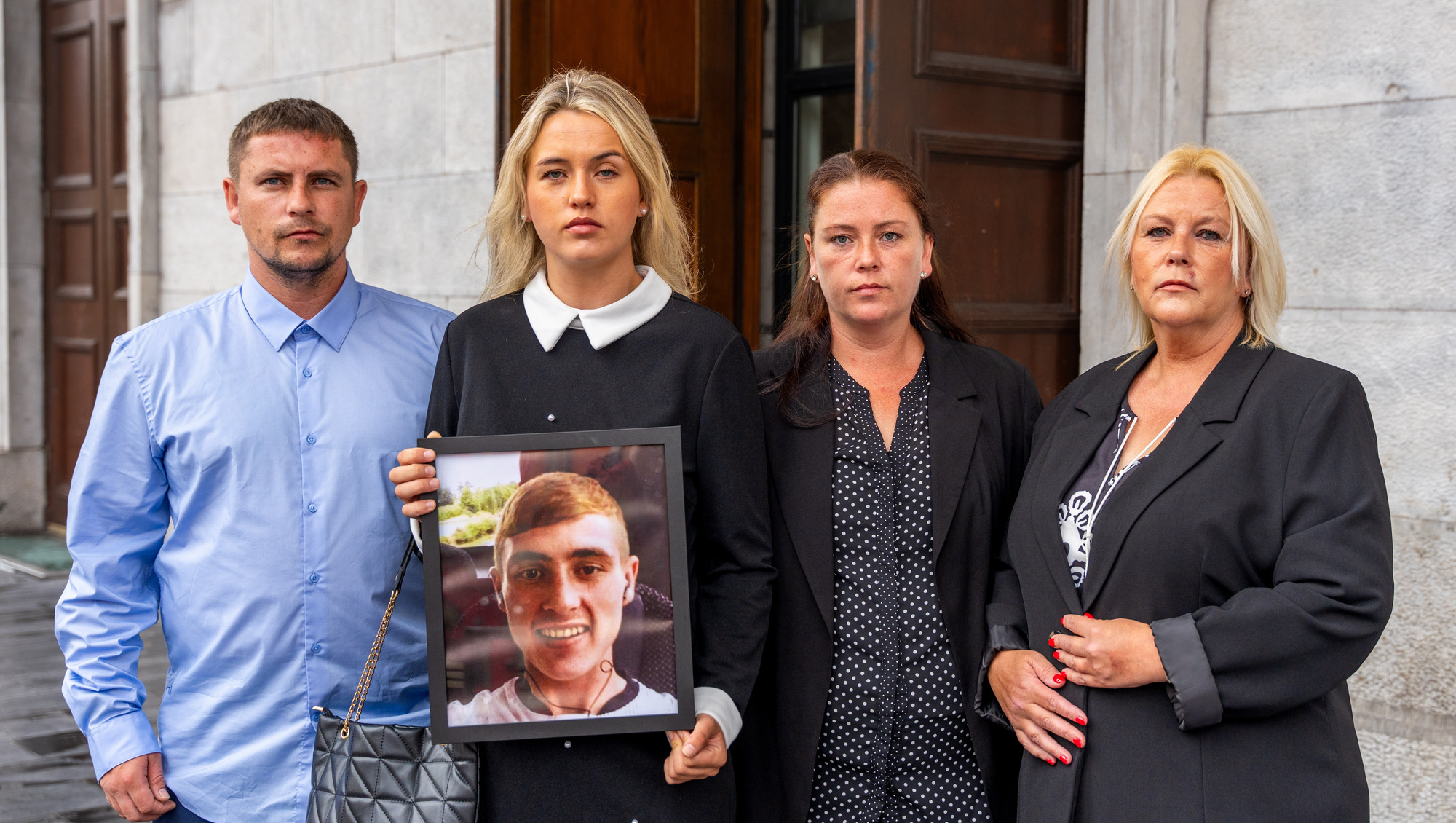
The family of Jamie Crowley outside Cork Courthouse for the first day of the inquest into Jamie’s death in Cork Prison. From left: Jamie’s siblings, Shaun Crowley, Lorna Crowley, Natasha Crowley, and his mother Deirdre Crowley. Picture: Noel Sweeney
The death of a young man in Cork Prison has prompted questions about whether new technology to monitor someone's vital signs should be introduced to prison cells.
Jamie Crowley, 27, had been checked every 15 minutes on the night of his death by prison officers looking through a hatch in his cell door.
But it would be impossible to tell if someone who was lying on his bed was still breathing by looking through the hatch in the dark, Cork City Coroner's Court heard.
Mr Crowley was found dead in his bed by his cellmate on March 14, 2024, after 7am.
He had been hospitalised the previous morning for a few hours with very low oxygen levels, but was discharged again quickly, having recovered.
Barrister for Mr Crowley's family, Tom Creed, said that “there are shortcomings, clearly, in what a prison officer can do looking through a hatch in the dark."
And the Inspector of Prisons has recommended using technology to monitor signs of life remotely in prison cells, he said.
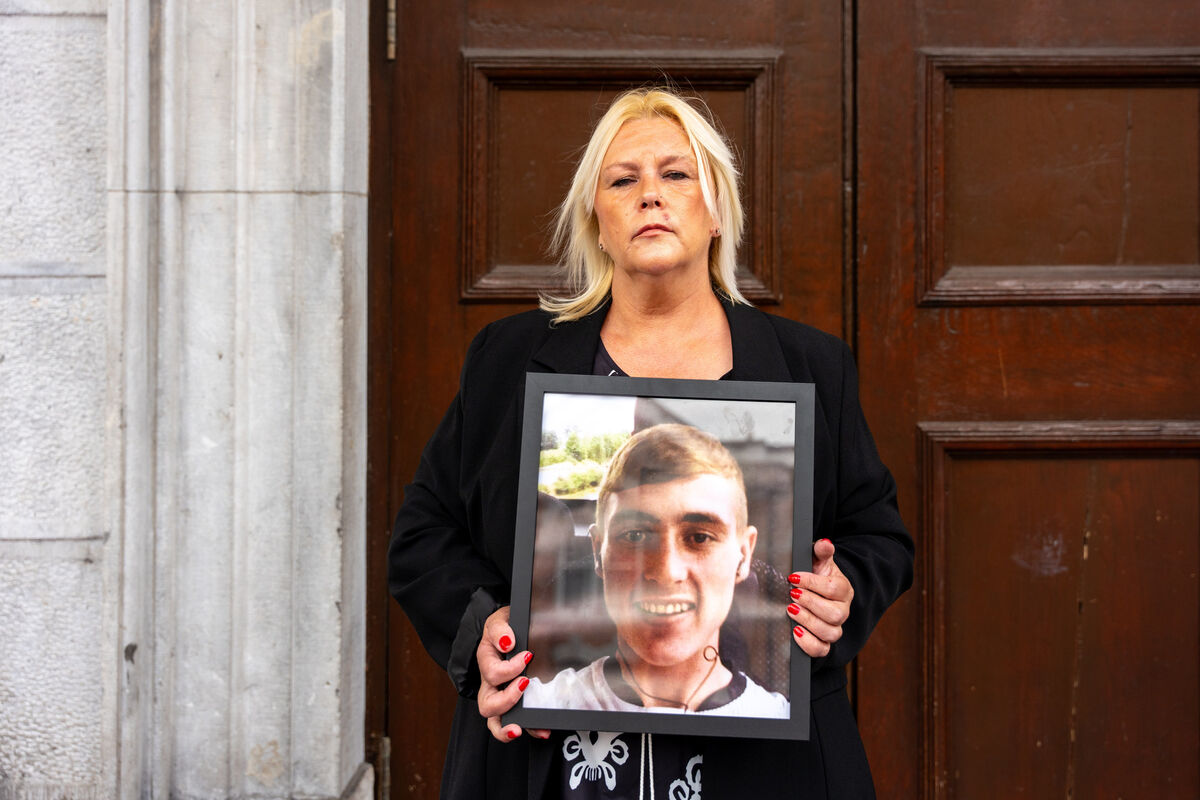
When committed to Cork Prison on March 8, 2024, Mr Crowley said that his life was chaotic and he was misusing drugs and alcohol.
He said he had suffered a seizure the day before entering prison.
But he was alert and coherent, and prison staff were not overly concerned.
He said he was “very sick” with withdrawal symptoms, and he was put on three medications to help with withdrawal and to control seizures. These were methadone, Librium, and Epilim.
But on the evening of March 12, 2024, after 5pm, he was unwell, he was shaking, his eyes were bulging, and he was sweating.
After 3am, on March 13, 2024, an ambulance was called to take him to a hospital emergency department as he was suffering from very low oxygen levels.
He told the ambulance paramedics that he had taken D5s — diazepam 5mg — something he had not been prescribed.
He also told his cellmate that he had taken another drug in prison, but did not name any.
But Mr Crowley stabilised quickly and was discharged back to Cork Prison that morning of March 13, 2024.
His cellmate, Richard O’Brien, said that when Mr Crowley came back from hospital, on March 13, 2024, he phoned his girlfriend and said that he was “grand”.
“He wasn’t grand, he was very pale and jittery,” Mr O’Brien said.
The cellmates went to sleep and woke around midnight. Mr O’Brien asked Mr Crowley if he wanted “a rollie”.
Mr Crowley sat up and started making a roll-up cigarette, but his eyes started rolling in his head and he lay back on the bed, Mr O’Brien said. Mr O'Brien said that he believed he had fallen asleep.
But when he woke at 7am on March 14, 2024, Mr Crowley was cold to the touch and had no pulse.
He raised the alarm, and prison officers and medical staff came to the cell.
But Mr Crowley, who was found lying on his back in his bed, had been dead for some time, with his hands already curled with rigor mortis.
Mr Crowley entered Cork Prison on March 8, 2024, and he was pronounced dead on the morning of March 14, 2024.
Nothing suspicious was found by gardaí during a subsequent search of his cell.
Cork Prison GP Dr Conor McGarry said he believed Mr Crowley was “repeatedly ingesting further substances when in custody”.
And using additional drugs on top of his prescribed medication could have reduced his respiratory rate to such a degree that when he fell asleep, he did not wake up.
But the court heard that evidence of State pathologist Dr Margot Bolster, to be given tomorrow, would contradict his opinion that Mr Crowley effectively died from an overdose.
Retired emergency medicine consultant Dr Iomhar O’Sullivan also said that his clinical findings did not fit with an acute overdose pattern.
Dr McGarry said that so many of his patients in Cork Prison "are homeless, living on the streets, in doorways".
“Some prisoners tell us they offend to get into prison, to have somewhere to go, like Airbnb,” he added.
And addiction problems are extremely common amongst the prison population, he said.
However, new, novel psychoactive drugs are now appearing in Cork Prison, Dr McGarry said.
Sometimes their effects are mild, but sometimes they are horrendous, with patients becoming psychotic, he said.
Traditional drugs are not as common as they used to be in prison, and it is difficult to keep drugs out, he said.
Testing for these multiplying types of new psychoactive drugs could and should be improved, he said.
"We only test for a standard suite of drugs, and are way behind the curve on what we should be testing for, there are so many novel drugs we are not testing for," he said. "And if we cannot monitor what patients are taking, it is harder to respond to an overdose."
The inquest, in front of Coroner Philip Comyn and a jury of five women and three men, continues.
CONNECT WITH US TODAY



Be the first to know the latest news and updates