Irish scientists invent device to prevent hospital patients getting ventilator-assisted pneumonia
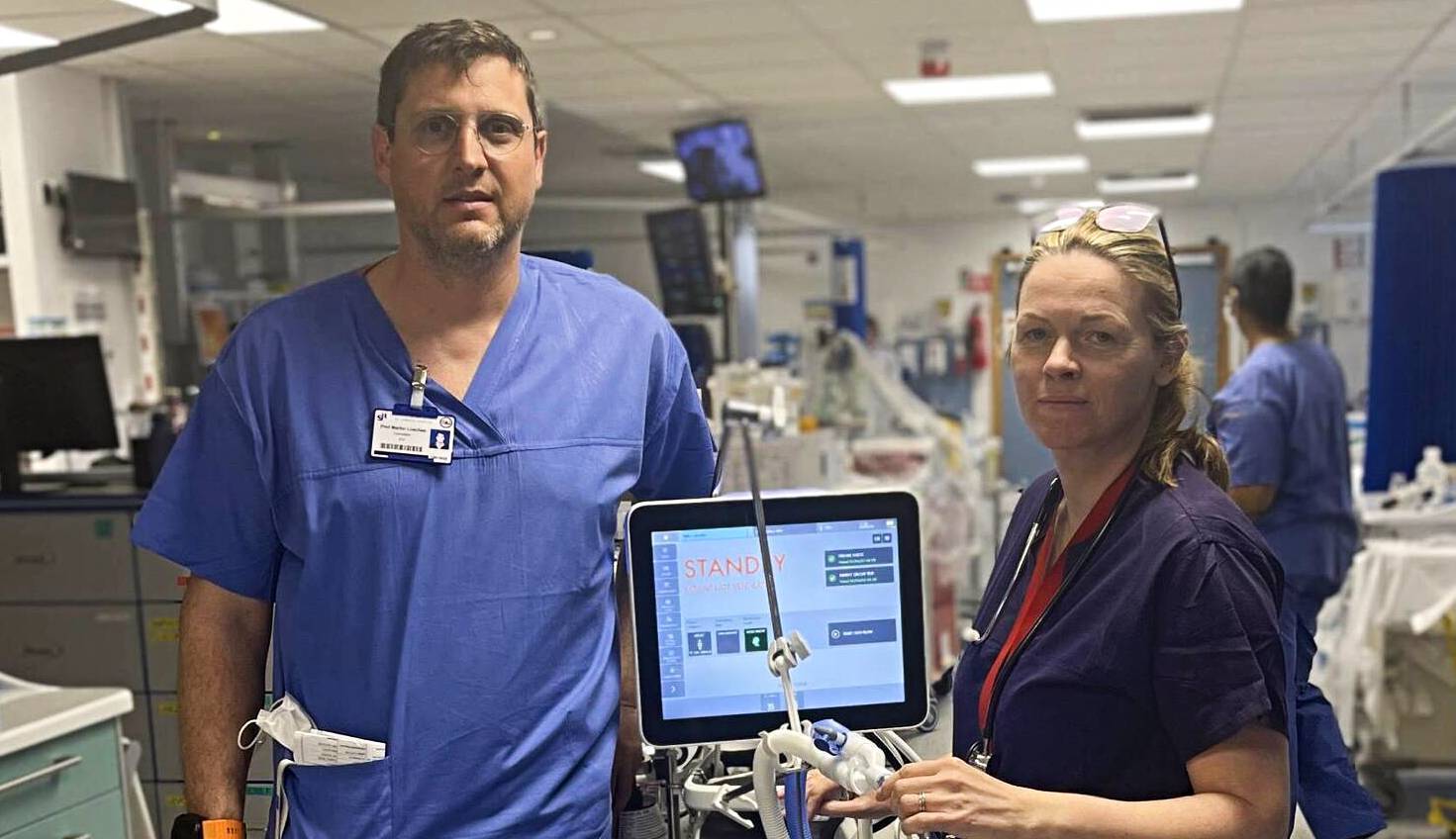
Professor Ignacio Martin-Loeches, professor of medicine at Trinity’s School of Medicine and consultant in intensive care medicine at St James’s Hospital and Emily Naylor Jones, co-founder and commercial lead of the NOVAP medical team, from Trinity’s School of Engineering.
An innovative medical device to tackle life-threatening ventilator-assisted pneumonia has been developed in Ireland and the team hopes it can be used worldwide.
This type of pneumonia is one of the most common serious infections patients in intensive care units can get. It affects up to 25% of patients on mechanical ventilation and increases the chances of death or a longer stay in ICU.
Patients also need longer antibiotic therapy at a time when antimicrobial resistance is on the increase. In addition, this all means the infection puts a heavy burden on healthcare costs.
The development team includes an ICU nurse and a consultant in intensive care medicine with frontline experience at St James Hospital.
That is one of the busiest ICUs in the country and saw many covid-19 patients during the pandemic.
Emily Naylor Jones is the co-founder and commercial lead of the ‘NOVAP Medical’ team, from Trinity College Dublin School of Engineering. She worked as an ICU nurse for 18 years.
“The underlying clinical need and concept came directly from experience in the ICU at St James’s, where I worked clinically,” she said.
“A solution that improves outcomes while fitting into existing clinical practice could make a huge impact.”
For patients, ventilator-assisted pneumonia is driven by harmful bacteria and other bugs moving into their normally sterile lower respiratory tract. The tube used for ventilation is a risk factor for this.
Read More
Ms Naylor Jones said: “Within hours of intubation, bacteria begin to stick to the internal surface of the tube, over time creating ‘biofilms’ of whole microbial communities.”
These biofilms then prevent the patients’ immune system from working properly. The team found current technologies for tackling this were “relatively ineffective”, she said.
“We have developed a mechanically active endotracheal tube designed to remove [the biofilm] before it can lead to infection,” she said.
The team also includes Ignacio Martin-Loeches, professor of medicine at Trinity’s School of Medicine and a consultant at St James’s Hospita,l as well as Professor Brooke Tornifoglio, assistant professor in Trinity’s School of Engineering.
The ‘NOVAP Medical’ technology won the 2026 Ideate Ireland entrepreneurship competition. Winners receive funding and are linked with venture capitalists and other entrepreneurs.
The work is in the second year of Enterprise Ireland Commercialisation Fund support.
NOVAP Medical is not yet in use, but Ms Naylor Jones said the current funding "is helping us move the technology through development and towards clinical evaluation and, ultimately, commercialisation".


CONNECT WITH US TODAY



Be the first to know the latest news and updates