Almost 8% of vehicles tested by NCT this year were classified 'failed dangerous', new figures show
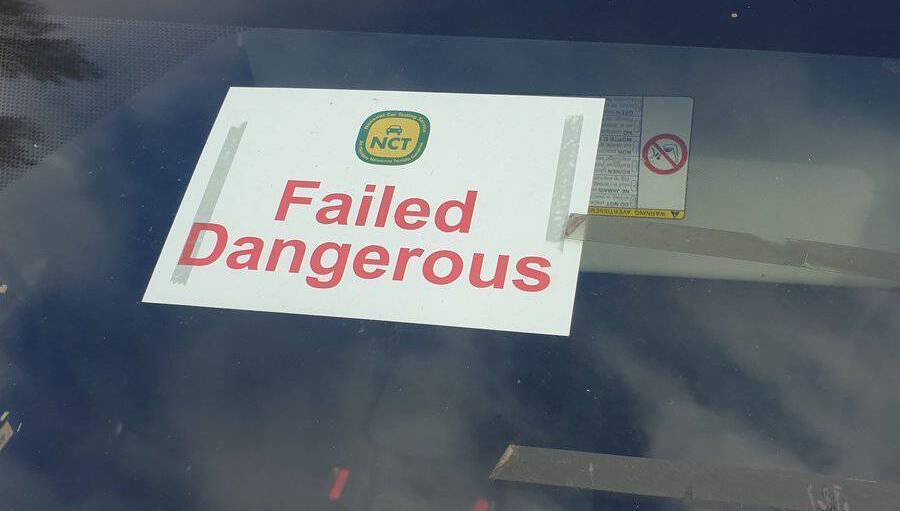
Cars deemed 'failed dangerous' will have a sticker stating their condition affixed to them by an NCT vehicle inspector, with motorists being advised they should have their vehicle towed away.

Cars deemed 'failed dangerous' will have a sticker stating their condition affixed to them by an NCT vehicle inspector, with motorists being advised they should have their vehicle towed away.

New figures show almost 8% of all vehicles submitted for a National Car Test (NCT) in the first half of 2026 were classified as dangerously defective — a total of 71,308 vehicles.

The proportion of cars deemed unsafe to be on public roads after being tested at the network of 50 NCT centres around the country is now at its highest ever rate of 7.7%.

The percentage of “failed dangerous” cars has grown annually from a low of 4.9% in 2020.

The figures show about one in every 13 vehicles assessed by NCT testers during 2026 received a “fail dangerous” grade.

The NCT, which is a compulsory vehicle inspection programme for all cars over four years old, checks more than 50 different items, including brakes, lights, steering, tyres, emissions, and bodywork, as well as windscreen wipers and seat belts.

The “failed dangerous” classification is applied to vehicles regarded as having a dangerous defect that “constitutes a direct or immediate risk to road safety such that the vehicle should not be used on the road under any circumstances.” 

Cars deemed “failed dangerous” will have a sticker stating their condition affixed to them by an NCT vehicle inspector, with motorists being advised they should have their vehicle towed away.

Research published by the Road Safety Authority last year revealed 21% of vehicles involved in driver fatalities between 2016 and 2020 had at least one defect recorded by a forensic collision investigator, of which 13% had defective tyres.

On a county basis, the highest “fail dangerous” rate was in Clare with 9.6% — almost one in 10 vehicles — followed by Meath, which averaged 9.2%, although the NCT centre in Navan had the highest of any location, with 9.8% of cars tested classified as dangerously defective.

Only two counties recorded a “fail dangerous” rate of below 7% — Wicklow (6.7%) and Tipperary (6.9%).

The NCT centre in Deansgrange, Co Dublin, had the lowest “failed dangerous” level of any location, with just 5.8% of cars deemed unroadworthy.

The figures show more than 2,200 vehicles remained dangerously defective even after they were resubmitted for further checks at NCT centres in the first half of 2025.

Commenting on the figures, an RSA spokesperson said it was an offence to drive a vehicle with dangerous defects on public roads.

“Vehicle owners need to embrace year-round responsibility for maintaining their cars, rather than relying on the NCT to identify faults,” the spokesperson said.

He claimed surveys had continuously highlighted “the disappointing culture of vehicle owners using the NCT as a diagnostic tool.” 

The spokesperson said such a trend contributed to inefficiencies in the system as well as increasing risks to road safety.

More in this section

Lunchtime News

Newsletter

Get a lunch briefing straight to your inbox at noon daily. Also be the first to know with our occasional Breaking News emails.

Cookie Policy Privacy Policy Brand Safety FAQ Help Contact Us Terms and Conditions

© Examiner Echo Group Limited