Bakhurst says Late Late Show host Kiely's salary is no more than €250k
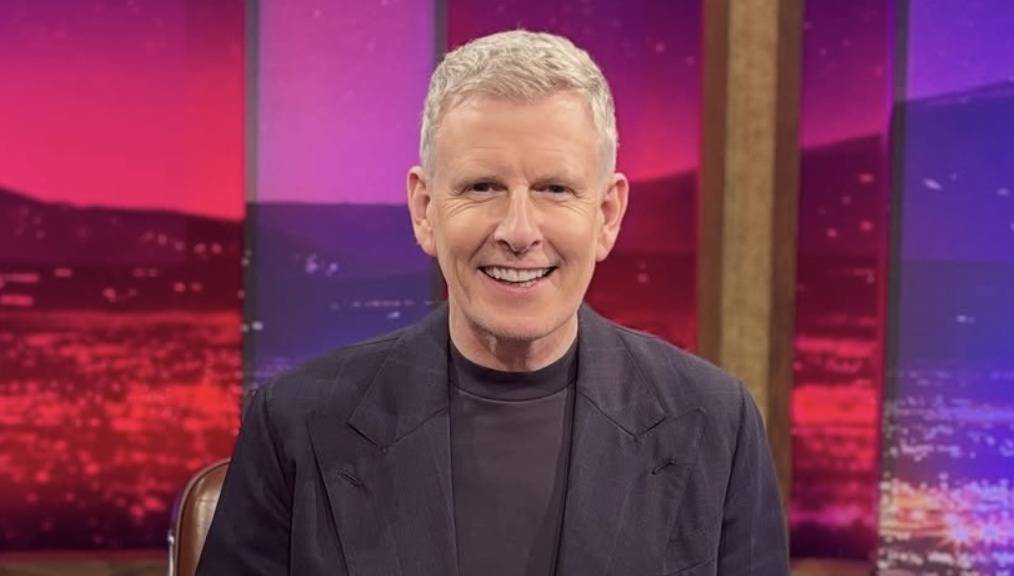
Late Late Show host Patrick Kielty
RTÉ director general Kevin Bakhurst has indicated that Late Late Show host Patrick Kielty’s base salary is no more than €250,000.
During an appearance at the Oireachtas Public Accounts Committee (PAC), Mr Bakhurst said “no one is employed directly on more than director general”, but there could be other costs allocated for wardrobe and transport.
Following the financial scandal that engulfed the national broadcaster in 2023, Mr Bakhurst vowed that no one would be paid more than the director general's salary, which is currently set at €250,000.
RTÉ announced earlier this week that Mr Kielty would host the Late Late Show until 2028. It followed uncertainty over whether he would remain on the flagship show following the expiration of his previous agreement.
Fine Gael TD Joe Neville noted that Mr Kielty’s contract was renewed and questioned how his salary was decided and whether his contract included “perks” such as transport costs.
“In terms of the salary itself, I said in 2023 no one would earn more than director general,” Mr Bakhurst said.
“No one is employed directly on more than the director general.” He also confirmed that there were no “side deals” or “side letters” guaranteeing additional income for anyone working for RTÉ.
Read More
In 2024, the Government agreed to provide €725m to RTÉ between 2025 and 2027. It committed to providing a top-up to the broadcaster’s licence fee revenue each year so that RTÉ would receive €225m in 2025, €240m in 2026, and €260m in 2027.
In his opening statement, the DG said he would “strongly appeal” that the current funding arrangements are repeated when it comes up for renewal in 2027.
This is despite media minister Patrick O’Donovan telling the Irish Examiner earlier this year that “under no circumstances” would that ring-fenced funding arrangement be repeated.
When those comments were put to Mr Bakhurst by Social Democrats TD Aidan Farrelly, the DG said he “hasn’t even started discussions with the minister or with officials yet”.
Mr Bakhurst conceded that the organisation will require ongoing public funding beyond 2027.
“We have a very wide remit to deliver, much of which actually costs quite a lot of money and makes no money commercially, such as Irish language, arts and culture, news and current affairs, investigative journalism, high-quality documentaries,” he said.
“None of those are cost-free, and they do need some sort of public funding. Now, whether the public funding is via the current license fee arrangement with some direct funding, or whether it's via a new way of funding it - that is, in the end, going to be a question for the department and for the Oireachtas and for this committee.
“But yes, we will need public funding unless we drastically reduce our remit, which is not our intention.”
The Government top-up will be in the region of €54.79m this year.
When asked what kind of top-up would be required in 2028, Mr Bakhurst agreed that it might be €65m, depending on inflation.
He said there is a “loophole” where people can watch RTÉ on the player without having to buy a TV licence. He argued that legislation needs to be “future-proofed” through a household charge, a reformed licence fee or another form of income.
Mr Bakhurst confirmed that RTÉ is currently in the middle of a plan to downsize its Montrose campus and to only use one end of the campus and dispose of the rest. He said the campus should be smaller within the next seven years, with the broadcaster intending to seek permission from the Government to sell land in Donnybrook.
The plans to downsize will go to the RTÉ board “in the coming weeks”.
RTÉ has confirmed it will attempt to reduce its headcount by 400 by 2028. There were 67 redundancies in 2025, with 30 other roles suppressed. There are plans to make between 40 and 60 redundancies for this year. Some 170 people are due to retire before 2028.
Fine Gael’s James Geoghegan questioned how RTÉ planned to reach the 400 numbers with so few staff members being given redundancy.
Mr Bakhurst said there will be larger numbers of exits in 2027 or 2028.
He added: “It'll be a mixture of a number of areas. There’s a number of big calls to make.
“One of them is about the future of Fair City and what we do with that.”
Adrian Lynch, RTÉ’s deputy director general, noted there were “up to 400” redundancies planned, but denied he was trying to “walk back” the commitment to reduce the headcount.
When asked what the “optimal” number of employees in the organisation would be, Mr Bakhurst said this would “depend on the remit and depend on the introduction of new technology and the introduction of AI and so on”.
When asked by Mr Farrelly what jobs could be taken by AI, Mr Bakhurst said “it’s not entirely clear yet”, but that the organisation is “not going to generate journalism via AI”.
The DG also argued that RTÉ cannot concentrate solely on making “cheaper programmes”.
“We're not in the business of being cheap as chips,” he said.
“We're in the business of providing high-quality content.”
He also defended the use of professional drivers for guests, denying that they are “limousines” but must be used rather than taxis for high-profile guests.
“We're a professional broadcaster. If you're going to attract top talent and top guests, then you have to provide a decent service when they get there,” Mr Bakhurst added.


CONNECT WITH US TODAY



Be the first to know the latest news and updates