Natalie McNally’s killer called himself a ‘monster’ in probation statements
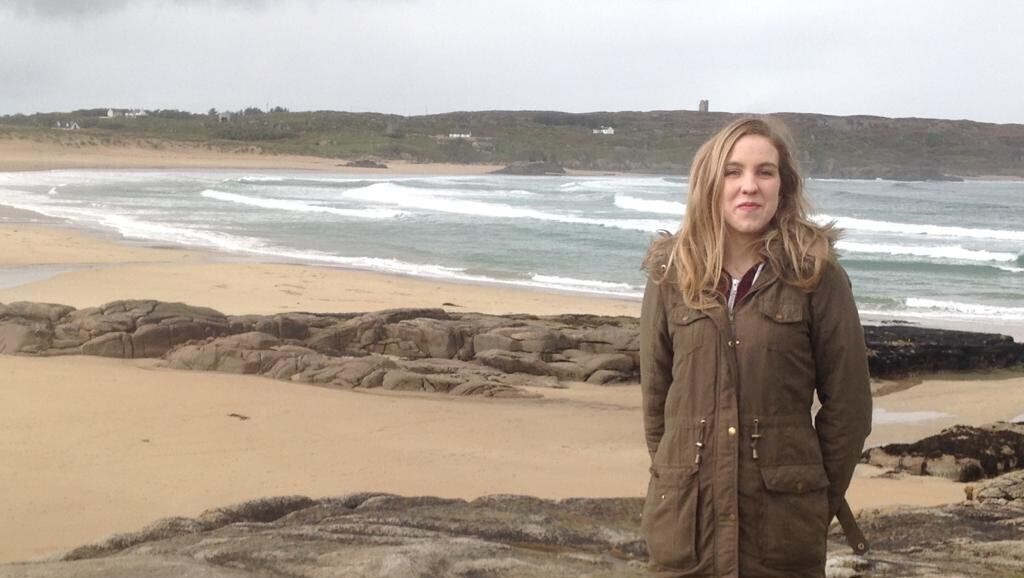
Natalie McNally (PSNI)
The man found guilty of murdering his pregnant partner, Natalie McNally, has referred to himself as a “monster” and expressed regret, a sentencing hearing has been told.
Stephen McCullagh, 36, of Woodland Gardens, Lisburn, denied the charge of murder, but was found guilty by a jury at Belfast Crown Court earlier this year following a five-week trial.
Ms McNally, 32, had been 15 weeks pregnant with their son when she was murdered at her home in Lurgan in December 2022.
A sentencing hearing on Thursday was told McCullagh made “self-contradictory” and “incredible” statements to his probation officer, first insisting he “was convinced that he was not guilty of the murder”.
McCullagh, wearing a blue T-shirt, glasses and grey trousers, was present for the hearing, sitting in the dock, while Ms McNally’s family watched on from the public gallery.
Prosecuting barrister Charles MacCreanor KC said: “When the jury came back so quickly, he only then began to suspect that he might be responsible, although he cannot make sense of the murder.”
Speaking of Ms McNally, McCullagh went on to say: “I don’t remember feeling the need for her to die,” according to the probation report.
The probation officer further noted McCullagh described the murder as “evil” and “vicious”, and referred to himself as “a monster”, the court heard.
He also said: “I’m sorry for what I did to that poor family, what I did to Natalie,” and “I would take it back if I could.”
McCullagh reportedly stated he “wants to be part of the solution” and “to be a mentor for other men”, which the prosecution said goes against the murderer’s initial blaming of Natalie’s death on her ex-boyfriend.
“He was assessed as causing a high likelihood of further offending,” Mr MacCreanor said, citing the probation report.
“There is no evidence of any insight into his behaviour.
“He will require long-term risk management, including long-term interventions.”
The trial heard that McCullagh concocted an alibi that he had been live-streaming himself playing computer games on his YouTube channel when Ms McNally was murdered on December 18 2022.
But police experts discovered the six-hour stream had actually been filmed four days before, and broadcast as live on December 18.
Mr MacCreanor KC said the murderer had put on a “staged performance” in the aftermath of the killing.
He said Ms McNally had sustained serious and extensive injuries in a “brutal assault”.
He said this included the compression of her neck, as well as stab wounds to her neck and blunt force trauma to her head consistent with at least five heavy blows.
He said either the compression or the stab wounds could have caused her death on their own, but there was difficulty in determining the final sequence of events.
Mr MacCreanor told the court that McCullagh had put forward an “orchestrated show” as the person who raised the alarm about her death, and the police initially considered him to be overwhelmed.
He added: “That of course was all a staged performance by him, one that he may have thought he had gotten away with.”
He said this was part of a “front” which showed the “callous, premeditated nature” of the offence.
Mr MacCreanor said McCullagh had no difficulty launching a false alibi and pointing the finger of blame at another person – Ms McNally’s ex-boyfriend – while presenting as a victim who lost his pregnant partner.
In reference to the fake “Violent Night” livestream, he said: “The craft of his false alibi was significant.”
He said it was part of efforts to avoid detection in his “murderous plan”.
Defence barrister John Kearney KC argued McCullagh’s minimum term could fall within the 15 to 16 years starting point.
He further told the hearing there was no evidence the murder of Ms McNally contained elements of “punishment or humiliation”, as the prosecution argued, notably that she was found with her face in a dog bowl.
Mr MacCreanor responded by telling the court Ms McNally had also suffered a stab wound to her pelvis area, near to “where her unborn child was developing at the time”, which he said was a “specific act” by McCullagh.
Trial Judge Mr Justice Kinney is expected to deliver the sentence tariff at a hearing on June 3.

CONNECT WITH US TODAY



Be the first to know the latest news and updates