Mother calls for continuation of RSV vaccine programme after Hiqa deems it too expensive
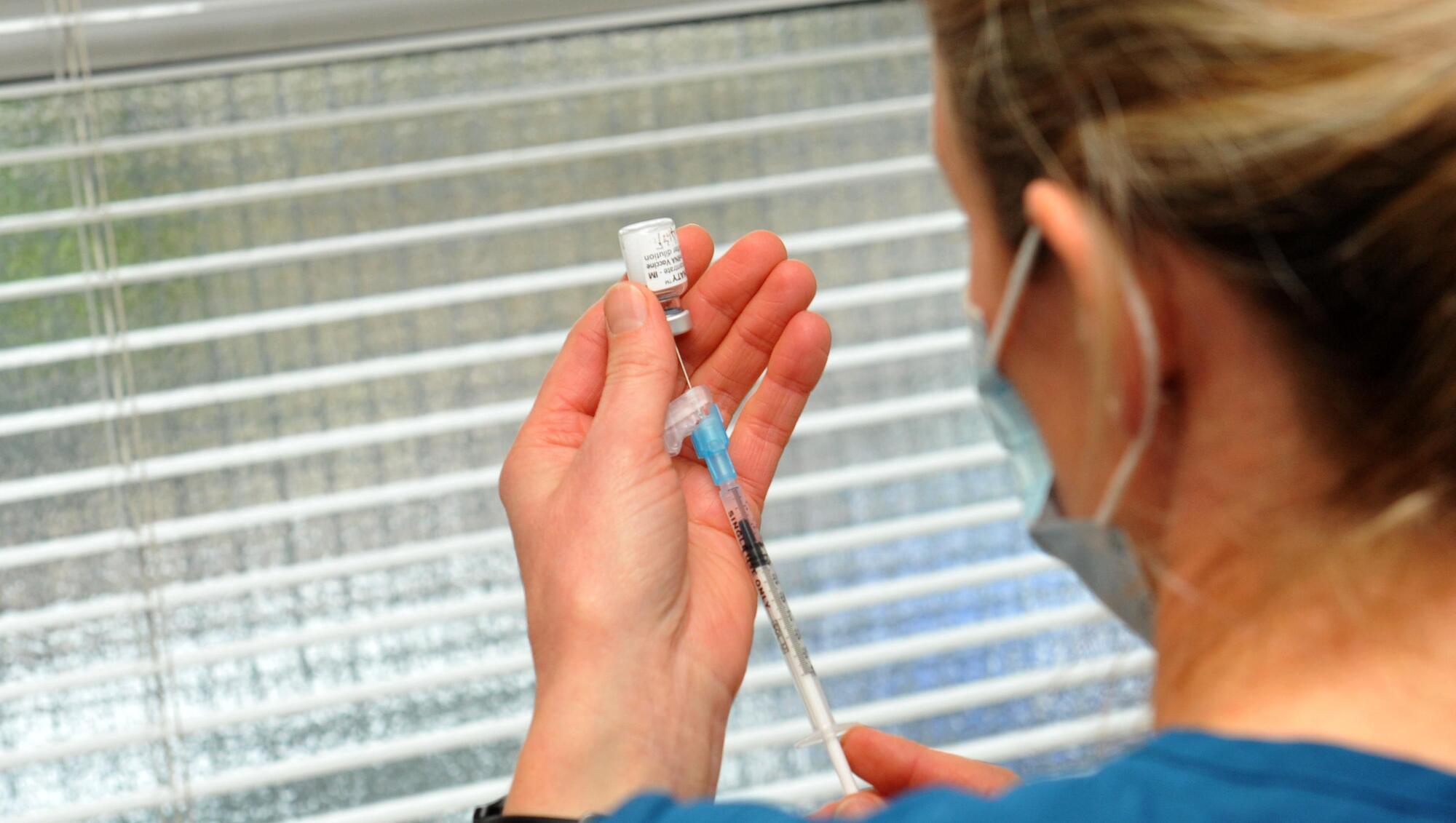
A pilot vaccination programme will be repeated this winter for the third year, the HSE has said. File picture: Larry Cummins
A mother whose newborn baby spent six weeks in hospital with RSV has called on the Government to continue supporting vaccination against the virus.
This follows advice from Hiqa to the health minister, published Tuesday, that the vaccines are safe and effective but too expensive at current prices.
A pilot vaccination programme will be repeated this winter for the third year, the HSE said on Monday. Then it is up to Jennifer Carroll MacNeill to decide on future plans.
Ciara Farrell’s daughter Daisy was admitted to CHI at Temple Street aged just over five weeks old in 2023.
Ms Farrell said: “When we were in with Daisy, the ward was like pandemonium. It was full of very, very ill newborns, two-week-old babies.
The impact continued after they returned home to Louth.
“Your child’s been tube-fed for six weeks so she doesn’t know how to use a bottle or breast-feed,” she said.
“It goes into nearly a year of re-training your child, I wouldn’t wish it on anybody.”
She is pregnant with their third child and relieved the vaccine programme remains for now.
"I think it's the best thing ever that vaccine, because of what happened to us," she said.
At Children’s Health Ireland, clinical director and paediatric emergency medicine consultant, Turlough Bolger, saw “a massive improvement” after the pilot began in 2024. CHI runs the only paediatric intensive care units (PICU) in Ireland.
“It leads to a 50% reduction in attendance in the intensive care unit and also a shorter length of stay in the intensive care unit,” he said.
“So overall between those two things you are seeing a massive reduction in PICU days of children with RSV.”
He added: “it’s almost impossible to avoid RSV, and it’s very infectious”.
He acknowledged Hiqa weighed these costs against vaccine prices. “That’s a commercial negotiation,” he said.
“So the most important thing is we look at the clinical effectiveness. And look at these children being transferred up from Cork, Galway or Donegal with severe bronchiolitis and RSV infection, and the trauma and the danger of having to drive all that distance up to an ICU bed.”
Funding decisions, however, are not made in isolation, according to health economist and MSc in Health Economics, University of Galway programme director, Ronan Mahon.
“The HSE is faced with very difficult and ultimately unavoidable decisions,” he said.
“In a finitely-resourced healthcare system, every euro spent on a new intervention is a euro that cannot be spent on other healthcare so the HSE have to choose what to fund and what not to fund to try to achieve the most health gain possible.”
In general there may be a chance to negotiate "a more reasonable price" so all patients benefit, he noted.
Hiqa estimated immunisation could be cost-effective if the HSE can negotiate lower prices. It found over five years options could cost €15.6m to €58.5m at current prices.
The Department of Health also said the pilot continues this winter.
It will work with Hiqa and the HSE "to consider the findings and options set out in the assessment, including operational and budget impacts".


CONNECT WITH US TODAY



Be the first to know the latest news and updates