Recreating the travel experience of 19th century railways
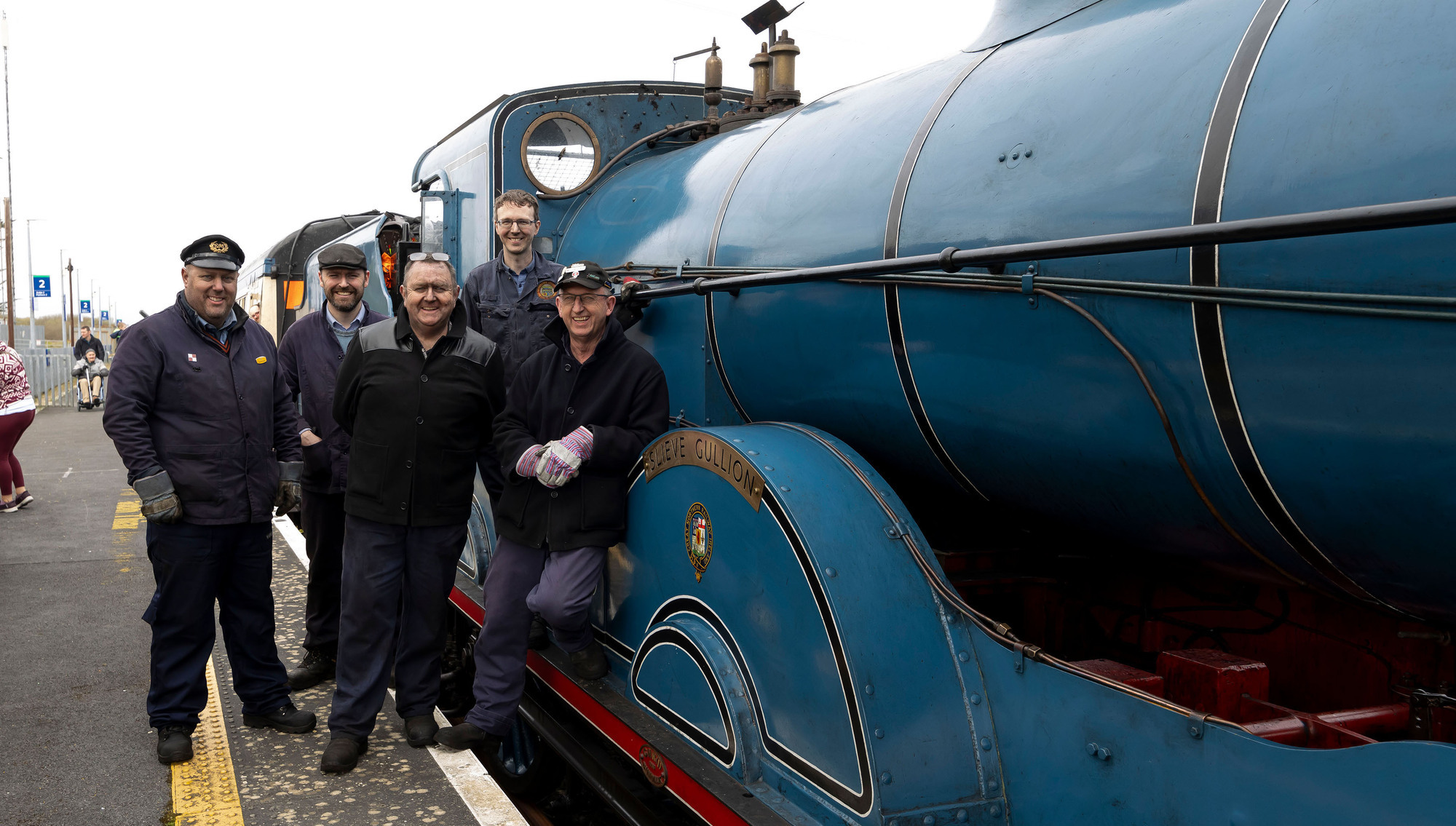
Just like their beloved pride and joy, the crew behind one of Ireland’s last vintage locomotives has yet to run out of steam.
Following its return to the tracks almost two years ago, the 171 Slieve Gullion steam train continues to benefit from the dedication of experts who make its nostalgia-fuelled trips possible.

The feat of old school engineering is one of a fleet of vintage steam trains that have been lovingly restored in recent years by the Railway Preservation Society of Ireland (RPSI).
With a number of trips scheduled throughout the year, the organisation, which has been operating since 1964, works closely with Irish Rail to recreate the experience of passengers of the 19th century.
Read More
In recent years they have been operating vintage steam trains on the national rail network in the Republic and Translink in Northern Ireland.
It comes several decades after the phasing out of steam trains between 1962 and 1970.
Ken Fox from Cork, who has been a train driver with Irish Rail and the RPSI for several decades, offered an insight into a day in the life of a steam train crew, with his colleagues Keith Farrelly, Robert Jolley, and Keith Doyle.
“There are some people out there who think that we are just playing with trains.
“However, in reality there is so much work and skill that goes into operating a steam train.
“Keith Farrelly, Robert, and I are qualified for firing and driving while Keith Doyle is a driver who is in the process of qualifying as a fireman.
“The driving is probably easier once you get into it. However, there is fierce skill in the firing job.
“We also have an Irish rail inspector to help with sightings and signals. As a fireman you are in charge of shovelling coal from the tender into the firebox.”
“You are also responsible for putting water into the boiler. It’s a lot different to working with a diesel train because you have to plan two or three miles ahead. You can’t just pile coal into the firebox and suddenly get more steam.
“It’s a delicate balance. It’s really important not to over-fire or under-fire. You also don’t want to put too much or little water in as this can also create problems.”
The crew often bond over their shared interest.
“We are assessed every year and crew interaction accounts for 25% of this. Communication among the crew is really important.
“The driver could be driving very hard and flogging the fireman to death or vice versa. It’s all about communication and, of course, the bit of craic too.
“The fact that we are all so passionate about steam trains really helps. If you don’t have the interest then there is no point being involved.”

He explained why operating a steam train can be challenging in modern times.
“One of the biggest problems nowadays is the quality of the coal. You don’t really know what you have anymore until you put it in the firebox. Some coal is brilliant.
“Then you get the coal that’s like butter because it literally melts straight away.
“A good batch of coal burns clean. A piece of coal with impurities has the potential to cause a lot of damage and can get you in fierce trouble The quality of the coal determines a lot.”
Mr Fox explained why steam trains are not for the faint hearted.
“Of course there are no heaters or draft excluders in the cab so it’s important to wrap up well. Even in summer it is freezing on a locomotive so you have to be as prepared as possible.”