'The system failed him': Brother of man who died by suicide calls for change at Oireachtas committee
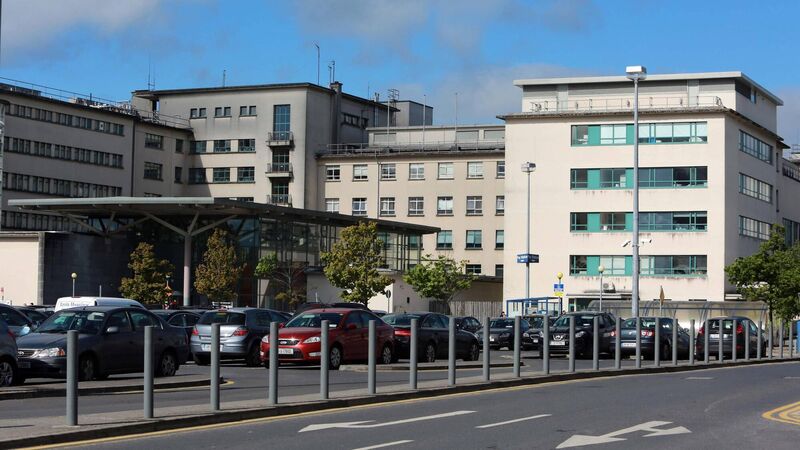
Adam Loughnane, aged 34, presented at the emergency department of University Hospital Galway on February 11, 2025. File picture
The brother of a man who died by suicide after he was left waiting for treatment at a hospital while experiencing a mental health crisis has said “the system failed him”.
Adam Loughnane, aged 34, presented at the emergency department of University Hospital Galway on February 11, 2025.
When he got to the hospital, he told staff several times that he wanted to end his life.
Mr Loughnane has been campaigning for a dedicated mental health emergency unit following his brother’s death, and said A&E is not the place for anyone who is suicidal.
“The revolving door nature of endless visits to emergency departments is forcing our loved ones to end their lives.

“In Adam's memory, we've been campaigning for the establishment of mental health A&Es, which has the support of over 21,000 people through a petition, as well as support from the Mental Health Commission, Mental Health Reform, the College of Psychiatrists of Ireland, and the Irish Patients Association."
He described his late brother as “academically gifted” and “one of the kindest, most gentle souls I'll ever meet".
“Our campaign has continuously pointed out that Adam's death was not the fault of any one staff member. The system failed him,” he said.
“Most emergency departments in the country haven't been updated in over 20 years."
“If Adam had been advised to attend a more appropriate setting for someone experiencing a mental health crisis, I genuinely believe he would still be here today.
“He had done everything right, but ultimately he was failed when he needed help the most”, he told the committee.
He said his brother’s death has shone a light on an experience shared by thousands of families across this country.
“People in suicidal stress being ignored and stigmatised by inappropriate health care environments providing inadequate care. This has to be the line in the sand," Joe said.
“We have the funding, the buildings, and the people to create separate, dedicated emergency spaces for patients experiencing a mental health crisis.”
Mr Loughnane was joined by Louise Doyle, professor in mental health nursing and head of mental health nursing at Trinity College Dublin.
Professor Doyle specialises in suicide and self-harm and has more than 20 years of experience in the area.
She referenced key findings in two recent studies focusing on the experiences of service users and their families following presentations to emergency departments with suicidal behaviour.
“We conducted in-depth interviews with 50 people from across the country, interviewing 39 women and 11 men, ranging in age from 19 to 68, who attended 21 of the 26 emergency departments in Ireland,” she said.
“As one participant noted, I knew I was in trouble."
She said the majority of service users reported negative experiences.
“It was not viewed as a conducive environment to engage in any kind of therapeutic communication and staff were perceived as being hurried and under time constraints.
“Participants described mental health assessments in the emergency department as formulaic, rushed, and lacking depth."
She told the committee she supported families when it came to providing a more holistic approach to treating people in a crisis.
Chairwoman of the committee Louise O’Reilly said she will take the concerns of Mr Loughnane and Professor Doyle to government to consider the establishment of 24/7 crisis centres around the country.

CONNECT WITH US TODAY



Be the first to know the latest news and updates