Households' response to storms leading to 'worse environmental outcomes'
Households' response to storms leading to 'worse environmental outcomes'

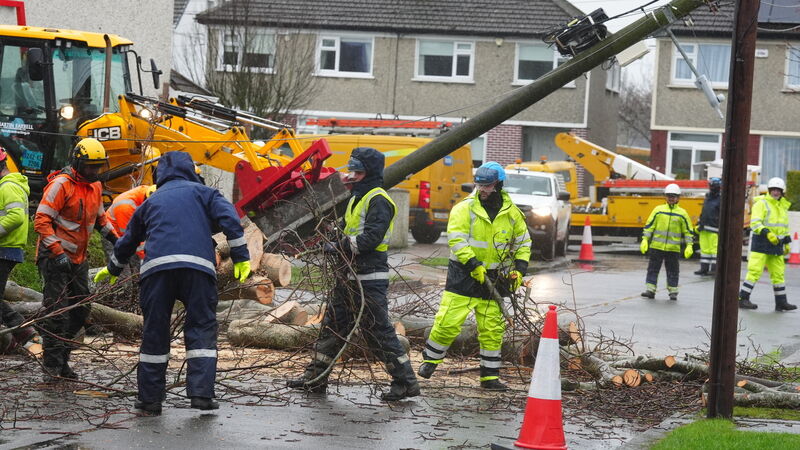
Examining the steps taken following extreme weather events such as Storm Éowyn, the report suggests that transformation of Ireland’s energy system is 'fragmented', creating increased costs and reducing public support. File Picture: Brian Lawless/PA


“Understandable” steps taken by individual households to improve their resilience to extreme weather such as Storm Éowyn are leading to “worse environmental outcomes and inefficient solutions”, a report has found.

The National Economic and Social Council (Nesc) said new solutions are required to better manage the situation when storms knock out power to homes.

It said it has become difficult for the public to “reconcile experience of storm-related outages with messages on the need to electrify”.

“Improved resilience to the impact of climate change should be a benefit of [energy] transition, but [we noted] a concern among households with how resilient their energy source is in the face of extreme weather events,” it said.

The report suggests that transformation of Ireland’s energy system is “fragmented”, creating increased costs and reducing public support.

Nesc said the major shift needed in energy to reduce our greenhouse gas emissions is leading to tensions across the energy system and missed opportunities.

It called for a more unified approach to the energy transition to help households become more resilient as they invest in energy efficiency, micro-generation, and electric vehicles.

“The diversity of approaches across the energy sector creates uncertainty for investors leading to increased costs,” said Nesc policy analyst Gemma O’Reilly.

“It also reduces support among the public, as contradictory messages and missed opportunities lead to frustration and loss of confidence.”

Nesc said it worked with over 50 stakeholders on the report, with such discussions emphasising that efforts already under way to reduce emissions are happening in “silos”.

It suggested there is a limited common understanding of the transition already under way, or a shared vision of what success looks like, given the complexities in our energy system currently from electricity and gas to fuel delivery and district heating systems.

'Multifaceted challenge and opportunity'

Given this complexity, Nesc said there is a risk of missing opportunities for “synergies and additional benefits”, slowing down the transition, and undermining public support.

“The energy transition is a multifaceted challenge and opportunity,” Ms O’Reilly said.

“If we pay more attention to the connections between energy solutions in heat, transport, and electricity, the energy transition can create more benefits for people, business, and communities such as enhanced affordability, increased resilience to extreme events, and better environmental outcomes.”

In its recommendations, it said that a cross-government energy framework should set out a joint approach to transforming electricity, heat, and transport together, as well as a future independent from fossil fuels.

It said that, to create a more affordable and sustainable energy system, managing the timing and location of both the supply and consumption of energy will be important, as well as managing energy demand levels.

“The benefits of the energy transition for Ireland will only be realised if we have a joined-up approach to policy and implementation,” said Nesc director Larry O’Connell.

In a statement, the Government welcomed the report from Nesc.

It highlighted some of its key findings.

“Achieving resilience is a greater concern for households following Storm Éowyn, and could be a motivation for change,” it said.

x

Check out the Irish Examiner's WEATHER CENTRE for regularly updated short and long range forecasts wherever you are.

More in this section

Lunchtime News

Newsletter

Keep up with stories of the day with our lunchtime news wrap and important breaking news alerts.

Cookie Policy Privacy Policy Brand Safety FAQ Help Contact Us Terms and Conditions

© Examiner Echo Group Limited