A son's journey to from loss to lifesaving research
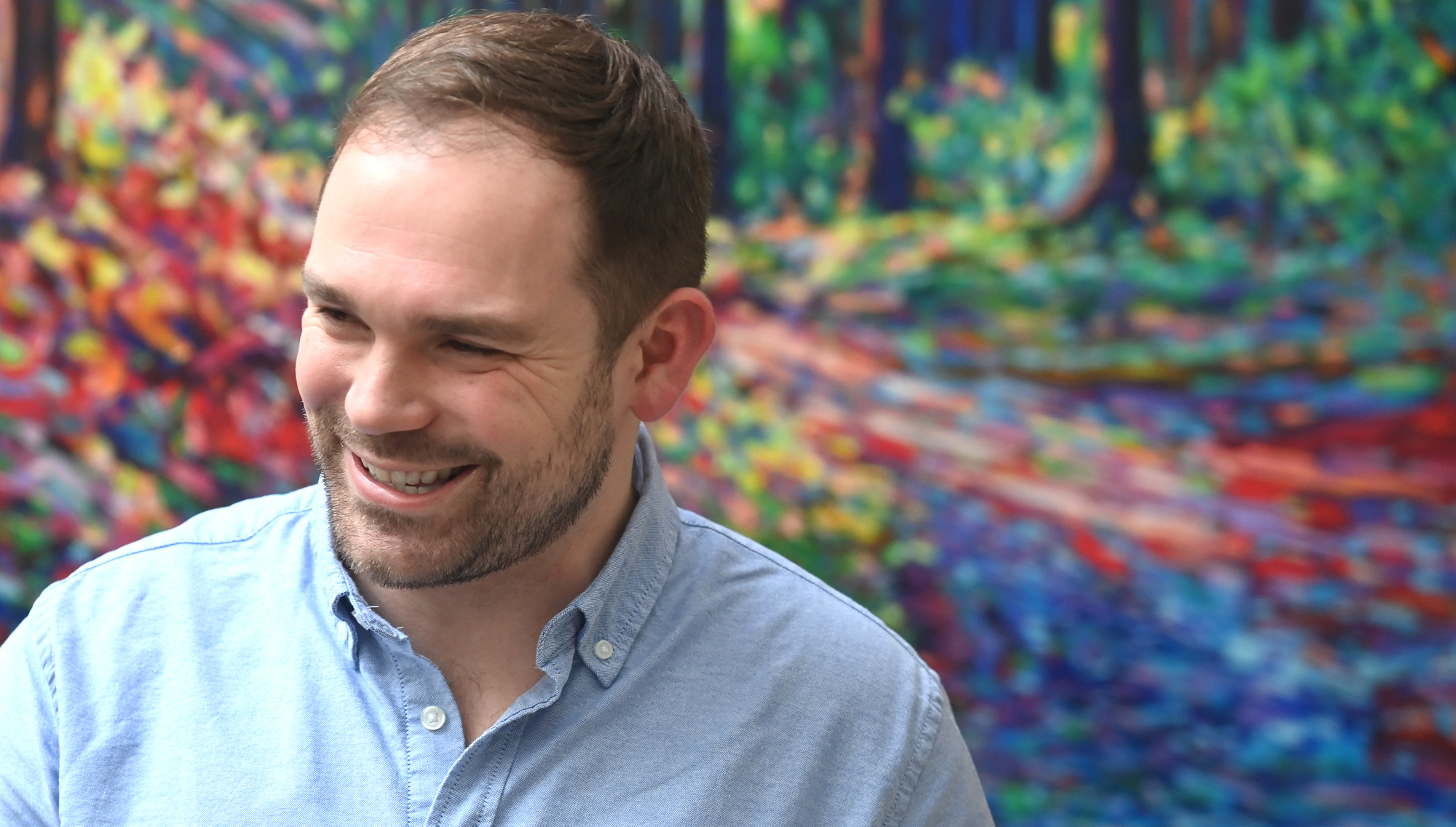
Cian O'Donnell, son of Aonghus O'Donnell is doing a research doctorate at Oxford focusing on designing genetic therapies for cardiomyopathies as part of the CureHeart project Picture: Larry Cummins
After three years of construction, more than a decade of planning, and €85m in investment, the Cardiac Renal Centre was being unveiled, with taoiseach Brian Cowen on hand — doing as taoisigh do and cutting the proverbial ribbon.

Aonghus, then a surgeon at CUH for close to 15 years, had been pivotal in developing the unit — which in the weeks to come would make some 140 beds available to patients in the Cork and Kerry area.
Its design stretched beyond function. On brighter days, as medics, patients, and visitors moved to and fro, uplifting light poured into the new atrium from banks of slatted windows in the ceiling above. That Friday, all Cork could muster was grey skies. No matter. To mark the occasion, Aonghus said a few words about all the new unit promised to offer, and then he went back to work in the same place he would, in all likelihood, spend the rest of his career.

Career, though, seems frivolous — it fails to capture the impact he made. Take a patient named Tina Conroy. Just two weeks before the official opening, her heart was failing. Though still a young woman, she had gotten her affairs in order; such were the possibilities. Then Aonghus operated on her, and the surgery — like thousands of others he’d performed — had been a success.
While recovering, Tina discovered photography. Her first exhibition was held in Bantry last year and was dedicated to the “incredible human being” who saved her life, she told The Southern Star.

For Aonghus, the operation was a day’s work done, a life extended, and then back to the family home in Douglas. To his children Aoife, Cian, Niamh, Neassa, and Roisin. And to his wife and partner in it all, Miriam.

On a wet Saturday morning in late January this year, Cian O’Donnell — Aonghus’s only son and my best friend of nearly 20 years — stood in the same wing of the same hospital and thought of his father.

He’d been thinking and talking about him a lot that morning as we made our way from my family home in Rochestown out to CUH, stopping off at the original family home along the way. The site of so many of Cian’s childhood memories, the house sits in a quiet cul-de-sac off the Well Rd and is home now to another young family making their way in the world.
His dad was on his mind because in the last six months, Cian, aged 31, has made a big change in his life. He hasn’t followed his dad into medicine, but he’s playing in the same ballpark.
Last September, he began a PhD at Oxford University, where he’ll be researching the potential of gene therapies to treat, and perhaps even cure, the genetic heart condition hypertrophic cardiomyopathy (HCM) for the next three years. The most common inherited heart disease, HCM affects around one in 500 people in Ireland, and Cian is among them.
HCM, he explains, can be asymptomatic, and when people present symptoms, but will often stabilise over time. But for others, the condition will progress, typically following a similar path.

“The tiny molecular motors which power cardiac cells and help to ensure the heart beats in a coordinated way can begin to malfunction”, he explains, placing additional strain on the organ and causing it to thicken. Blood can be obstructed from leaving the heart, and scar tissue may develop, disrupting the path of the electrical impulses which travel through it, beat by beat.
The results can be catastrophic. For those most at risk, like Cian, an internal defibrillator can be fitted, acting as an “insurance policy” in an emergency. Medication can help to alleviate symptoms. But neither “addresses the issue at its source”, he says.
The goal of the CureHeart project, the international collective of research labs under whose auspices he now works, is to go a step beyond. Funded by a British Heart Foundation grant, CureHeart researchers are exploring the viability of manipulating gene behaviour and even altering the genetic sequences which give rise to cardiomyopathy in the first place.
Ultimately, the hope is that gene therapies will provide a cure for HCM — that one day, your DNA will no longer be your destiny.
When you arrive at the CUH Cardiac Renal Centre, make your way to the atrium where you’ll see a painting of a forest clearing in spring, The Kerry Way by Dr Carl Vaughan. A small plaque underneath reads: “In memory of our colleague and friend Aonghus O’Donnell”.

On Thursday, November 17, 2010, almost a month to the day after the unveiling of the new unit, Aonghus suffered an arrhythmia at home and died aged 49. The underlying cause was HCM.
He spent his final hours watching a mid-week Munster match with Cian, then 16. The match ended, and as they both headed to bed, their final words — a goodbye from father to son on an ordinary evening in November — were: “Love you. Night.”
Looking back, if there had to be an end, that was “a lovely place to leave it”, says Cian. But in the moment, his dad’s death caused a fracture in how he saw the world: “It felt like the bedrock of everything had been ripped out and nothing was certain anymore. Like, if this can happen, anything can happen. Good or bad.”
That sense of seeming powerlessness was mirrored in what was to come.
Following their father’s death, Cian and his sisters were screened each year by the charity Cardiac Risk in the Young Ireland (CRY), which now funds his PhD. For a long time, everything looked normal.
But while studying at Notre Dame in Indiana in 2018, Cian’s body started acting up. While physically fit, he found himself having to drop weights in the gym for fear he was going to pass out; after drinking alcohol, he would lie awake listening to his heart pound in his chest. Further testing in the US found no issues.
The symptoms and his anxiety around them built, becoming so severe that there were nights when he feared he wouldn’t wake up again. His days were spent checking his pulse, coaxing his heart along to make sure it was still beating normally. Doctors continued to reassure him that there was nothing to worry about.

During a visit from his mum, a period where his symptoms were particularly heightened, he decided something had to be done. They went to the emergency room and insisted on further testing, testing which confirmed a diagnosis of HCM.
It felt in part like a release: “We went back to my mum’s hotel room, and I’ll never forget it. The door closed, and I just crumpled into her arms, crying. She was patting my back, saying: ‘At least we know, at least we know.’
“I could tell a part of that was concern for me; a part was some sense of relief, and a part was maybe justice. That what happened to her husband wasn’t going to happen to me because we understood my risk profile and we were going to do something about it.”
In the years since, Cian’s symptoms have stabilised. He takes medication, exercises, and for the most part, leads a normal life. And his definition of what it means to do something about it has expanded.
The O’Donnells’ home base is in Castlegregory now, the Kerry town where Aonghus’s father was from and where Aonghus had hoped to retire to. When Cian and I recently visited on the morning after his stag party, we were met by four generations of his family. And on the kitchen table, smiling out from a photo of his wedding to Miriam, was Aonghus, then almost the same age as Cian will be when he gets married this summer.
In the last two years, Cian has begun asking himself: “If life is short, and I know it can be very short, what’s the most meaningful, interesting, and true to yourself thing you can do?”
It’s a question he’s continuing to try to answer day by day at Oxford University. Looking toward his dad’s life offers him clues.
Aonghus dedicated himself to a career so all-encompassing that it was not uncommon for patients to approach him on the street, unbutton their shirts, and ask him to check how their scars were healing. He always gladly obliged.

He got married and had a family, a family he “was just completely in love with”, Cian says. It was a life, Aonghus’s old friend Tom Aherne once wrote, that was “packed down, shaken together and flowing over”.
And it flows over still: In the photographs on the walls and the windowsills in Castlegregory, where he’s holding a fish, bumping bellies with his brother, or surrounded by a gaggle of children.
He’s there in CUH, too, in the strokes of The Kerry Way. When his grandchildren, Harry and Jack, were born, they each stopped by with their parents to have their photograph taken with the painting — just to say hello, before heading out the hospital doors to start lives of their own.
- To find out more or to support Cardiac Risk in the Young Ireland’s work, see: cry.ie