'Cancer doesn't discriminate by age': Warning as cases rise among people under age 49
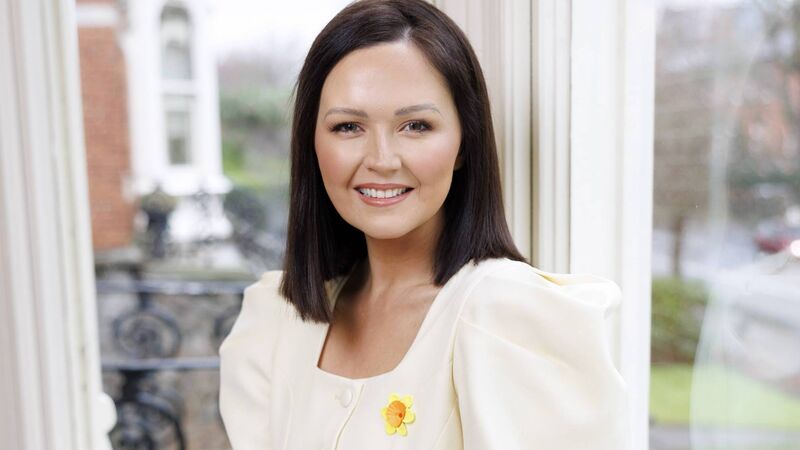
Influencer and breast cancer patient Jennifer Wrynne launches the Irish Cancer Society’s Daffodil Day 2026 on World Cancer Day. Picture: Andres Poveda
The Irish Cancer Society and OECD have warned of “concerning” rises in cancer among people under 49, particularly among younger women.
Since the year 2000, the number of new cancer cases has surged by about 30% for both sexes, said the OECD. However, it said fewer people are dying from the disease, with death rates falling by 18% among women and 26% among men.
Jennifer Wrynne, an influencer with almost 150,000 followers on Instagram, was diagnosed with breast cancer at age 36. “Sadly, cancer doesn’t discriminate by age,” she says.
“I had recently welcomed my fourth baby, and cancer was the last thing on my mind. Life was busy and full and then suddenly everything stopped. My world was turned upside down overnight.”
Read More
Jennifer and her family faced “fear, shock, and huge uncertainty”.
Like many thousands of others, she was helped by the Irish Cancer Society. To mark World Cancer Day on Wednesday, she called on people to support fundraisers for Daffodil Day next month.
“By sharing my story and supporting Daffodil Day I want to not only raise awareness and vital funds, but also remind others that they are not alone, and that there is strength, hope, and a life beyond a diagnosis,” she said.
The society has committed over €1m for the Young Onset Cancer Pilot Programme for 2026 and 2027. Delivered in partnership with the Trinity St James’s Cancer Institute, it includes supports for fertility challenges, sexual health, and living as a cancer survivor.
This comes as OECD data shows how EU health services are facing "sustained pressures" from the high numbers of cancers and the growing population of survivors.
“Concerningly, cancer diagnoses among younger people, ages 15-49, have increased more widely among women,” it said.
The rate of new cases among young women relative to the population grew by 16%. This includes an increase of 120% in thyroid cancers, 48% in skin melanomas, 16% in breast cancers, and 10% in colorectal cancers.
It also saw reductions in the incidence of cervical cancer (a drop of 2.2 cases per 100,000 women) and ovarian cancer (a drop of 1.6 cases per 100,000). The OECD said these reductions “are not large enough to offset increases coming from other cancer types”.
Data for men shows a 50% rise in skin melanomas, a 38% rise in testicular cancer, and a 12% increase in colorectal cancers.
It is not yet clear why more younger people are getting cancers. Possible factors include changing reproductive patterns affecting breast cancer, said the OECD report, which also pointed to increased detection of thyroid cancer or early-life exposures and diet affecting colorectal cancer rates.
CONNECT WITH US TODAY



Be the first to know the latest news and updates