70% of newborns have a digital health record from start of life
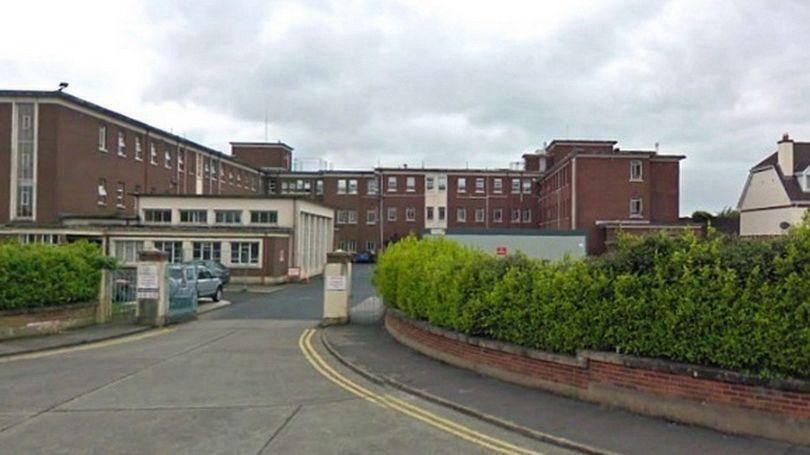
University Maternity Hospital Limerick
Carts of patient charts disappeared at Limerick’s maternity hospital when it began using digital health records earlier this year in an “amazing” move welcomed by all.
It means some 70% of newborns in Ireland now have a digital health record from the start of their lives as six of the 19 units now use electronic records.
Pregnant women have been the first to benefit from the HSE’s move towards digitalisation despite frustrations at the slow pace until recently.
In Limerick, Professor Roy K Phillip said there were months of preparation before its July 2025 launch.
“All of the charts have disappeared so it was a huge transition to a very modern facility,” he said.
“I think it is amazing. Of course it has been a steep learning curve.”
Despite the challenges, he predicted in a few years no one will want to go back to paper charts comparing it to moving between manual and automatic car driving.
“Like any new development or technological advance, it takes a while to get used to it,” he said.
“But it brings a massive amount of benefits whether it is about patient safety or access to information.”
He described the difference in accessing charts for babies who have been discharged from the hospital.
“If I know the baby’s number and click it, immediately everything is in front of me,” he said compared to before when “it might take a couple of days to get the chart back from the storage facility”.
In a hospital where about 4,000 babies are born every year, these time-savings are crucial.
Women benefit too as they no longer need to trek bulging charts around the hospital.
“There is nothing called folders now,” he said. “Even if a woman is looking for a folder, there is nothing now.”
The first maternity hospital to leave paper behind was in Cork back in 2016 and the Coombe in Dublin the latest after University Maternity Hospital Limerick.
This change is part of a national programme for digitalising the health services.
While it has been a bumpy road with the pace greatly affected by funding shortages, things have changed dramatically since the HSE was hit by a devastating cyberattack in 2021.
At the time doctors and nurses said the cyberattack was worse even than the pandemic.
In Cork for example the Blood Bikers South group switched from carrying blood samples for hospitals to paperwork and files.
An emergency department nurse at CUH Michelle Kingston said simply: “It was a nightmare. I don’t think the public realises how hit we were.”
Now Damien McCallion, HSE deputy CEO, describes a very different picture.
“In 2021 we didn’t have a chief information security officer in the HSE and we had about 10 staff working in this area and no dedicated budget,” he said.
“We now have a senior person and we’ve 70 staff and we’ve over €70m invested.”

He still accepted however “we are at the bottom of the league table” with a long way to go yet.
He faced questioning a few weeks ago from politicians at an Oireachtas committee when the progress and gaps were discussed.
Dr Martin Daly, a GP and Fianna Fáil TD, spoke of a patient treated in a Galway hospital told her doctor could not access her information because the chart had been taken across the city to another hospital in error.
Data safety concerns if there is another hacking attack were raised by senator Nicole Ryan.
“We prioritise critical systems, there’s over 3,000 systems in the health service,” Mr McCallion said.
Back-up plans include off-line copies of some data and hard copies of some key reports.
The HSE will run a simulated cyberattack during 2026 to check how robust this all is. He pointed out its digital estate is “the largest of any public or private organisation in the country”.
It has 144,000 users working across about 5,000 services on 1,600 networked sites. It runs about 80,000 devices, 50,000 mobile phones and needs 12Pb of Storage (equivalent to 240m tall filing cabinets).
The system runs about 3,000 applications, and processes around 2m emails per day for 250,000 email addresses.
This is changing under the Digital for Care 2030 plan. The HSE has also said patients can still choose to keep getting appointment letters if that suits better.
This is all of course going to cost a pretty penny.
The Department of Health has been reluctant to put precise numbers on it as the procurement process for the big ticket item — a digital health records system — continues.
However assistant secretary for health infrastructure Derek Tierney did go as far as describing it as a multi-billion euro investment. He conceded costs are “getting there” when asked if it could reach €2bn.
In the meantime more than 120,000 patients are using the HSE app which offers their personal data including hospital appointments and vaccination information.
Patients in Waterford are in a pilot project for a shared-care record — meaning data is shared between GPs and hospitals as well as people like public health nurses. This will be rolled out nationally.
Hospital patients at the Mercy in Cork and UHL as well as five other hospitals can be treated on a virtual ward if appropriate.
This means they stay at home while being treated or monitored remotely. Again this is planned for a national roll-out.
It has been a long road to get this far with many changes still to come, but as Mr McCallion said even struggling English football team Wrexham AFC managed to get promoted eventually.

CONNECT WITH US TODAY



Be the first to know the latest news and updates