Meet the Irish soldiers who fought in America's bloodiest battles
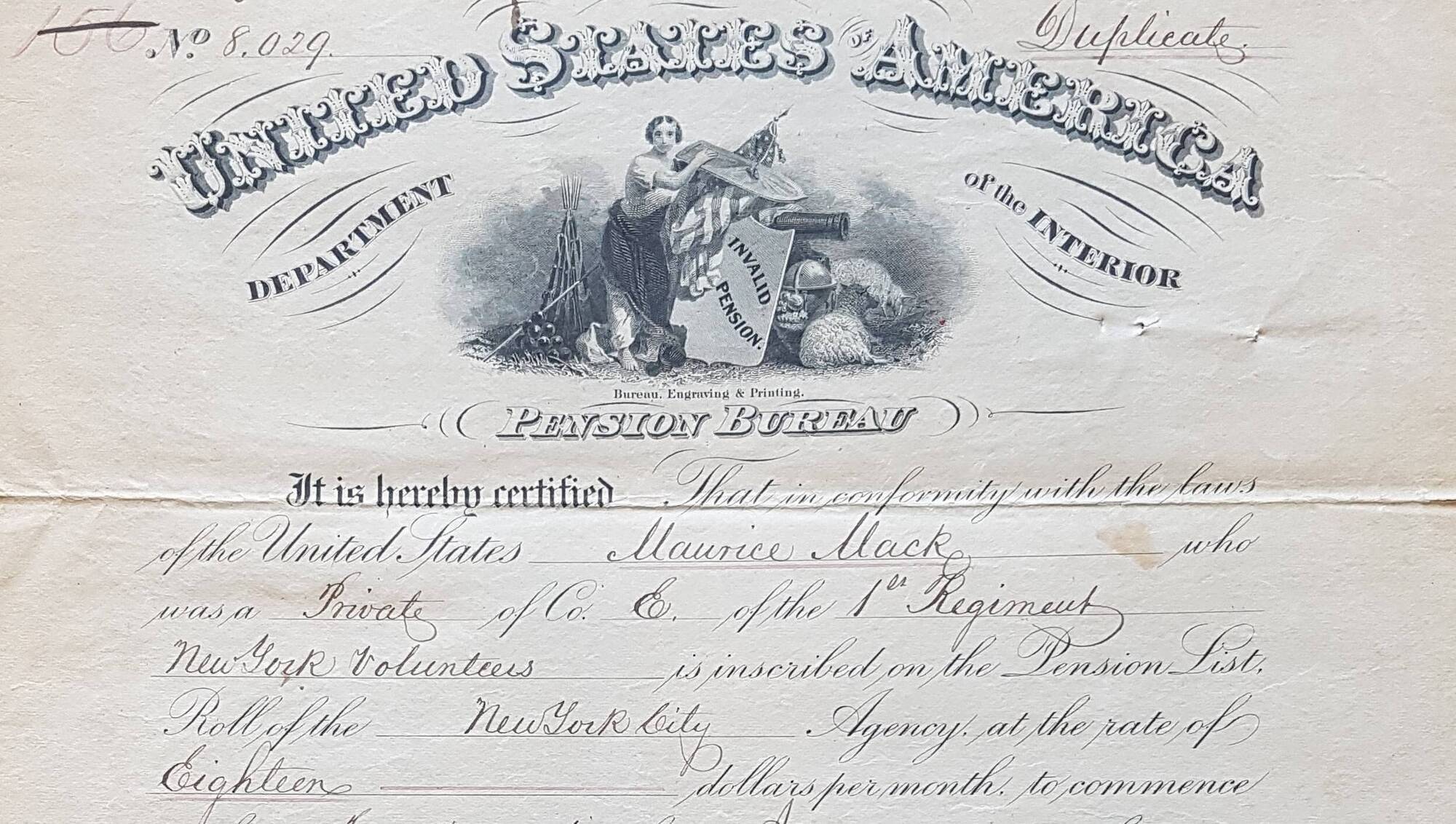
The US Pension Certificate of Maurice McAuliffe, which he used in Co Limerick.
Meet 'Little Yankee' who returned to Cork after fighting in the American Civil War, only to be found floating in the Lee — the victim of a gruesome murder.
Or Mary Harrington, from Rosscarbery, whose son Owen died in a POW camp after being captured by Confederate forces during the American Civil War, his letters home to his mother in West Cork read aloud to her because she was illiterate.
These are some of the ordinary, working-class people from across Ireland, who normally do not feature in the history books.
But now, for the first time their stories can be told, thanks to an interactive map, painstakingly put together in a 15-year labour of love.
One of Ireland’s most acclaimed military historians, Dr Damian Shiels, has unveiled the fascinating new research — captured in the interactive map. It details the pensions awarded by the American government to Irish soldiers who fought in some of that country's biggest military campaigns — including the American Civil War, Custer’s Last Stand and the US war with Mexico.
Tens of thousands of Irish people served in the US military, with Co Cork having the biggest presence of any county in Ireland. The majority of these fought on the Union side against the Confederate forces of the southern states, who wanted to preserve slavery.
The map details the biographical information and addresses of more than 700 men, women and even children living in 19th-century Ireland who received pensions for their service or that of loved ones in the American Civil War.
This is the first tranche of information Mr Shiels hopes to release.
“Over recent years, the exceptional efforts of the Irish Military Archives in digitising and making accessible the Military Service Pension Collection has transformed our understanding of the women and men impacted by the Irish revolution," says Mr Shiels.
"Although largely unknown in Ireland today, another source offers similar insight into the lives of people from across the island of Ireland during the 19th and early 20th centuries. It’s the US pension system that grew out of the American Civil War."
During this period, tens of thousands of Irish people applied to the American government for pensions based on service in the United States military. Most did so from within the United States, but this data reveals large numbers also did so from Ireland after returning home.
"They came from all walks of life and from all faiths represented on the island of Ireland, but they are particularly revealing for what they tell us about ordinary working-class Irish people, individuals whose lives are often largely invisible in the preserved historical record,” Mr Shiels says.
Within the map, people will find women whose husbands died on some of the most infamous battlefields of the American Civil War, and mothers whose sons fell fighting Native Americans during the US army’s bloody wars of westward expansion against native tribes.
There are also details of many veterans, some of whom returned home bearing the physical and emotional scars of far-off combat. Other stories carry detail of abandonment, child loss, and economic hardship, some borne out of the Famine.
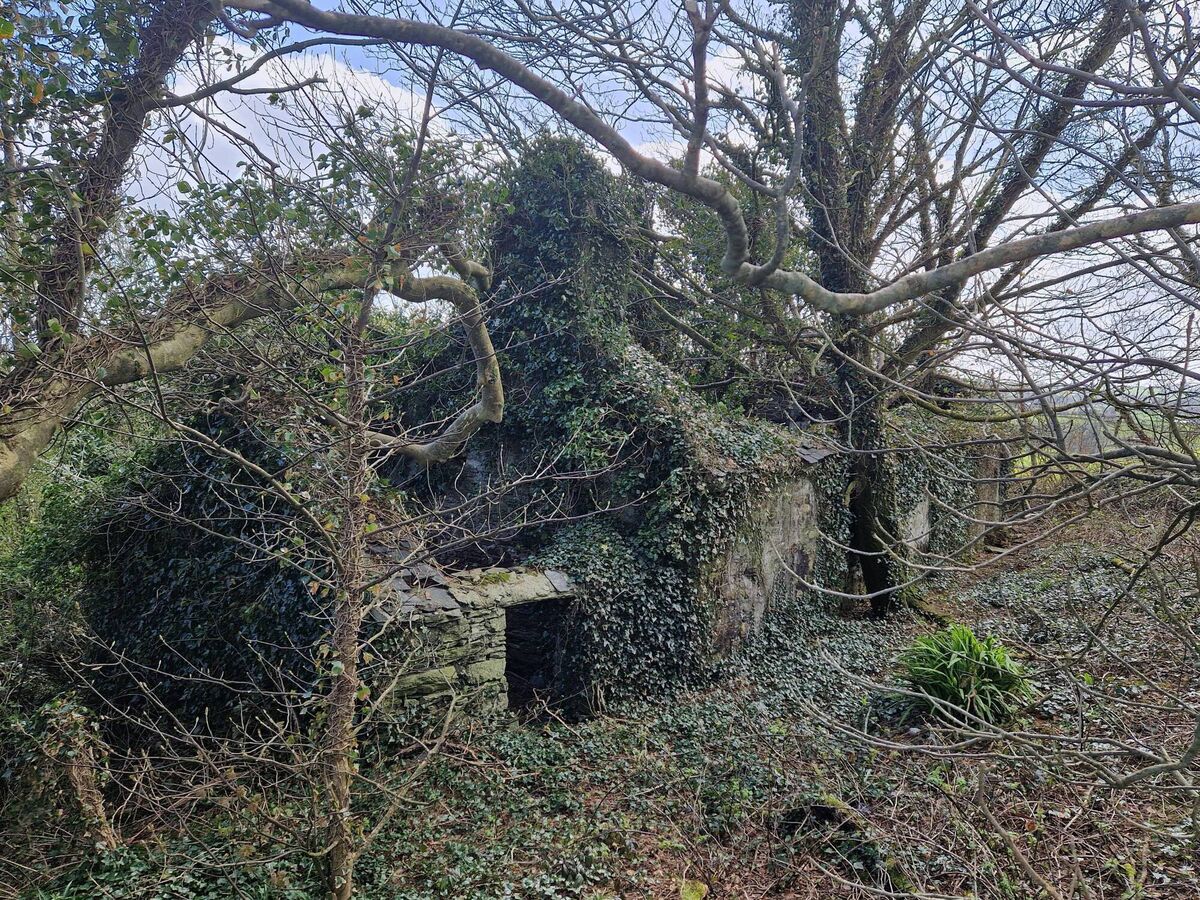
The database is the product of 15 years of work on the Irish in the American pension system.
Mr Shiels says there were many more Irish pension files than those so far mapped in existence, but whose home address is yet to be established.
It is hoped the release of this interactive map will spark further interest in the enormous resource that lies behind each of these entries in Ireland, and lead to an exploration of making digitised versions of these pension files available for the benefit of all those interested in Ireland’s 19th-century history.
Some of those who details can be found on the map include the following:
William was born around 1835 and despite seeing serious actions with cavalry units and getting an honourable discharge from the US military for disability due to injuries, he returned home to his native city only to be murdered by a local policeman.
He apparently began his service in Company B of the 14th Kentucky Cavalry, though the particulars of that service have yet to be confirmed.
On March 18, 1864, William enlisted in the 82nd New York Infantry in New York City, and was transferred to the 59th New York on July 10, 1864. He was discharged for disability at Milwaukee, Wisconsin, on May 6, 1865.
Mr Shiels discovered that in 1899, William was back in Ireland and living at 14 Upper John Street in Blackpool, Cork.
William, who was known as the "Little Yankee" in the city, was murdered at his then home at 5 Cross Street in 1904.
Newspapers at the time reported he was found in the River Lee with head injuries, with a heating iron nearby.
An ex-policeman who lodged with him, John Foster, was arrested, tried and convicted for his murder, and sentenced to death. The sentence that was carried out.
Margaret's son William enlisted in the US navy (later Union side) on January 21, 1892, and served as an ‘oiler’ in the engine room.
He died in massive explosion onboard the USS Maine in Havana Harbor on February 15, 1898. The incident was used as a pretext for the commencement of the Spanish-American War.
At the time, it was said at least 261 of the crew died, with a number of pensions being paid to relatives in Ireland.
His mother Margaret, at home in Cork, had received constant letters back to Ireland from William during his service, and she claimed a dependent mother's pension based on the remittances he had sent.
Her husband William (Snr) died on August 15, 1892. They had been married since 1846. Margaret died on New Year’s Day in 1910.
Mary Harrington first received her mother's pension in Cahermore, Co Cork, and later in Cork City. It was based on the service of her son Owen. He had previously worked the land for neighbours around their West Cork home before emigrating to try and improve the family's lot.
During the Civil War, he enlisted in the 30th Indiana Infantry and wrote home regularly to his parents in Cork telling them of his experiences on battlefields like Shiloh and Stone’s River.
Mary was illiterate, and these letters were read aloud in their home for them by other locals.
“Owen was captured by Confederate forces at the Battle of Chickamauga, in Georgia, in September 1863 and died a prisoner of war in their notorious prison of war camp at Andersonville, Georgia on September 28, 1864. Later, Mary submitted the letters Owen had sent to Ireland to the Pension Bureau as evidence that her son had supported her during the Civil War,” Mr Shiels says.
Thousands died in Andersonville and he says many of them were Irish and many from Cork.
Mary's son Patrick was born in Longford in July 1851 and enlisted in New York City on September 18, 1873, where he had been a shoemaker.
A member of Company E, 7th United States Cavalry, he was killed in action in the Battle of the Little Bighorn, Montana Territory, on June 25, 1876 — famously known as ‘Custer's Last Stand.’ He was one of four children of Mary O'Connor (née Mackey), who had worked as an upholstress in Longford. Her husband and Patrick's father, Patrick Snr, had died on September 1, 1858. Mary was living with her son-in-law Joseph Williams on Ballymahon Street in Longford when her pension was approved.
Born in Ireland around 1837, James enlisted in New York City on September 15, 1861. The regiment he joined was the famed 69th New York Infantry of the Irish Brigade. He was shot in the left shoulder at the Battle of Antietam, Maryland, on September 17, 1862, the bloodiest single day in American history, when the Irish Brigade was decimated at the "Bloody Lane".
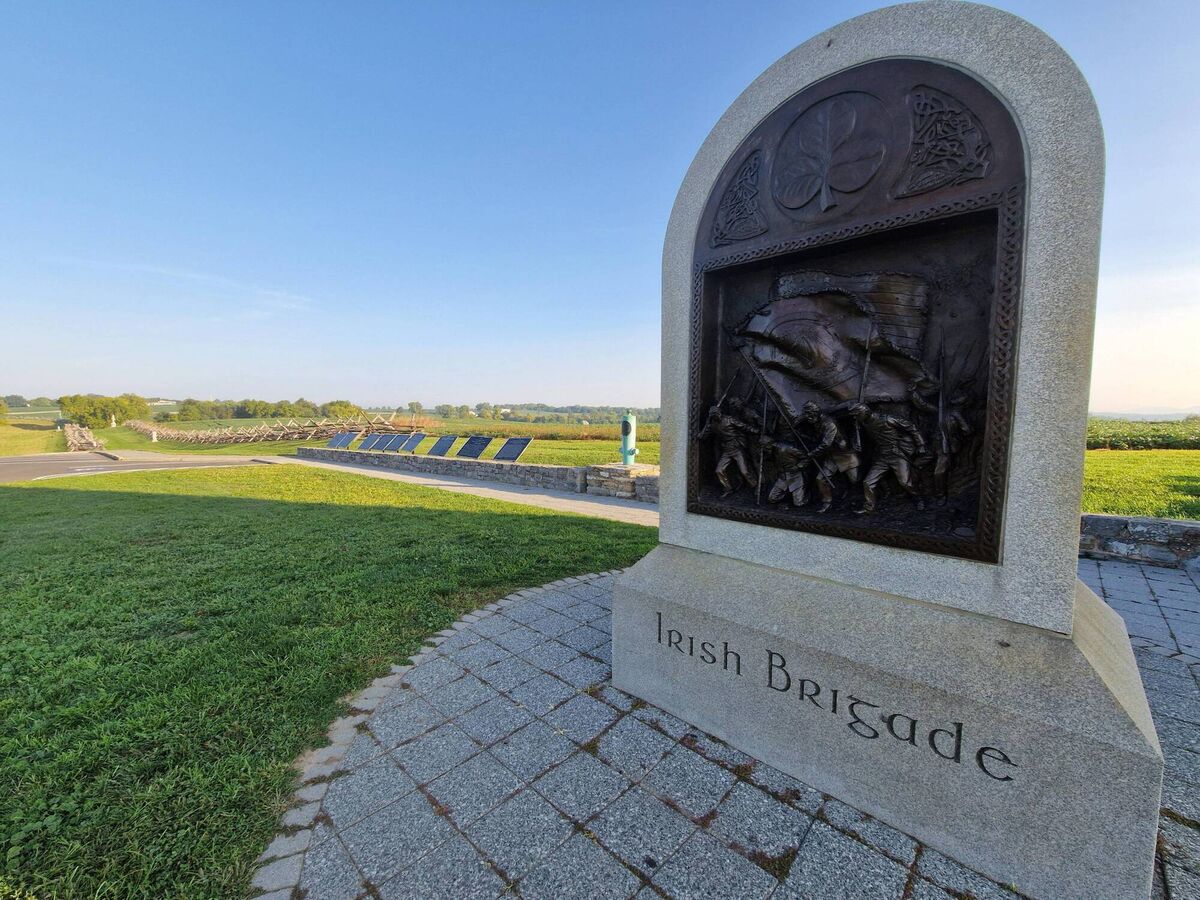
James never recovered fully from the wound. He was discharged for disability from the Convalescent Camp in Alexandria, Virginia, on February 10, 1863. In 1899, he was living on Church Street in Listowel. After his death, his widow Catherine applied for and received an American pension in 1905.
Maurice was born around 1830. He enlisted in the 1st New York Volunteers on October 1, 1847, under the name "Maurice Mack" to serve in America's war with Mexico (1846-48).
He was discharged on July 25, 1848. Maurice was injured in the left leg by a splinter of wood near Puente Nacional in Mexico.
He was living in Brooklyn, New York in the late 1860s when he first applied for a pension, but moved back home afterwards. In Ireland, his address was variously given as Ardagh and Shanagolden in Co Limerick.
Maurice died on August 17, 1915. His widow Elizabeth received a pension after his death at an address on Main Street, Foynes.
Maurice was recorded in Ardagh in 1901 as a 73-year-old pensioner of the United States Army.
View the map here.

CONNECT WITH US TODAY



Be the first to know the latest news and updates