Travellers suffer in healthcare settings 'due to racism and discrimination'
Travellers suffer in healthcare settings 'due to racism and discrimination'

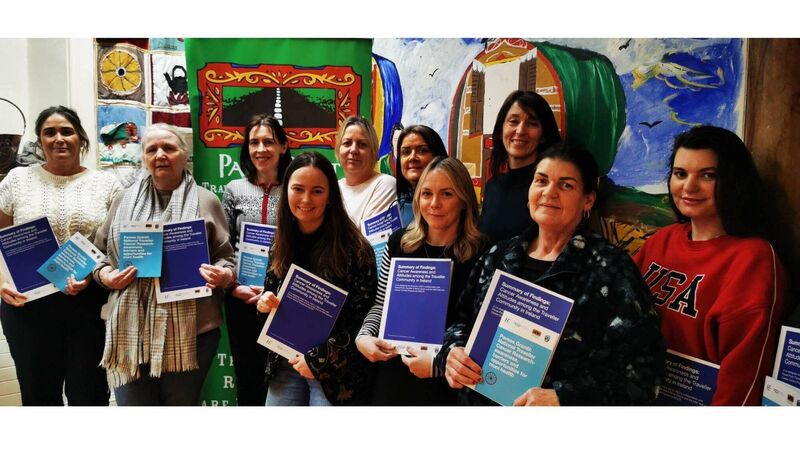
Among the attendance at the launch of the study were Winnie McDonnell, Pavee Point; Lena Lawrence, Balbriggan Travellers; Patricia Fox, UCD; Triona Bracken, Pavee Point; Bridgie Nevin, Coolock PHC; Pauline McDonnell, Pavee Point; Lynsey Kavanagh, Co Director, Pavee Point; Oonagh Kennedy, National Cancer Control Programme, HSE; Winnie McDonagh, Drogheda; Ellen McDonagh, Balbriggan; and Prof Kate Frazer, UCD. Picture: PaveePoint.ie

A first-of-its-kind study on Traveller health and cancer has found that racism and poverty are still barriers to treatment, despite more Travellers going for screening than non-Travellers in Ireland.

The authors called for investment in “culturally sensitive, well-resourced” health staff and services to help overcome these barriers.


One person described what often happens if they go to a new doctor or GP.

“I just find that some people look at us as if we’re dirt; we’re nobody,” 

What’s the point coming in — you’re going to die anyhow? 

This survey of 483 people is the first national study on cancer awareness, attitudes, and access to health services amongst Travellers.

Interviews with healthcare staff showed that they believe “racism and discrimination are root causes” of the difficulties that Travellers face in the healthcare setting.

Survey results 

The survey found that 18% of Travellers missed out on or avoided screening because they could not get postal communications.

One respondent to the survey said that women miss more appointments because a lot of Traveller women “put themselves last”.

Some 37% of respondents were reluctant to talk to doctors’ receptionists about their potential cancer symptoms.

However, it also found that 88% of those surveyed reported going for cervical cancer screening. This is compared to 75% in the general population.

Rates were also higher for breast and bowel cancer screening.

Pavee Point primary health care programme co-ordinator Mary Brigid Collins said: 

We are dying at a faster rate compared to the general population.

“Racism, discrimination, poor living conditions, low literacy levels, and other social determinants of health, combined with lack of culturally appropriate health services, are costing Traveller lives,” Ms Collins added.

Patricia Fox, a principal investigator and assistant professor at the University College Dublin School of Nursing, Midwifery, and Health Systems, said that the findings show “a whole-of-government approach” is needed to fix underlying social issues.

Study 'provides baseline data'

“Trusted relationships with culturally sensitive, well-resourced healthcare professionals, and health services are also key, as is employing flexible, innovative approaches in this context,” she said.

Dr Una Kennedy, a GP advisor to the HSE’s national cancer control programme, said that there is now “baseline data” to feed into programmes around cancer prevention or early diagnosis as well as monitoring outcomes.

This Traveller health study was led by UCD in collaboration with Pavee Point Traveller and Roma Centre as well as the HSE’s national cancer control programme.

More in this section

Lunchtime News

Newsletter

Keep up with stories of the day with our lunchtime news wrap and important breaking news alerts.

Cookie Policy Privacy Policy Brand Safety FAQ Help Contact Us Terms and Conditions

© Examiner Echo Group Limited