'Hard to envisage' why State agencies disagree on postmasters' employment status, report finds
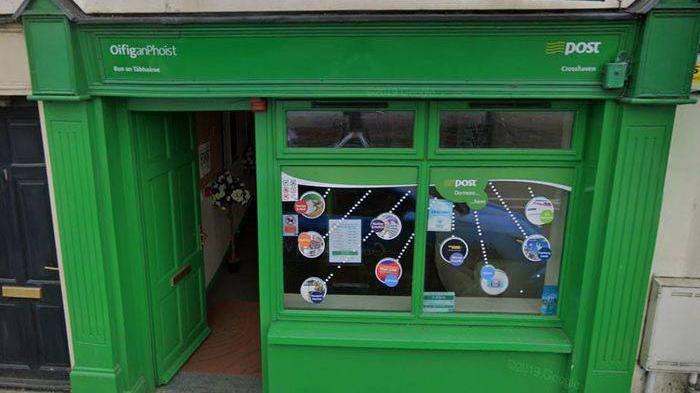
Ireland’s 850-plus postmasters function as self-employed workers under a contract with An Post for the operation of each individual post office, according to a 1979 agreement between the Department of Social Protection, An Post, and the Postmasters Union. File photo
A confidential consultants’ report has called into question how two Irish State agencies have been unable to agree whether or not postmasters should be self-employed, describing the situation as “hard to envisage”.
The report, prepared for the Irish Postmasters’ Union by consultants Grant Thornton, notes that the Department of Social Protection currently considers postmasters to be full employees in terms of their social insurance contributions, while the Revenue Commissioners treats them as being self-employed for the purposes of income tax and the universal social charge.
However, all decisions regarding employment status in Ireland are now supposed to be made referencing the October 2023 Supreme Court Karshan decision, otherwise known as the Domino’s Pizza case.
That case saw delivery drivers proclaimed to be full employees, entitled to all of the same benefits, and their prior status marked as being bogus self-employment.
Bogus self-employment broadly refers to workers who perform the same duties as full employees but who are treated as self-employed contractors, and thus miss out on the benefits of being a direct employee, including holiday, sick and bereavement pay and pension contributions.
“Both the Revenue Commissioners and Department of Social Protection apply the same principles for determining employment status,” the Grant Thornton report said about the Karshan judgement.
It said:
“Such divergence is extremely limited in practice and adds complexity as to the form of legal engagement between the sub-postmaster and An Post, ie treated as employed on one hand, and on the other self-employed."
Last year, 10 postmasters approached the Department of Social Protection’s employment status section, Scope, querying their social insurance status and were informed that their work is typical of an employer-employee relationship.
Ireland’s 850-plus postmasters function as self-employed workers under a contract with An Post for the operation of each individual post office, according to a 1979 agreement between the Department, An Post, and the Postmasters Union.
The 10 postmasters argued they should not be considered as self-employed given they have no control over their hours, place of work, or salary, and given they are not allowed to sub-contract their own employment.
The postmasters’ union, which has advocated up to now that postmasters continue to be self-employed, did not respond to queries around the Grant Thornton report.
A spokesperson for Revenue said: “It is for a business that engages a person to make the determination whether the individual is employed or self-employed for tax purposes based on the facts and circumstances of each relationship and payment.”
reviously, Revenue told the that “while Revenue has responsibility for determination of employment status of a worker for taxation purposes”, differences in opinion between itself and Social Protection would “occasionally” arise “due to the separate legislative frameworks” at play.
Separately, it emerged on Tuesday that 257 post offices have closed across Ireland over the past decade, 34 of them in Cork.
Read More

CONNECT WITH US TODAY



Be the first to know the latest news and updates