Cara Darmody begins 50-hour protest to highlight disability assessment delays
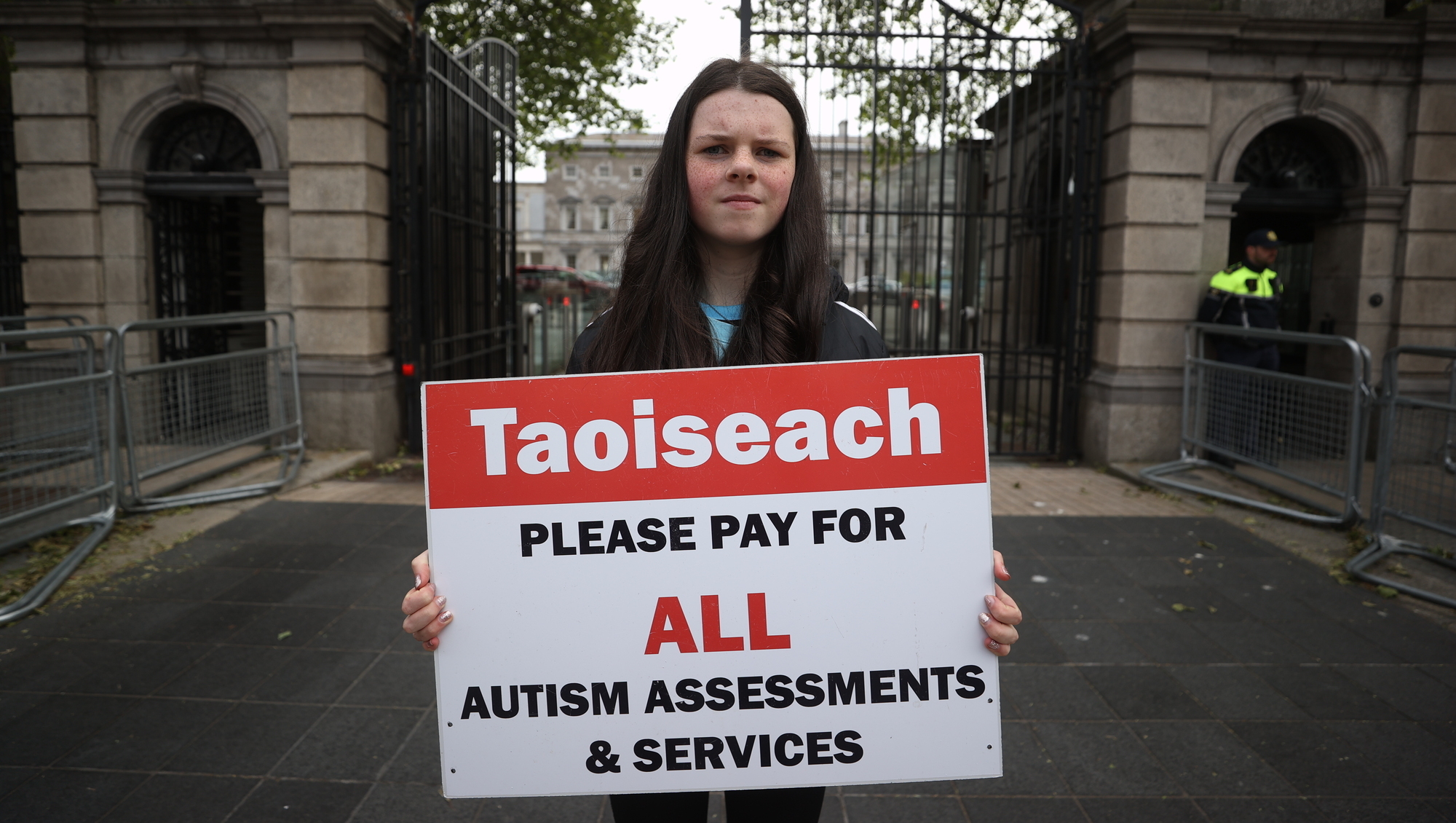
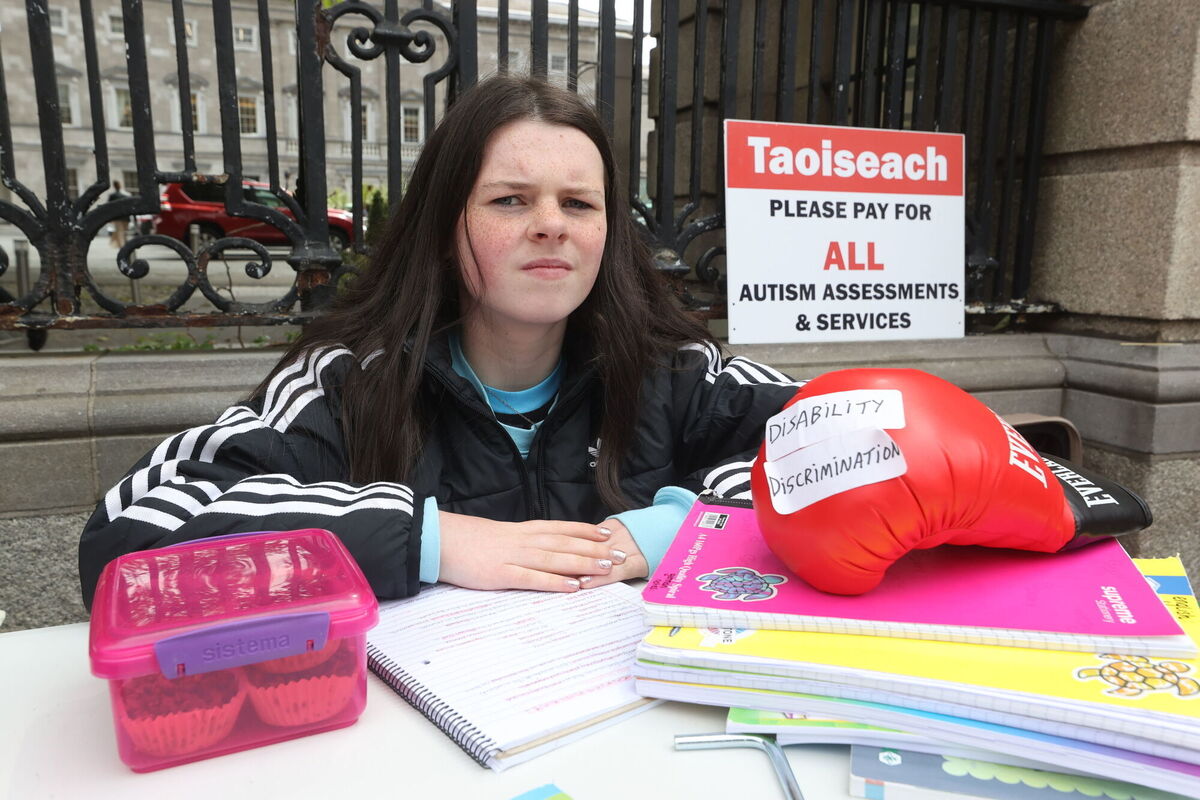
Fourteen-year-old disability campaigner Cara Darmody stages a 50-hour protest against the backlog in the assessment of needs (AON) system outside Leinster House, Dublin, ahead of the motion AON which will be heard in the Dail on Tuesday evening. Picture date: Tuesday May 20, 2025.
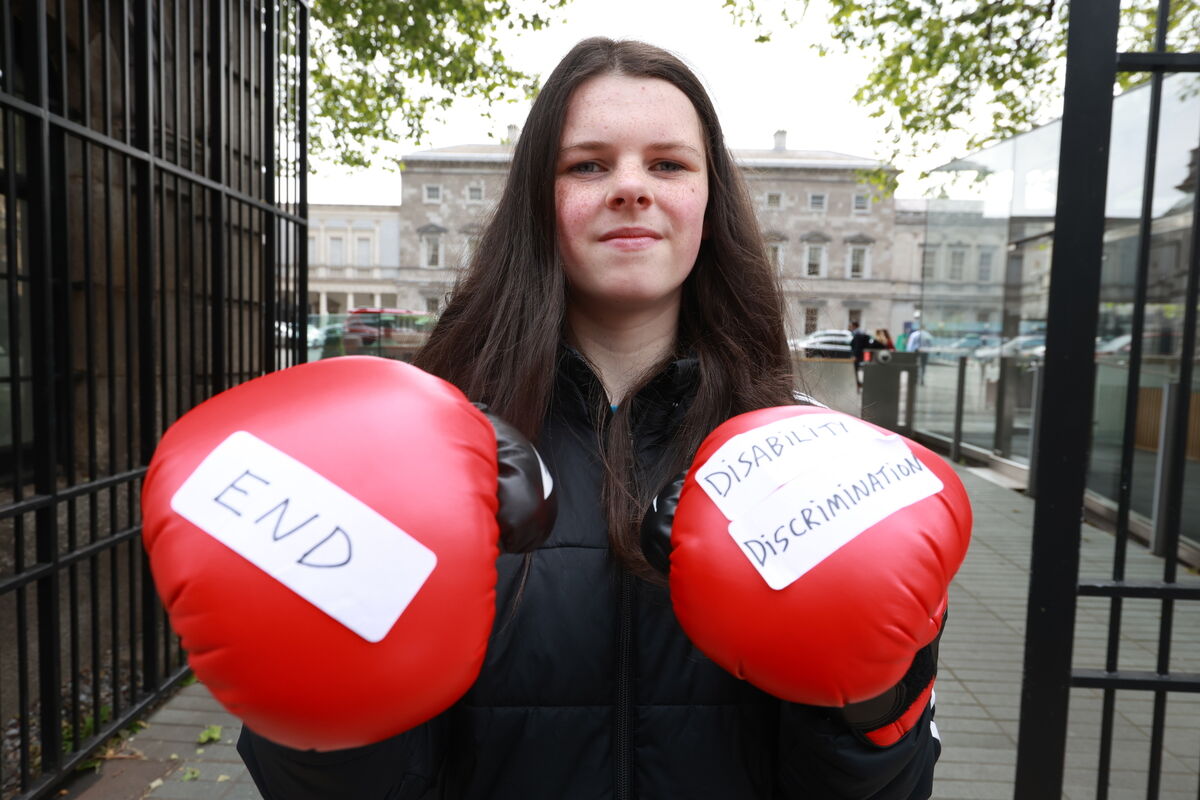
Tipperary youngster Cara Darmody has vowed to "win and end disability discrimination" as she begins a 50-hour protest at the gates of Leinster House.
Cara, aged 14, from Ardfinnan in Co Tipperary, said the Disability Act has been "systemically broken" for almost a decade as delays for assessments of needs look set to reach 25,000.
Cara was initially motivated to pursue her advocacy because her two brothers — 12-year-old Neil and 8-year-old John — are autistic and have severe to profound intellectual disabilities.
The issue of the backlog will be raised today throughout the Dáil schedule, with the opposition backing a Sinn Féin motion on the issue.
An assessment of need is carried out to identify if a child, children, or young person has a disability. It is designed to identify their health needs as well as service requirements.
Once the HSE receives an application, there is a legal requirement for the assessment of needs to be completed within six months.
The number of applications overdue for completion at the end of March 2025 stood at 15,296 — an 8% increase on the figure from the end of 2024.
However, throughout the first quarter of this year, just 7% of assessments were completed within the timeframes set out in the Disability Act 2005 and its accompanying regulations.
In response to a parliamentary question from Labour TD Alan Kelly, the HSE said demand for the assessments continues to outstrip system capacity — despite increases in activity and commissions to private assessors.
The HSE anticipates that, by the end of the year, there could be as many as 24,796 assessments due for completion.
Under questioning in the Dáil, Taoiseach Micheál Martin said he has committed to making a comprehensive step change, across all areas of Government, in provision for people in relation special needs or with disabilities, and with a particular focus on young people.
He added that he is in the process of establishing the first ever disability unit within the Department of An Taoiseach to "troubleshoot and co-ordinate" across all Government Departments the provision of services for people with disabilities.
Mr Martin said the numbers of people identifying with a special need has been increasing, however he added that in education there has been an "exponential increase" in investment.
"There has been a major increase in resources in terms of special needs assistants and there are approximately 23,400 of them now.
"There are 20,800 special education teachers. The expenditure on SNAs alone is approximately €1 billion per year and that is the way it should be.
"Enrolment in special classes alone has doubled in five years with nearly 19,000 students being supported in 3,335 classes. More than 2,700 new placements are planned for 2025-2026," Mr Martin said.
The Taoiseach said he will "not be happy until 100% of children are looked after in terms of a school place for September," but said that there is an issue with therapists and this is why there has been a moved to an education model.
"There are choices we can take to enable therapists to get to children more quickly and to be used more optimally than currently is the case for children. That is the case I am making as to why I think we need legislative change along with a range of other measures also," he said.
Elsewhere, the children's minister has said the assessment of needs system is "broken" and needs an overhaul.
Speaking ahead of a pair of Dáil motions on the issue, Norma Foley said that the system was too complex, too layered and that assessments were unnecessarily required for too many services.
"I'm very open in saying that it is my personal view that the assessment of need system is a broken one. I'm absolutely 100% clear on that.
Ms Foley said that she was "committing to streamlining the assessment degree process to make it more efficient and to ensure that children are getting access to the therapies that they need".
Ms Foley said that many children who go through the process don't need to. She said that she is working to ensure that assessments are not needed to access social some protection payments or housing.
"I've had the opportunity some very, very interesting...information has come to the fore. So, for example, 30% of the assessment of need reports that are done find that the child has gone through the entire process, which can be very long and run up to 90 hours. At the end of that process, at least 30% of children are told that they don't have a disability, they have a health need, but they don't have a disability.
"I think that's absolutely ridiculous, that children had to go through that very long process to be told they don't have a disability."
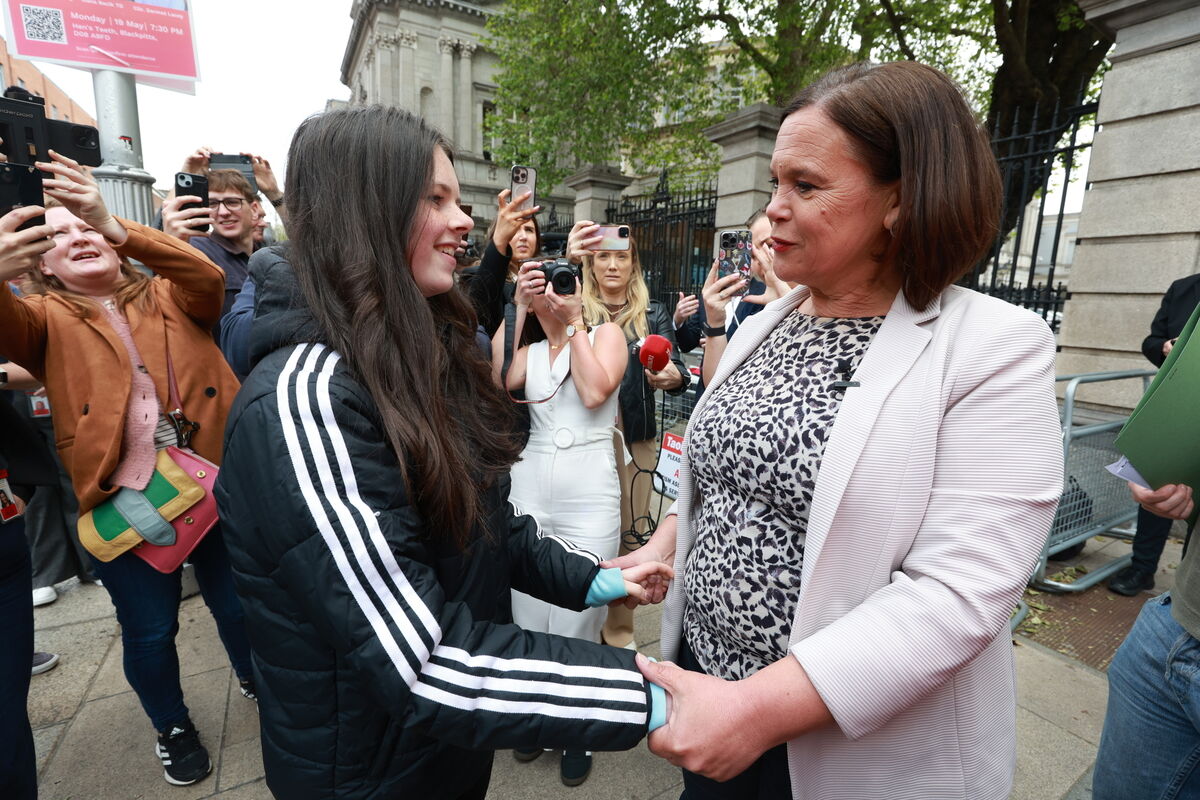
Meanwhile, Sinn Féin leader Mary Lou McDonald said that at the heart of Cara’s protest is a demand that the Government complies with the law and ensures that no child is left behind.
“Cara is an exceptional and amazing young woman who stepped forward to fight not just for her brothers, Neil and John, but for all of the children so badly failed by Fianna Fáil and Fine Gael governments,” she said.
“Children with disabilities are legally entitled to an assessment of needs within six months. Yet 15,296 children are left well beyond this timeframe, some for years, delaying their access to vital therapies and appropriate school places.
“One mother got a letter on Friday to acknowledge her application for assessment of needs, and was informed that the waiting list is in excess of three years.
“Even then, when you get your assessment of needs, the fight continues, the fight for therapies, for school places, for very, very basic services. Taoiseach, you have broken the law over and again.
“Our motion tonight lays out the clear, concrete steps needed if you are serious about tackling assessment of needs, waiting lists and complying with your legal and your moral obligations.
Ms McDonald made the comments during Leaders’ questions while Cara sat watching proceedings in the public gallery with her father, Mark Darmody.
Labour leader Ivana Bacik said: “It’s not tenable for the many thousands of children, 15,000 children nationally, who are now languishing on waiting lists, awaiting an assessment of needs. In breach of your government’s own law.
“When the HSE receives an application Taoiseach, it’s set out in law that the assessment of need must be carried out within six months.
“My colleague, Deputy Alan Kelly, has received responses to parliamentary questions which reveal that in the first quarter of this year, that legally binding six-month deadline was missed in a shocking 93% of cases.”
Mr Martin said the issue was not one of resources but one of capacity.
“But in my view, the standing upper rating procedure model that the HSE adopted was struck down by the courts, and the rationale behind it was to prioritise establishing the needs of children rather than providing the diagnosis immediately,” he added.
“I think we have to facilitate more recruitment of therapists from overseas, and I think the regulatory body needs to be flexible in that regard.”
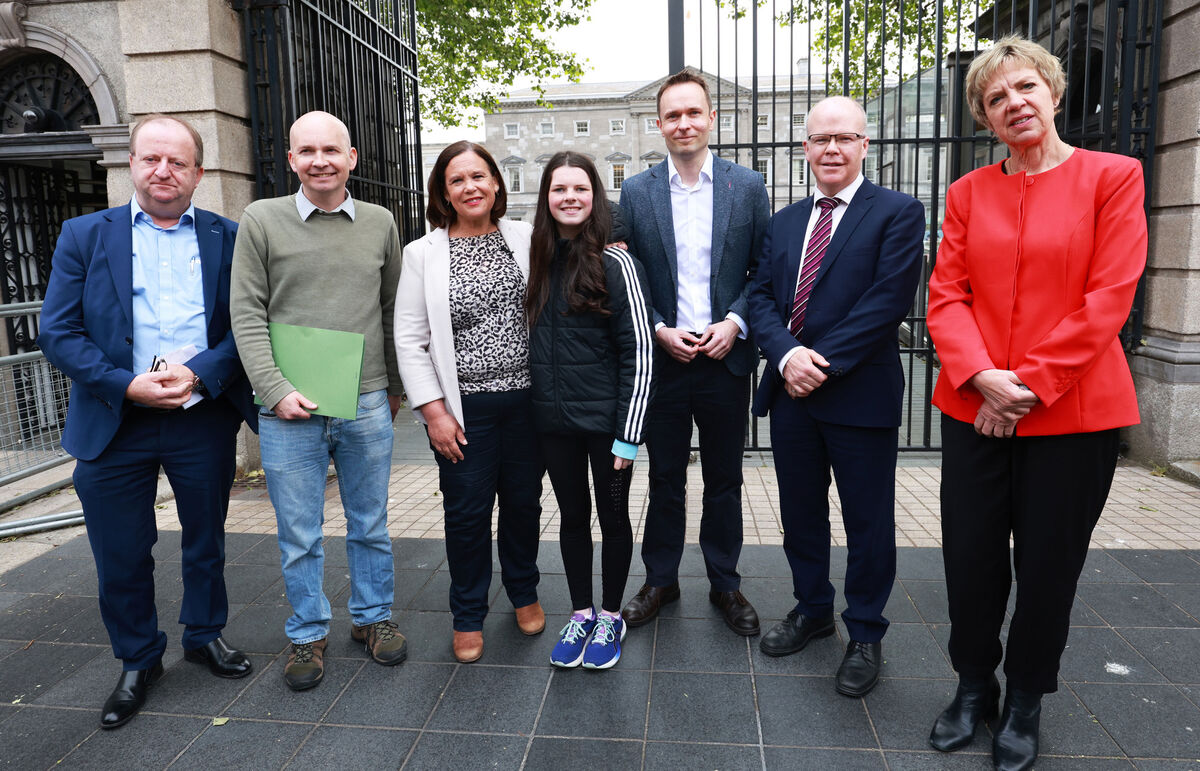
Social Democrats deputy leader Cian O’Callaghan said that Cara has been highlighting the crisis in assessment of need and disability services since she was 11.
“No child should have to spend years campaigning and protesting for basic services. Cara should be in school today, like other kids her age, but she isn’t,” he said.
“She’s here in the gallery and outside the building during the day to highlight that services are getting worse, not better.
“Taoiseach, the Dáil motion that the Social Democrats and other parties have tabled isn’t asking for bells and whistles, it’s asking for the Government to comply with the law.
“It should not take a 50-hour protest outside the Dáil by Cara, just 14 years of age, to shame this government into action to provide assessments of need within the legal time limit of six months.”


CONNECT WITH US TODAY



Be the first to know the latest news and updates