Murder trial told how Richard Satchwell regrets not telling gardaí about wife’s death
Murder trial told how Richard Satchwell regrets not telling gardaí about wife’s death

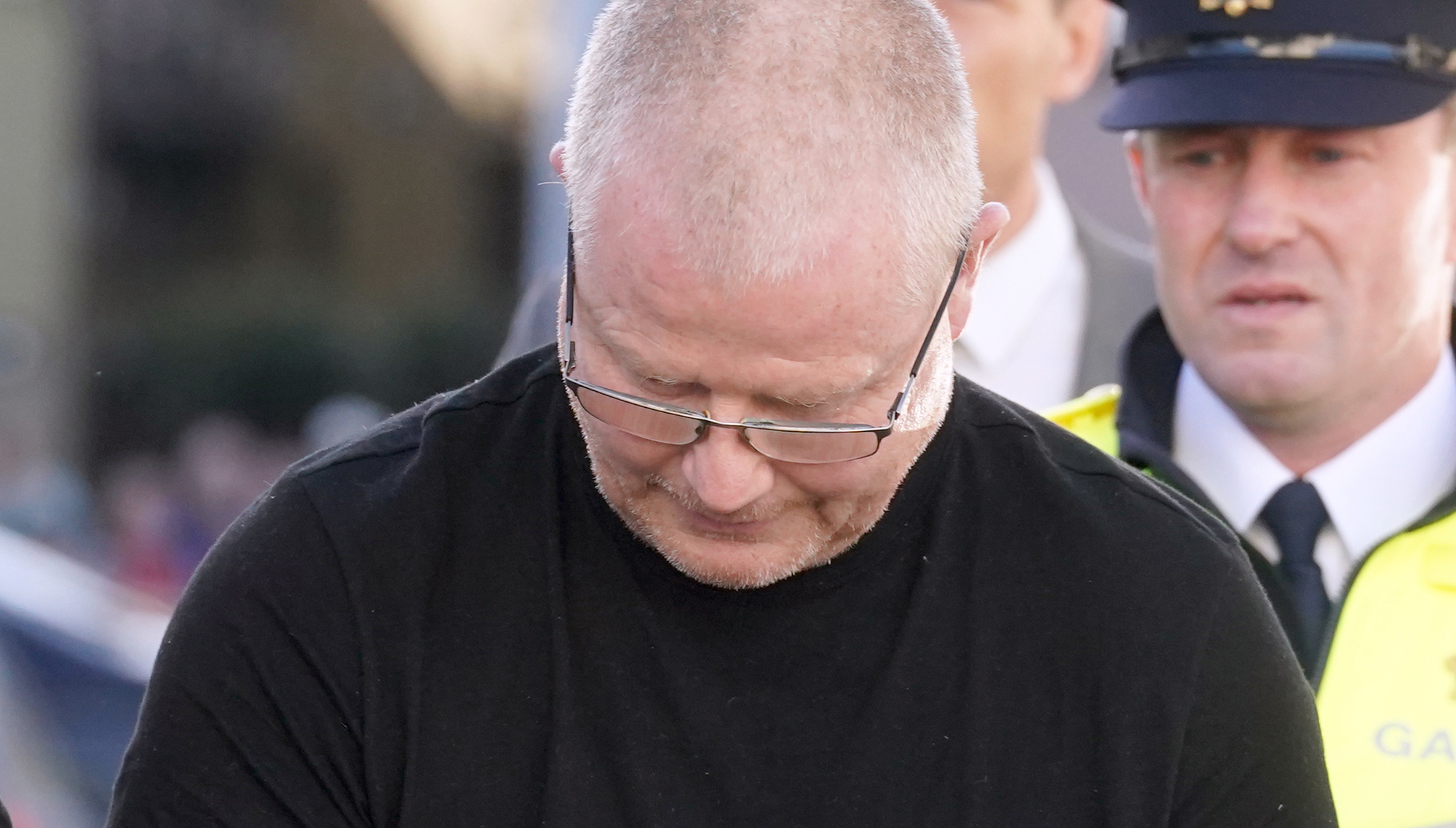
Richard Satchwell has denied his wife’s murder at their home in Youghal, Co Cork.

A hand emerging from sandy soil beneath a stairwell in an East Cork home was the first sighting of the body of Tina Satchwell, who had vanished more than six years earlier.

Wearing a dressing gown over her pyjamas, a dressing gown belt around her body, she was found wrapped in a blanket and covered in black plastic sheeting.

Her husband Richard Satchwell has denied her murder at their home on 3 Grattan St, Youghal, between March 19 and 20, both dates inclusive.

Evocative details were heard at the Central Criminal Court about Ms Satchwell in life and the way her body was found in death.

Dr Patrick Burke told the court that he had been the couple’s GP since 1999.

“Tina was always friendly, open, a great communicator,” he said.

She “always enjoyed good health” and suffered “absolutely no conditions” that could end her life prematurely, Dr Burke said.

Richard and Tina Satchwell  almost always came to surgery consultations together, even if only one was sick, he added. 

In Fermoy, he would also see the couple together, walking their dog.

Mr Satchwell repeatedly told gardaí that his wife was violent to him, since he reported her missing on March 24, 2017. 

Dr Burke said the first time Mr Satchwell told him that Ms Satchwell had been violent towards him was on March 30, 2017.

This was a few days after the State alleges that Mr Satchwell murdered his wife.

Tina Satchwell 'always enjoyed good health' and suffered 'absolutely no conditions' that could end her life prematurely, her GP told the court.

Mr Satchwell said his wife was taller when she "disappeared" than when he first met her — a reminder that she was still a teenager, only 17, when they met.

He described his wife as his “Irish rose” and “physically perfect”. 

He had a granular understanding of the measurements of his wife’s body and what sizes she would take in different items.

Ms Satchwell was found face down in the grave, wrapped in a blanket, and covered in a black plastic sheet.

Mr Satchwell said in a Garda interview that he covered her body in plastic because he did not want her to get dirty. 

He lifted her gently into the grave and buried her with tulips and her wedding ring, he said in Garda interviews played to the court.

Burying his wife “was the final goodbye”, he said. 

But he still loved his wife, still dreamed about her, and would talk to the place in the sitting room where he buried her.

The night of her death, he “lay with her all night” on the ground by the stairs, he said, his body going numb by the morning.

He then lay her on the couch but later moved her to a freezer in the shed because “the dogs kept coming over to her”.

Days later, on the Sunday, he buried her beneath the stairs.

No fractures were found on any of her bones, including her skull, neck, and the very fragile and “matchstick-like” floating bone which holds the tongue called the hyoid.

Defence barrister Brendan Grehan noted that the fracture of this bone is commonly associated with strangulation.

Forensic anthropologist Dr Laureen Buckley, described in court as a “bone expert”, agreed that the fracture of this bone was “sometimes” associated with strangulation but not always.

A red brick wall, inexpertly built under the staircase in the sitting room of the Satchwell home, had been one of the “red flags” identified by forensic archaeologist Niamh McCullagh, who advised gardaí to conduct an invasive search at the property.

Superintendent Anne Marie Twomey had asked her to review the case in 2022, with the specific goal of looking for where human remains could be clandestinely concealed.

Ms McCullagh reviewed the case files and concluded that Ms Satchwell “never left her home alive”.

Gardaí had searched the property in 2017 and photographed the scene. 

A forensic scientist had tested the house for invisible blood traces. Nothing was found in this search but it had not been invasive. Ms McCullagh advised an invasive search.

The four-day search began on October 10, 2023. 

Detective Garda Brian Barry, a ballistics and forensics expert, noticed that newer concrete had been poured under the stairs in the sitting room which was “suspicious”.

He ordered building contractors to use kango hammers to break through the concrete floor.

When Det Garda Barry noticed black plastic buried some 64cm beneath the floor, he stopped the excavation. 

Cadaver dog Fern was brought in and confirmed human remains. 

The scene was then excavated by two forensic archaeologists.

'Living two lives'

Mr Satchwell told gardaí he’d been “living two lives” since his wife’s death, going to work by day as if everything was normal and coming home to a filthy house.

At work, as a truck driver, he could “concentrate on driving, on doing the job”.

But he would go home, where there was “dog shit on the couch”, “dog shit and urine on floors”, and a bed which had not been changed “in years”.

“I was so deflated. I guess I was living the life of a homeless person with a roof overhead,” he said in the interview at Cobh Garda Station.

He said he felt “scared, sorrowful, ashamed”.

Although he should have gone to gardaí with his “hands up” immediately after his wife’s death, he did not “and can’t take that back now”.

“It started as a lie and the lie escalated,” he said.

He said he has contemplated suicide since her death but stayed alive for their pets.

The Garda interviews became increasingly heated as they were played to the court. 

They were carried out after Mr Satchwell had been arrested for murder in October 2023.

Mr Satchwell repeatedly said he “couldn’t give detail” as it all “happened so fast” when questioned by gardaí about his wife’s death. 

He said he had found her scraping at plasterboard he had recently erected by the staircase of their home on the morning of March 20, 2017.

When he asked her what she was doing, he alleged that she “flew” at him with the chisel. 

He fell to the ground and she jumped on top of him, he said.

“She was going for my head with the chisel,” he said, making stabbing motions in the recorded Garda interview.

He said he was “concentrating” on holding her away from him with the belt of her own dressing gown, which he held at her neck.

She then fell into his arms, dead, he said.

“It all happened in a blur, the blink of an eye,” he told gardaí.

But gardaí said there was “a massive question mark” over his “story”.

“What you have described doesn’t make sense,” Detective Sergeant David Noonan said in a video of an interview with Mr Satchwell. 

“No one could die just like that.”

In another recorded interview with Det Sgt Noonan, gardaí told Mr Satchwell his “story” was coming apart as evidence gathered was building a different picture to the one he had “constructed”.

“It’s evidence that speaks for itself,” Det Sgt Noonan said in an interview at Cobh Garda Station on October 13, 2023.

“The story you came in here with is starting to come apart.”

Mr Satchwell said he was trying to “please” gardaí and cooperate.

“It’s very clear what you’re doing. You’re trying to protect yourself,” Det Sgt Noonan said.

Ms Satchwell’s dog Ruby was “distressed” and “trying to get away” from Mr Satchwell, who was selling his wife’s most treasured possessions at a car boot sale weeks after she disappeared in 2017, the Central Criminal Court also heard this week.

Sarah Dobson, a friend of Ms Satchwell, said she met Mr Satchwell at a car boot sale in Co Cork, on the Monday of the May bank holiday weekend in 2017.

“I told him Tina would kill him for selling all her stuff,” she said.

“Their dog Ruby was distressed, hopping around, trying to get away from him,” she said in her statement, read to the court by prosecuting barrister Gerardine Small.

Nothing of Mr Satchwell’s was for sale, Ms Dobson added.

Mr Satchwell said his wife was “very ill” and had been in hospital for weeks.

A bacteria in their home had made Ms Satchwell sick and had caused the death of their parrot, he said.

“He told me he needed between €80,000 and €100,000 to fix the house so she could come home. That’s why he told us he was selling the stuff.”

The trial, before Justice Paul McDermott, continues.

x

More in this section

Lunchtime News

Newsletter

Keep up with stories of the day with our lunchtime news wrap and important breaking news alerts.

Cookie Policy Privacy Policy Brand Safety FAQ Help Contact Us Terms and Conditions

© Examiner Echo Group Limited