Gaza hunger crisis: Palestinian in Cork fears for starving family amid Israeli blockade
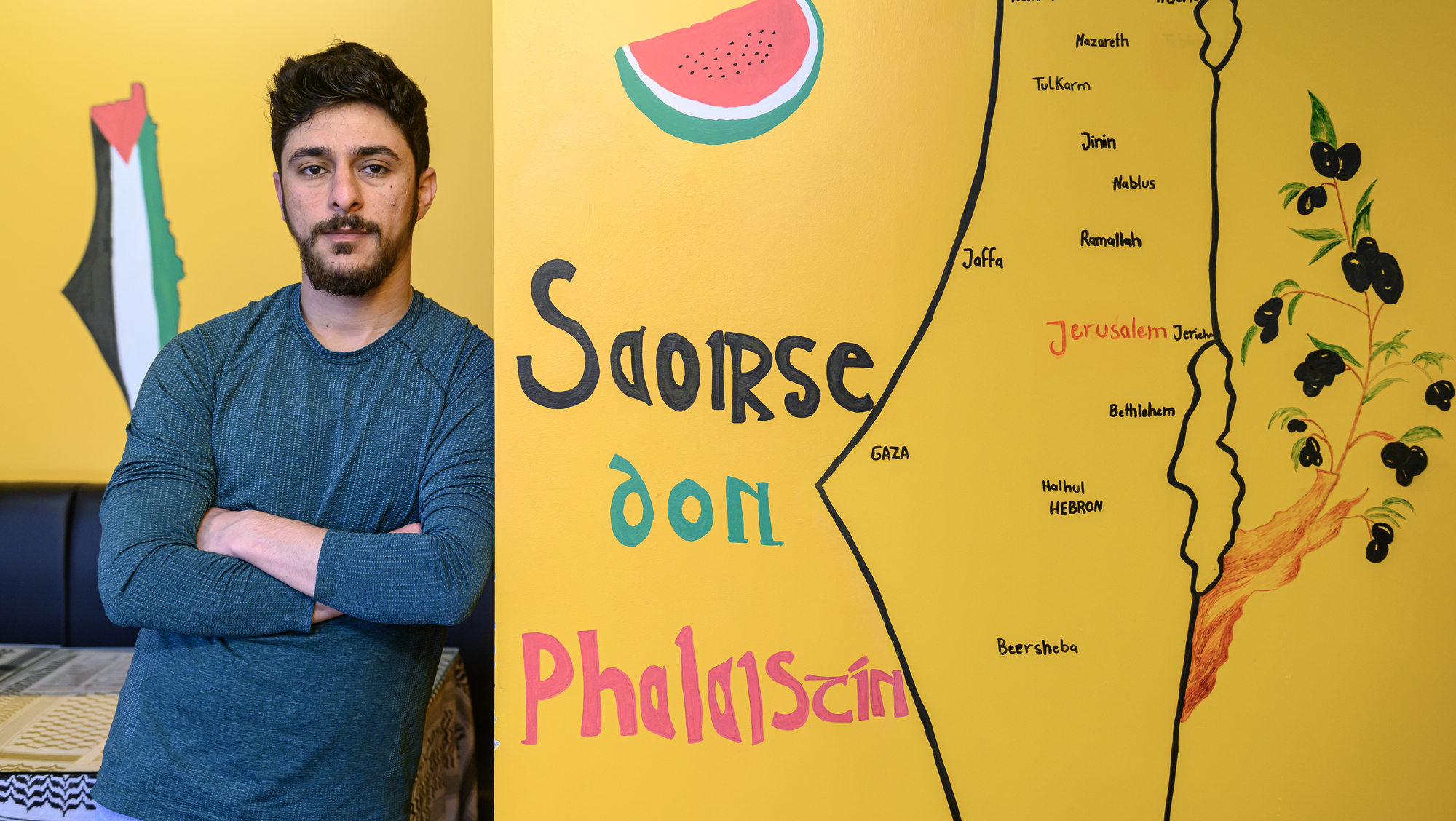
Habib Al Ostaz is looking for the Irish Government to help his family escape from Gaza. Picture: Dan Linehan
Habib Al Ostazâs family has not eaten in two days.
Small portions of lentils and rice are all they can intermittently access since Israel stopped all food, humanitarian aid, and other supplies entering Gaza on March 2. Even the flour has now run out.

They are in their bomb-damaged home in the north of the beleaguered strip, trying to repair it amid rubble from the surrounding flattened homes where neighbours once lived.
However, Israeli prime minister Benjamin Netanyahuâs fresh threat this week of a âforceful entry into Gazaâ, sending thousands of soldiers to seize territory and push Palestinians down to the south, may force Habib's family to leave again.
Habibâs family already subsisted as refugees in the south since Israelâs bombardment of Gaza began in October 2023.
They lived with thousands of others in a UN school before that area was attacked. They then fled to a relativeâs house, but that was full so his parents, four brothers, and one sister lived in tents with bombs detonating close to their flimsy canvas walls.
More than 52,000 people, mostly women and children, have been killed since the conflict began, the Gazan authorities estimate.
However, the dizzying levels of damage to homes and infrastructure may make it difficult to fully account for all the bodies trapped and decaying beneath the endless piles of deadly rubble.

Habib speaks to his family every two days now, once they can charge their phones on car batteries. There is no electricity.
Two days is also the frequency at which the family can now get one small meal.
âI can't express my feelings at the moment,â Habib told the
Habib spoke to this newspaper hours before giving a presentation in University College Cork, where he is studying for a qualification in youth and community work.
Every time he speaks to his family, they sound very hungry and thereâs very little he can do for them.
He previously told the that he has listened to his severely weakened father plead for help for the family over the phone as bombs detonate nearby.
âYour family are about to die, to be killed, and youâre not able to help them,â Habib said.
On Wednesday, airstrikes hit Gaza and killed at least 59 people, according to Gazan authorities.
One attack killed 33 people when bombs hit a popular café where young people were using the internet in Gaza City. The bombs are hitting already starving people.

A total blockade by Israel on humanitarian aid and other supplies into Gaza is now in its third month.
Some 10,000 acutely malnourished children have been identified by the UN in Gaza this year. Food prices have spiked by up to 1,400%.
Taoiseach MicheĂĄl Martin has said the blockading by Israel of food and humanitarian aid to Gaza "clearly constitutes a war crime".
Despite such horror in his homeland, Habib was recently refused an application to remain in Ireland.
Although he is a refugee, he was granted refugee status in Greece â the first EU country he reached after fleeing Gaza.
His brother lives in Cork with a visa and, after years in the country, Habib has built up a support network here.
His solicitor, Susan Doyle, said that maintaining a support network is important, particularly when he has suffered such trauma from the Israeli onslaught on his country and is in constant fear about the survival of his family there.
A move to Greece would be a move into penury, without the language or any support network, Ms Doyle said.
But the Stateâs position is that Greece is a safe country and he must return there, she said.
âIn Greece, he was destitute and he faced discrimination," she said.
"He was living in a really impoverished camp where it was filthy. He had medical issues, but he wasn't seen by doctors.
âThe law would say that if you are likely to end up in serious poverty, then you shouldn't be sent back there.Â
"But the Government's viewpoint would be that Greece is a safe country and that, regardless of whatever experiences he's had, he should be returned to a European country because they are members of the European Convention on Human Rights," she added.

The recent refusal of his application is also a waste of taxpayer money, Ms Doyle said, because Habib won a High Court action regarding the State's refusal to let him stay last year, so the new decision will again be challenged in the courts.Â
Legal costs will likely come in at more than âŹ20,000 against the State.
âWe took a judicial review last year as to why he couldn't return to Greece, and we were successful in that case," Ms Doyle said.
âBut when they refused it again, they refused it on the basis of the exact same reasons as last time.
âThe State will pay our costs when we win this again, which is a complete waste of taxpayersâ money.
Justice minister Jim OâCallaghan sent a letter to HABIB saying he can either leave Ireland voluntarily, consent to a deportation, or make representations as to why he should be given leave to remain in Ireland.
âWe're in the process of making that submission now,â Ms Doyle said.
Applications by refugees are being increasingly refused since immigration protests swept the country in recent years, she said.
âTwo to three years ago, he [Habib] would have been given permission to remain immediately. But I think the Government is really trying to show that they're being hard on immigration at the moment.
âThey want to take a tough line with it. People that would have been given permission to remain in the past are no longer being given it," she added.