Government documents recommend larger cut to jobseeker's allowance to 'trigger' engagement with Intreo services

Government documents recommend larger cut to jobseeker's allowance to 'trigger' engagement with Intreo services

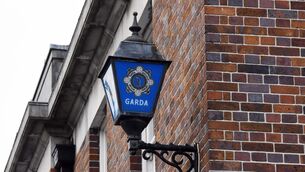
A spokesman for the Department of Social Protection said their Intreo service helped jobseekers with a wide range of support including education, training, work placements, and other programmes. Picture: Gareth Chaney/Collins

Internal government documents said the welfare system needed a stronger “trigger” to force people who were unemployed to engage with employment services.

In briefings, officials said a €44 cut on jobseeker payments had not been changed in over a decade, and should be doubled at a time of full employment.

The briefs were prepared for then-social protection minister Heather Humphreys ahead of a controversial decision to increase a penalty for jobseekers who did not engage to €90 per week.

It said these welfare payments were supposed to be contingent on a person being “available for, capable of, and genuinely seeking work". The briefing said employment supports were available to stop people “drifting further from the labour market” and losing any skills they had.

It said a small number of people — numbering around 1,000 at any given time — were on reduced payments for not engaging.

A briefing said: “In the vast majority of cases the reduction in the payment rate acts as a ‘trigger’ for the person to engage.” 

However, officials said the €44 reduction had not changed even as welfare payments grew, meaning they were becoming less effective.

They said before a rate was reduced, an individual was offered at least two opportunities to reengage or explain why they could not.

“The consequences of not engaging are clearly communicated to them,” a ministerial briefing from late last year said.

Where a person has valid reasons for any failure to engage eg illness, childcare considerations etc, these will be taken into account. 

It said once a person made clear they were open to employment, training opportunities, and other measures, the full payment was “immediately restored". 

One Q&A for the minister said: “It is accepted that some jobseekers face significant barriers to employment, but this does not mean that they are permanently and irrevocably ‘unemployable’.

“Many people facing significant barriers can, with the support of the State’s employment and training services… overcome these barriers and progress to employment.” 

It said by the end of August 2024, around 200,000 jobseekers were in receipt of payments that needed engagement with employment services.

It detailed how around 1,000 were on reduced benefits on any given day, with most only lasting a brief period.

Overall, by the end of September 2024 last year, 8,000 people had the jobseeker cut applied to their welfare payment at one stage during the year.

It said 45% of them were young and aged between 18 and 30, while 47% were between 31 and 50 years of age.

The briefing said: “The process of exiting a reduced rate is entirely in the power of the jobseeker. Once they re-engage the reduced rate is removed.” 

Asked about the records, a spokesman for the Department of Social Protection said the measure had been introduced in January of this year.

He said their Intreo service helped jobseekers with a wide range of support including education, training, work placements, and other programmes.

More in this section

Lunchtime News

Newsletter

Keep up with stories of the day with our lunchtime news wrap and important breaking news alerts.

Cookie Policy Privacy Policy Brand Safety FAQ Help Contact Us Terms and Conditions

© Examiner Echo Group Limited