Salmon's 2,300km epic journey from Greenland back to Co Mayo
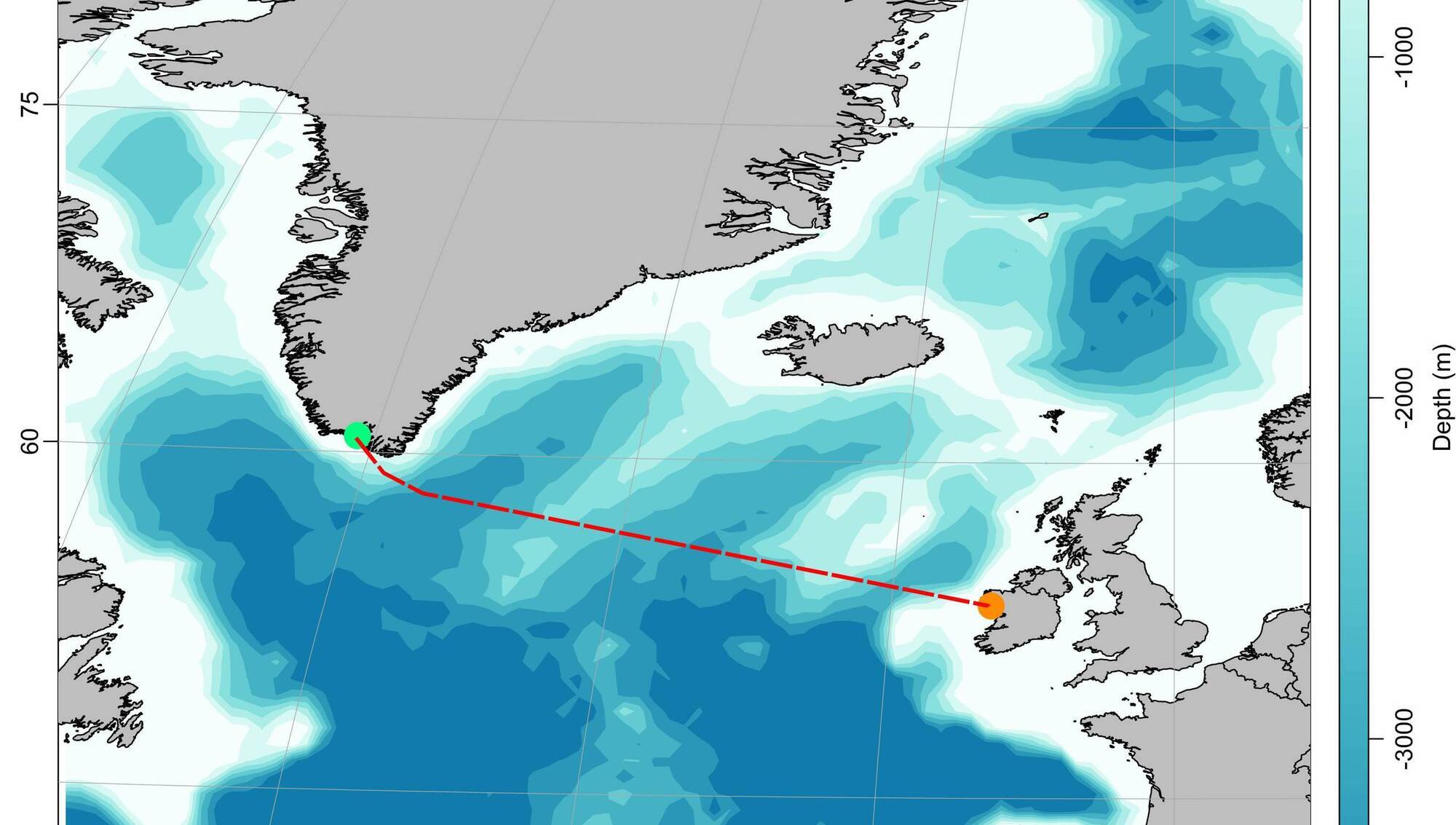
Map of the tagging and detection locations of the migrating salmon. Picture: Inland Fisheries Ireland
Scientists have tracked a migrating salmon that swam an epic journey of more than 2,300km, from Greenland back to its native river in Co Mayo.
Inland Fisheries Ireland (IFI) has acoustic tracking technology set up at the entrance to Killary Harbour, which picks up signals from any tags attached to fish.
IFI recorded the "mystery fish" at Killary Harbour and could tell that it had been tagged near a town called Qaqortoq, in southern Greenland.
The town of Qaqortoq is more than 1,242 nautical miles, or 2,300km from Co Mayo.
Commenting on how the salmon ended up back in Co Mayo, IFI research officer Glen Wightman said: "Although it had not been tagged in fresh water in Ireland, we know that when salmon migrate from the sea, they are using their strong homing instinct and typically returning to their river of origin.”

IFI sensors have traced the fish again in recent weeks as it swam up the River Erriff in Co Mayo, which is IFI's National Salmonid Index Catchment.
“These tags are pinging a unique code every 60 to 90 seconds. Our acoustic arrays can record them moving into and through monitored rivers when they swim by," said Mr Wightman.
According to salmon research scientists working in Greenland, the salmon weighed 3.3kg and was 64cm-long when it was tagged in September 2023.
Mr Wightman now believes the fish may weight up to 5kg, after having spent two winters at sea.
The salmon has now migrated upstream to spawn in the River Effiff, where it will "pass on its genes to the next generation of salmon".
In order to identify the tag, and find out how far the fish had travelled, IFI had to correspond with numerous overseas organisations, including the USA federal agency NOAA Fisheries, Fisheries and Oceans Canada, the Atlantic Salmon Federation, and the Association of Fishermen and Hunters in Greenland.
Commenting on the efforts, Tim Sheehan of NOAA Fisheries said: “This tagging effort furthers one of our main goals — to develop a better understanding of the factors driving salmon abundance and the challenges they face.”


CONNECT WITH US TODAY



Be the first to know the latest news and updates