State Papers: Taoiseach doubted Sinn Féin and SDLP accurately represented nationalists in the North
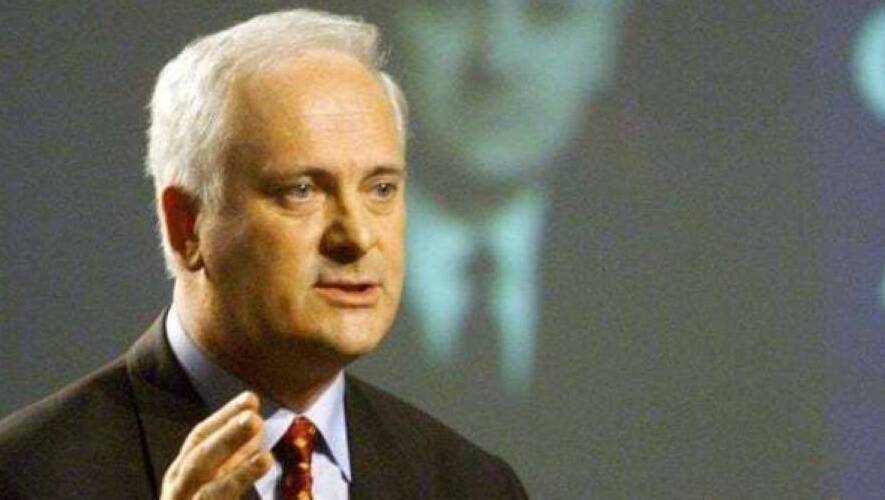
Thirty years ago, Taoiseach John Bruton warned of the risks of entering peace talks without a clear understanding of nationalist voters’ core concerns.
Taoiseach John Bruton had a firm view that neither Sinn Féin nor the SDLP were accurately representing the views of ordinary members of the nationalist community in Northern Ireland.
State papers released by the National Archives show that the Fine Gael leader, who became taoiseach in December 1994, considered conducting opinion polling to better understand the priorities of Northern nationalists during the peace process.
They also reveal that Mr Bruton was mistrustful of the views of the Department of Foreign Affairs on the same issue.
Confidential files show that he questioned whether the public demands of the two main nationalist political parties which centred on issues of sovereignty and the establishment of North-South institutions aligned with the everyday concerns of nationalist voters.
He suspected that issues of “respect” and “dignity” might resonate more strongly with the community than the constitutional goals espoused by Sinn Féin and the SDLP.
In a memo to his advisers, the Taoiseach warned of the risks of entering peace talks without a clear understanding of nationalist voters’ core concerns.
“In the absence of a clear understanding of irreducible northern nationalist demands, there is a danger that the Irish Government will be drawn into writing a blank cheque in the talks,” he wrote.
He claimed there was some urgency in finding out what nationalists in Northern Ireland wanted as peace talks were due to get underway within two months. Mr Bruton’s proposed solution was to conduct qualitative research into the opinions of Northern nationalists which would be funded by Fine Gael.
Files show he wanted to find out whether nationalists might accept a settlement involving power-sharing, a reformed police force, greater cultural recognition, and modest North-South co-operation.
While it appears the proposed polling never went ahead, Bruton’s envisioned compromise is not too dissimilar to elements of the 1998 Good Friday Agreement which ultimately resolved many of the issues he had outlined.
The State papers also reveal the Taoiseach’s wariness that the outlook of the Department of Foreign Affairs was closely aligned to the views of Sinn Féin and the SDLP.
He emphasised the need for the various parties to be reminded of the firm stance adopted by unionist leaders for nationalists to demonstrate their commitment to the peace process through actions such as IRA decommissioning.
In one note, Mr Bruton wrote: “We need to stress to SDLP, SF, D/FA and all others, how definite the Unionists were on paragraph 10 of the Downing St declaration re ‘action to show commitment’ and the vital necessity for nationalists to come up with new thinking.”
Other documents show that Sinn Féin and the SDLP were somewhat concerned about Mr Bruton’s commitment to the peace process following his surprise election as Taoiseach following the collapse of the Fianna Fáil-Labour coalition at the end of 1994.
They reveal that Sinn Féin president, Gerry Adams, initially expressed cautious optimism about the Fine Gael leader’s approach to the peace process but grew critical by early 1995.
Mr Adams complained that the IRA ceasefire had been sold on the basis of “three pieces of the jigsaw” — a reference to support from Irish America, the relationship with SDLP leader, John Hume, and the commitment of the Fianna Fáil-Labour government.
However, he pointed out that there was a new government in place in the Republic while the support from Irish America had not lived up to expectation.
The SDLP leader also had some concerns about Mr Bruton and told a senior civil servant in the Department of Foreign Affairs that the British were using the issue of the IRA decommissioning weapons solely for the purpose of tactically driving a wedge between the Taoiseach and other nationalist interests.
Mr Hume claimed it “would be disastrous” if that was allowed to happen.
In turn, files show that Mr Bruton had his own concerns about the SDLP leader and informed his own officials in September 1995 about the need “to clarify John Hume’s personal position on the peace process".
The Fine Gael leader wanted to determine whether Mr Hume supported Sinn Féin’s position of no decommissioning until after a peace agreement or whether he would back the Irish government’s call for symbolic gestures during negotiations.
Without knowing the position of Mr Hume, whom he noted was regarded as “the expert on the peace process”, Mr Bruton warned that his government would be “travelling blind.”