More than 300 complaints made to Press Ombudsman in 2023
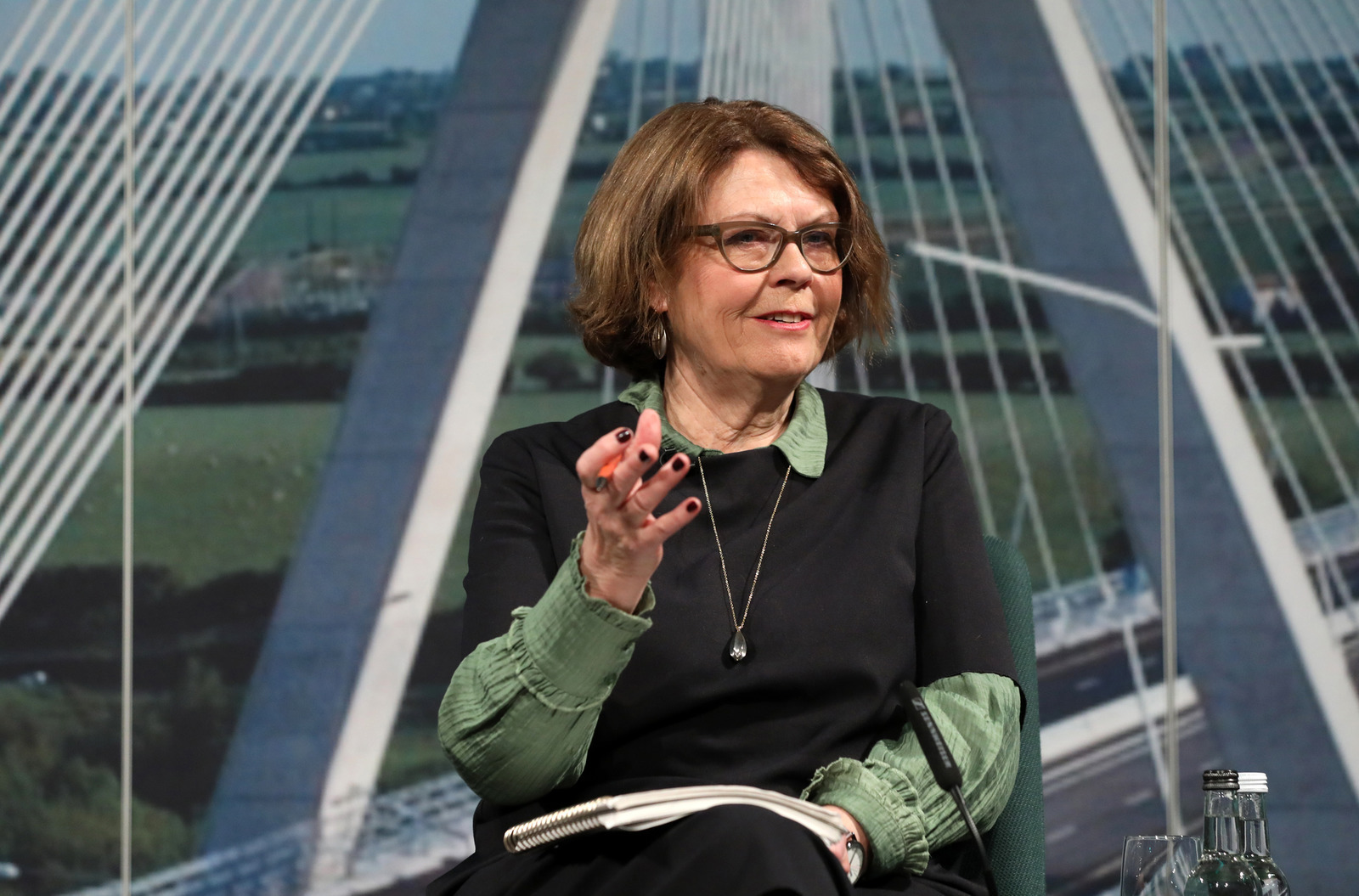
Launching the report, Press Ombudsman Susan McKay said publications must continue to rigorously challenge those who are spreading prejudiced ideas. Photo: Sasko Lazarov/ RollingNews.ie
The Office of the Press Ombudsman dealt with 305 complaints in 2023, marking a significant increase from the previous year's figure of 260.
More than one-third of complaints revolved around breaches of Principle 1: Truth and Accuracy of the Press Council's Code of Practice, with 123 complainants.
31 complainants cited breaches of Principle 5: Privacy, while 27 others lodged complaints regarding breaches of Principle 2: Distinguishing Fact and Comment. The remainder of the complainants referenced various other principles.
The Press Ombudsman report detailed that 25 of these complaints were decided by the Press Ombudsman. 17 of these complaints were not upheld, six were upheld with one overturned on appeal and an additional two complaints were offered "sufficient remedial action" by the publication to resolve the complaint.
Launching the report, Press Ombudsman Susan McKay said publications must continue to rigorously challenge those who are spreading prejudiced ideas.
She said her office was receiving an increasing number of complaints under Principle 8 of the Press Council’s Code of Practice, which deals with prejudice. In 2023, the Press Council dealt with 23 complaints relating to prejudice.
This Principle states that “the press shall not publish material intended or likely to cause grave offence or stir up hatred against an individual or group on the basis of their race, religion, nationality, colour, ethnic origin, membership of the travelling community, gender, sexual orientation, marital status, disability, illness or age”.
“Journalists in this country do incredible work to highlight social issues, and most do so with proper respect," said Ms McKay.
She also said misinformation and hate speech emanating from a small number of social media accounts was capable of reaching a massive audience and causing disproportionate harm.
“We need to stand in solidarity and demand that the social media platforms submit to regulation,” Ms McKay said.
Citing a 2023 Dublin City University report that found 13% of journalists experience online abuse on a daily or weekly basis, Ms McKay said that "the absence of regulation of these platforms threatens journalism, journalists and the public".
Noting that it can be difficult for individuals to make complaints about prejudice, Ms McKay also said her office was open to representative organisations making complaints on behalf of those whose interests they seek to protect.
There were four complaints raised with the Press Ombudsman concerning coverage in the in the relevant period.
In three of these, the Ombudsman published decisions in 2023. The fourth complaint was postponed until the conclusion of legal proceedings, with a decision in this complaint published this week, that did not uphold that complaint.
Regarding the three decisions issued in 2023, the articles that gave rise to these, and the Ombudsman's decisions in each case, are listed below.
Decision on LNG plant in Shannon Estuary delayed again
Safety Before LNG and the Irish Examiner
How far-right propaganda in Ireland ‘weaponises legitimate social issues’
Mr Stephen Kerr and the Irish Examiner
A decision in a third complaint anonymised the complainant, and may be read at the following link.
The Office of the Press Ombudsman receives complaints from members of the public and seeks to resolve them through the office’s conciliation service to the satisfaction of everyone concerned. Where conciliation is not possible, the Press Ombudsman will make a decision on the complaint based on the Code of Practice.
The Press Ombudsman’s decision-making is independent of the Press Council. The Press Ombudsman's office has two full-time and one part-time staff.
The Press Council of Ireland is responsible for the oversight of the professional principles embodied in the Code of Practice, and with upholding the freedom of the press. It operates with the support and co-operation of member publications and journalists.
It decides on appeals against decisions made by the Press Ombudsman and on complaints referred to it directly by the Press Ombudsman. It is independent of both government and media.


CONNECT WITH US TODAY



Be the first to know the latest news and updates