Female sperm whales travelling further north than ever before
Female sperm whales travelling further north than ever before

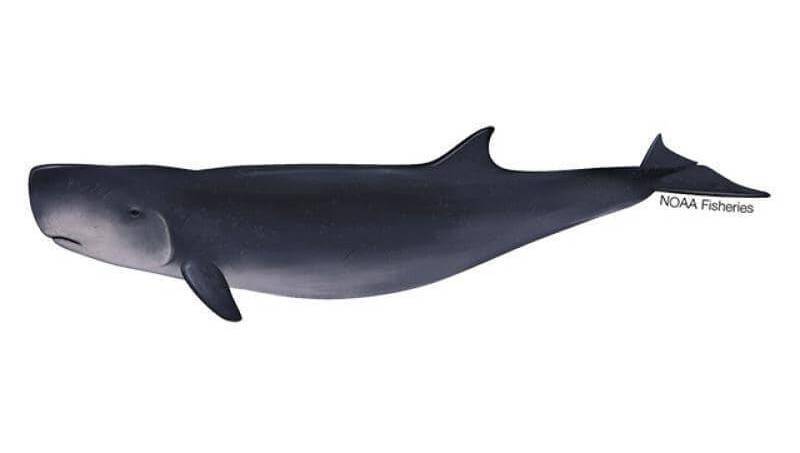
Sperm whales are the largest of the toothed whales and are under-researched in Irish waters. File Picture: Irish Whale and Dolphin Group

A new study of sperm whales off the Irish coast has found female and young whales are now travelling much further north than ever before.

The presence of female whale and their calves at higher latitudes is most likely linked to climate change, according to lead scientist Seán O'Callaghan.

Mr O’Callaghan, a native of Killarney, is a PhD candidate at the Marine and Freshwater Research Centre, Atlantic Technological University in Galway.

He has been following and documenting the activity of the deep-diving whales from their traditional breeding grounds near the Azores, where male sperm whales traditionally feed, to Norway.

Just last week, he recorded a large sperm whale on the continental shelf off Mayo — where the canyons are closest to the coast.

Sperm whales are the largest of the toothed whales and are under-researched in Irish waters, Mr O’Callaghan said.

In the North Atlantic, male whales move to higher latitudes as far as Svalbard at 80°N, north of mainland Norway and in the Arctic circle, whereas female and young whales typically remain around lower latitudes below 40–45° around the Azores, Madeira, and the Canary Islands.

Irish waters represent a midpoint for this species’ spatial segregation in the northeast Atlantic

Historically, just male whales are found off Ireland, with just one “stray” female whale recorded in Irish waters in 1910 by commercial whalers. However, that has started to change in recent decades.

“It appears that the population structure for sperm whales off Ireland began to change over the past decade from a primarily male-based population to now include females, as indicated by stranding and sighting records,” Mr O’Callaghan said.

Continental shelf

Between 1995 and 2023, 10 female sperm whales have been stranded around the coast of Ireland. Eight of these whales have been stranded since 2013, and there has been at least one stranding per year between 2019 and 2023.

Four of the strandings have occurred in Donegal, indicating the presence of female whales along the continental shelf off this region. Two female whales were stranded within a day of each other.

Sperm whale calves and juveniles were also sighted in Irish waters in 2001, 2004, and 2010 in the Rockall Trough, along the Porcupine Bank, and Goban Spur, his research has found.

“Historically, we should only have males in our waters as they forage off of our canyons or move between the southern nursery grounds and high latitude foraging grounds when they're adults,” Mr O’Callaghan said.

Marine heatwaves have increasingly become a concerning issue for the world's oceans, given that they permeate into deepwater habitats and may affect depths down to 200m, while the duration of their effects also increases with depth.

Irish waters have cooled since reaching a peak in 2007, but still remain 0.4°C warmer in the 21st century when compared to the last century.

x

CLIMATE & SUSTAINABILITY HUB

More in this section

Lunchtime News

Newsletter

Keep up with stories of the day with our lunchtime news wrap and important breaking news alerts.

Cookie Policy Privacy Policy Brand Safety FAQ Help Contact Us Terms and Conditions

© Examiner Echo Group Limited