Government poised to use national training fund surplus to address higher education crisis
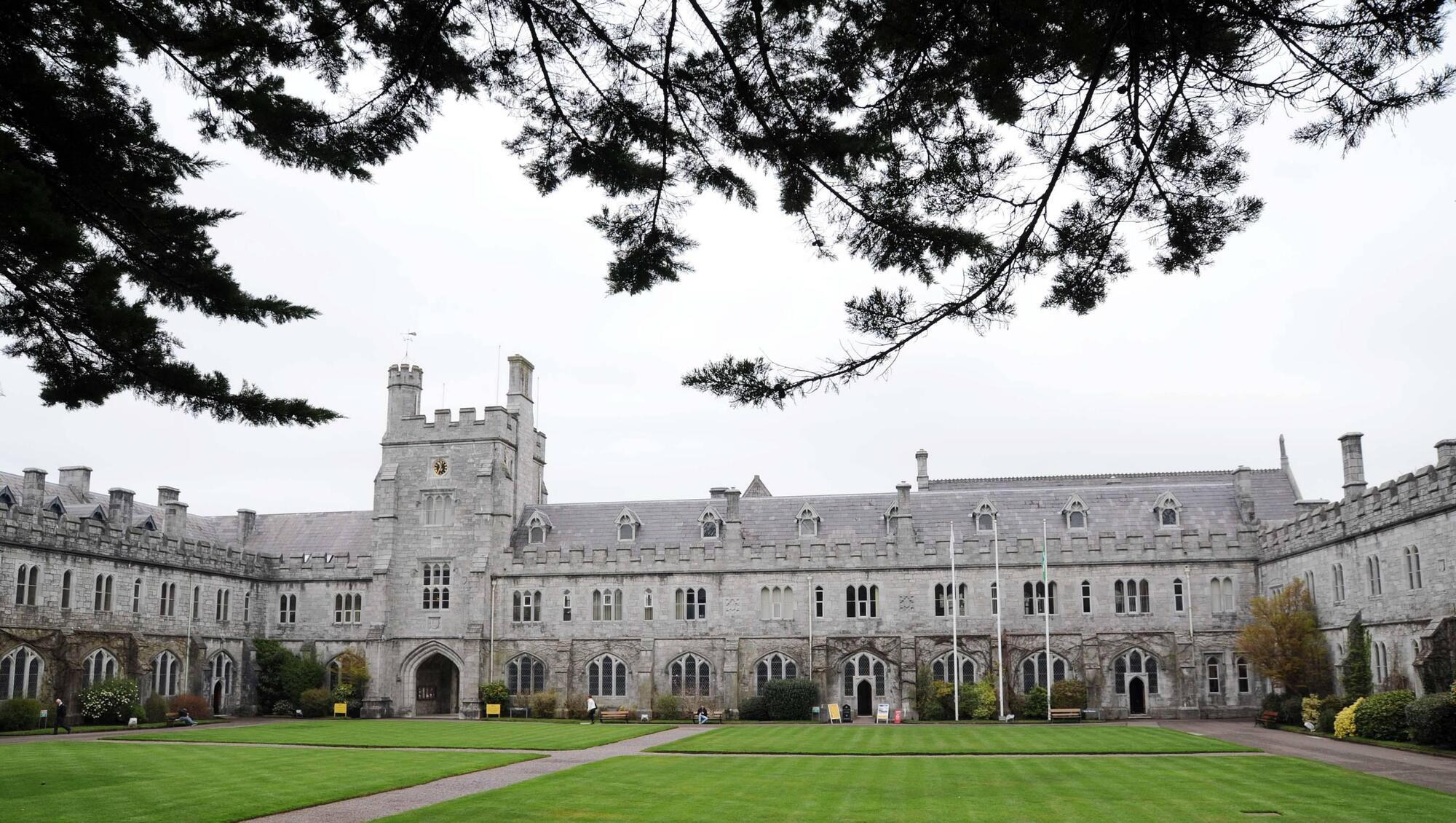
The chair of University College Cork's giverning authority is 'astounded by the short-term nature and inadequate funding of the higher education sector'. Picture: Denis Minihane
The Government is poised to use the vast surplus in the national training fund to help address the core funding crisis facing Ireland’s higher education sector.
It follows warnings from one of the country’s most respected business leaders that the annual funding arrangement has put the very viability of universities at risk.
The reported the warnings of Sean O’Driscoll, chair of the Economic and Social Research Institute (ESRI), a member of the Ireland 2040 delivery board, and a former chair and chief executive of industrial giant Glen Dimplex, earlier this month following his recent appointment as chair of UCC’s governing authority.
He said he has been “astounded” by the short-term nature and inadequate funding of the higher education sector, and said the backdated funding model does not adhere to the basic management principles taught in first-year commerce.
Governing authorities, which are legally responsible for managing the financial affairs and viability of universities, have a responsibility to highlight this financial fragility and the serious strategic risk that the state is taking, he said.
"That’s where the Irish education system is heading unless this is addressed once and for all,” he said.
Mr O’Driscoll, who graduated from UCC with a commerce degree in 1979, is a former director of AIB, a former member of the National Competitiveness

Council of Ireland, and a former member of a number of other government appointed advisory groups, said while UCC has a superb strategic plan, “it is built on sand” because of the ‘zero certainty’ on funding.
He challenged the Government to provide a multi-annual funding model that would give the sector certainty, insisting that it is not an affordability issue, it is a funding problem, and he suggested using the vast surplus in the national training fund to plug the sector’s funding shortfall which the Government’s own 2022 report put at €307m a year.
Tánaiste Micheál Martin, a former education minister, accepted Mr O’Driscoll’s points and said the Government has been working on the core funding issue for some time.
“I hear what Sean O’Driscoll is saying and I appreciate the very good work he is doing at UCC,” he said.
“Hopefully in the budget and estimates, with the utilisation of the national training fund, we will be in a position to deal with the core funding issue of the universities.
“We need to give certainty on that core funding issue and I would like to think that in the forthcoming budget and estimates, we will be in a position to do that because we have done a lot of work on that.
“I pushed and developed the concept of a new department of further and higher education and research and it is clear what is required for the third-level sector and I think we would be in a position to do something positive in the budget in terms of the core funding issue which has bedevilled universities for the last 10 years.”
The revealed last January how UCC recorded a €11.2m deficit last year, forcing it to embark on a major cost-cutting and cost-containment programme called Project Alpha, which included a review of major capital projects, which in turn led to the pausing of key projects including the proposed Cork business school, an expansion of the Tyndall facility, and the development of a new Cork dental school.
Mr O’Driscoll says the deficit is now under control but he said the development of a new dental school in Cork should become a national priority project.