Met Éireann forecasters told of 'profound impacts' from possible collapse of ocean current system
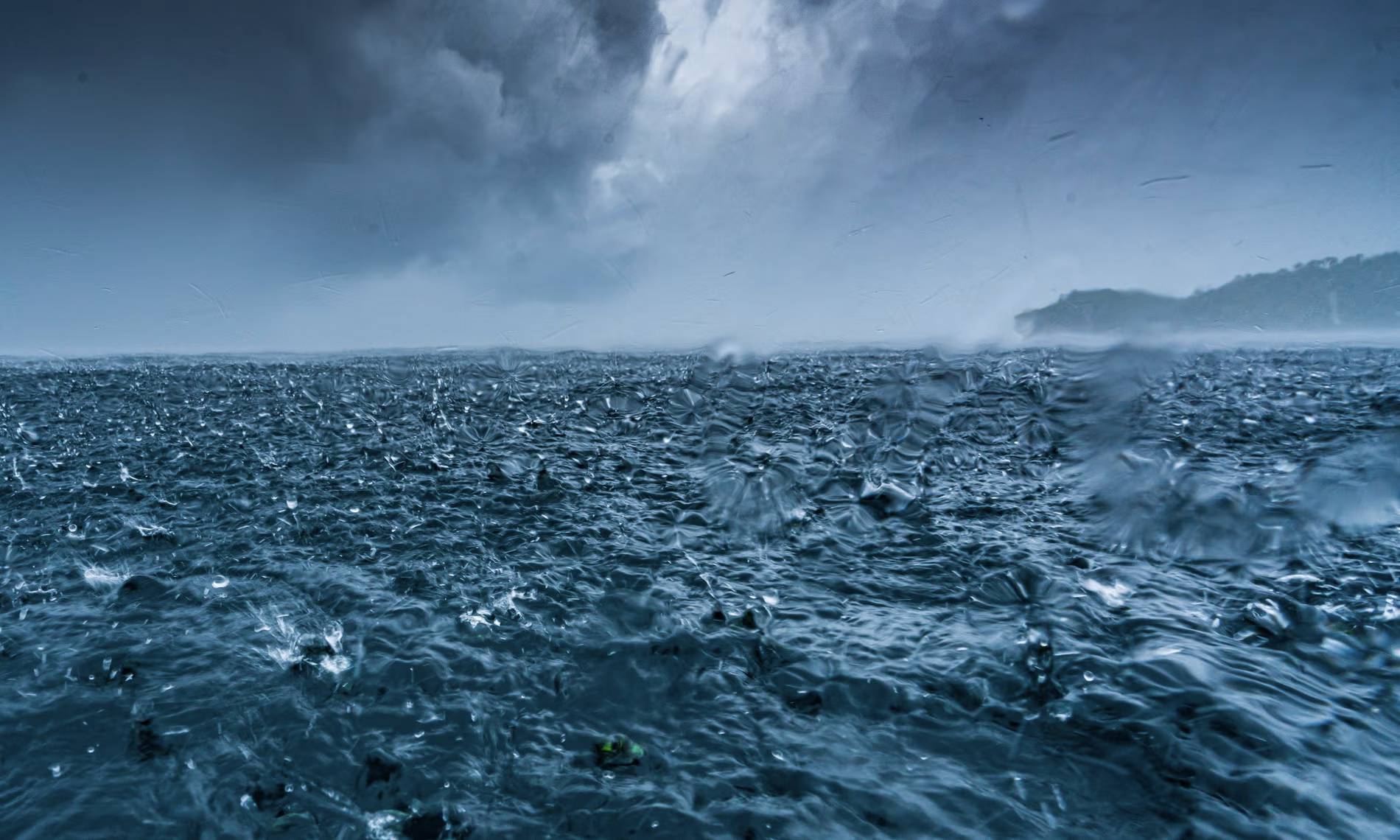
An advisory said the weakening of the Amoc was likely to result in further sea level rises around the country, in addition to what is already expected from climate change. Picture: Henrik Egede-Lassen/Zoomedia/PA
Forecasters at Met Éireann were briefed on the “profound impacts” of the possible collapse of an ocean current system that keeps Ireland’s weather relatively mild.
International climate scientists have raised the alarm over the cooling of what is known as the Atlantic Meridional Overturning Circulation (Amoc), the shutdown of which would be a potentially irreversible tipping point in the climate crisis.
Met Éireann forecasters were given guidance notes on how best to communicate the risks for Ireland and how the Amoc was at its weakest in over a millennium.
An advisory said: “It is projected to decline by a further 30 to 40% by 2100.”
Forecasters were told that a large cold pool of water, sometimes referred to as the ‘cold blob’, had been observed in North Atlantic waters in recent decades as part of the system weakening.
The guidance note said: “The northern part of the North Atlantic where the cold pool has been observed is the only global region which has cooled as the rest of the world has warmed due to climate change.
“Further weakening of the Amoc is expected to lead to a continuation of the cold pool in the North Atlantic, with the possibility of further cooling.”
It said that while warming caused by climate change was predicted to continue in Ireland, the influence of the cold pool could mean this was less than what would be seen in continental Europe.
The advisory said that while a complete shutdown of the Amoc was still thought unlikely, it could not be “definitively ruled out”.
The note explained that if collapse did happen, the impact on Ireland would be “profound” with far more severe winters, warmer summers, and a possible increase in storminess.
It also said the weakening of the Amoc was likely to result in further sea level rises around the country, in addition to what is already expected from climate change.
A separate presentation on the influence of the North Atlantic on climate said it was a “huge heat reservoir” that made Irish “winters comparably mild and summers comparably cool”.
It explained how a shutdown of the Amoc was thought of as one of the “tipping points” in climate change should it ever take place.
The slideshow said it was considered a “low likelihood — but high impact event” for Ireland if it happened.
The likely results would be “strong cooling” of several degrees Celsius, reduced rainfall, increased snowfall and increased storminess.
It added: “[It is] very different from climate projections for Ireland. But this is the impact of a low likelihood — high impact event.”
Another presentation said other possible effects were “extreme storms” in Ireland, “extreme heat waves” in the rest of Europe, and an additional 30 centimetres of sea level rise.
Asked about the documents, which were released under Freedom of Information laws, a spokesperson for Met Éireann said they had nothing further to add to the contents.
Check out the Irish Examiner's WEATHER CENTRE for regularly updated short and long range forecasts wherever you are.
CONNECT WITH US TODAY



Be the first to know the latest news and updates